


This is a free post made possible by paid subscribers.
Writing is my profession and calling. If you find value in my work, please consider becoming a subscriber to support it.
Already subscribed but want to lend additional patronage? Prefer not to subscribe, but want to offer one-time support? You can leave a tip to keep this project going by clicking the link of your choice: (Venmo/Paypal/Stripe)
Thank you for reading, and for your support!
Today is my 47th birthday. I say this not because I’m soliciting birthday greetings — I’ve got hundreds of those on Facebook to reply to already — but because as we age, birthdays become less about the parties and the cake, and much more about opportunities to reflect on where we are, and also where we’ve been.
I never expected to go through a mid-life crisis. Things were far from perfect, but I thought I was doing pretty well. I had finally made it, and thought I had nothing left to prove. I grew up on the almost-poor end of middle class, but here I was, living in a nice house that was actually big enough for our family, in a gated community (that I owned, rather than rented). I had beautiful children, cool stuff, good food, and a Jeep that I’d take off-roading like I’d always wanted since I was a kid. Our bills were getting paid on time, and I had attained a level of notoriety and success that felt like the culmination of a lifetime of hard work and dedication.
It was 2020, and by that point, I had built something I felt I could be truly proud of. I was not embarrassed to tell people what I did and who I was. I got to call myself a professional writer, like I’d always dreamed. My parents had come for Christmas the previous year, and I’d gone all out to show them the sights, and all I’d accomplished, because I’d spent my life feeling like I had to do something to earn their respect. I finally felt that I had nothing left to prove.
But the truth is, I was still deeply unhappy. Moreso than I’d ever been.
It’s cliche, I know, but it’s true. So is what I’m about to say next.
Yesterday, I stumbled across a video that grabbed my attention, because it was my story, told through different eyes. Rick Rubin, the legendary music producer and author of my favorite book on the artistic life, The Creative Act, talked recently on a podcast with Jay Shetty about how even famous or extremely wealthy people who have finally accomplished all their dreams are often surprised to discover that success doesn’t make them happy at all:
I had spent a lifetime distracting myself from unaddressed childhood traumas that came out in my own antisocial and destructive behaviors, which were hurting the people I loved. I was desperate for external validation, affirmation, and love, because inside I was filled with self-loathing, fear, and doubt. I also had a pile of religious trauma I had never faced. Not just from my time spent in a religious cult, but from an upbringing where obligation, rules, and fear of God’s wrath seemed to be the real motivations to stay religious, rather than any real concept of a personal relationship with Jesus — whatever that means — or an actual love of God.
My wife and I had been traditionalist Catholics for 17 years at that point, and I was tired as hell of driving an hour each way to Mass, past a hundred bourgeois parishes of suburban good cheer, to some mediocre hand-me-down church in a ghetto somewhere, where it wasn’t safe to stray outside the walled parish grounds, just so we could have a decent liturgy. Trad culture was toxic and growing worse — full of more guilt, fear, anger, snark, and negativity, than anything I’d ever been a part of. And as my work covering the internal politics and corruption in the Church hit its seventh year, I could no longer find God in any of it. To be honest, I’m not sure I ever did. The Church, for me — with its rules, rubrics, legalisms, and theological debates — was more of an idol than an authentic manifestation of real faith. A proxy for a God I had no idea how to actually encounter.
My marriage was strained to the breaking point, largely due to my anger and emotional volatility. My kids were afraid of me. I was drinking to numb the pain of my everyday existence, and I found that I increasingly could not stomach trying to dredge up a vision for how the Church could ever redeem itself after having fallen so far.
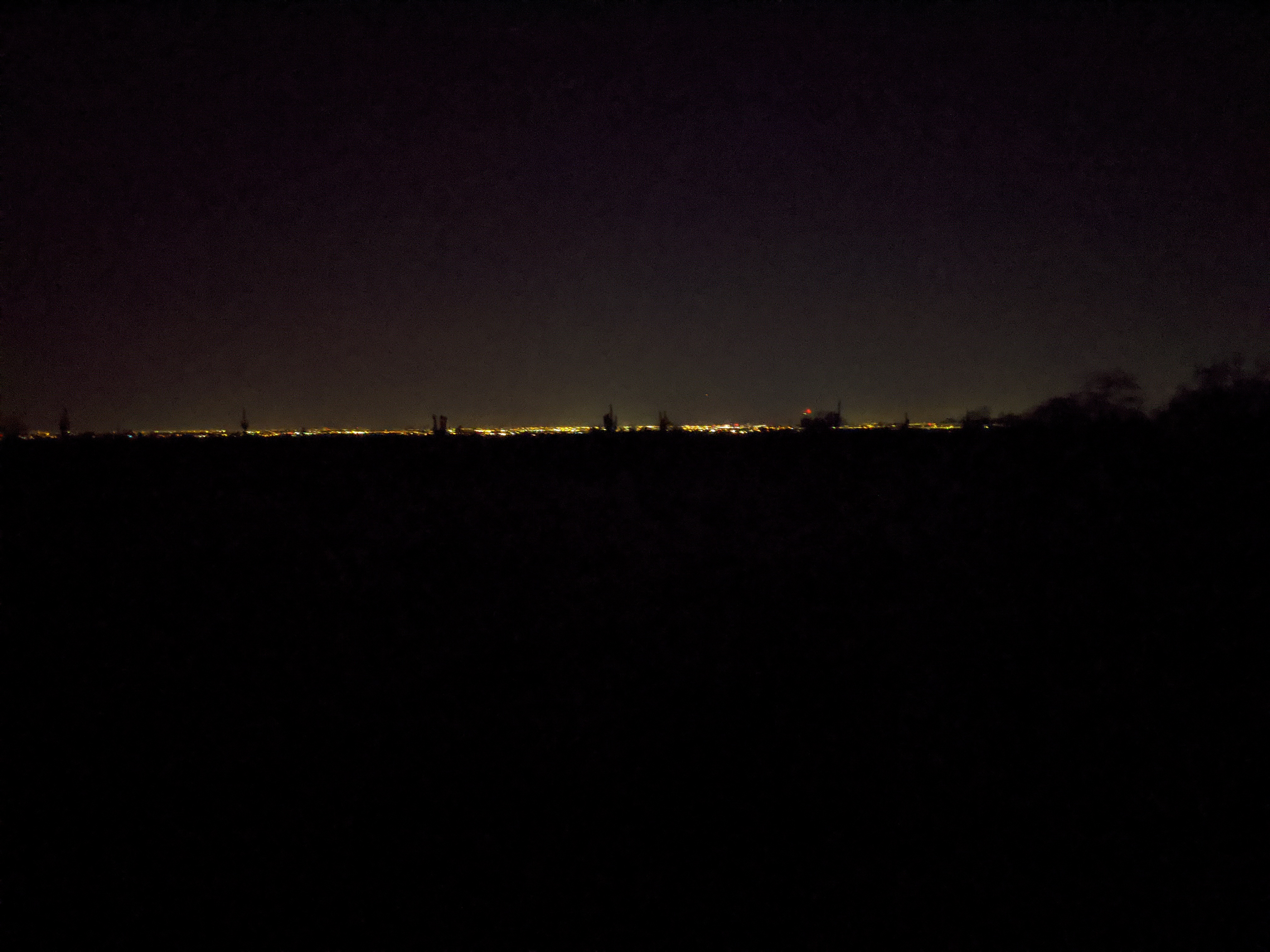
I would sometimes walk down the cool tiles in our long central hallway at night, in the dark, looking out our floor-to-ceiling back patio windows, across the vast expanse of open desert, at the twinkling city lights on the horizon. It was stunningly beautiful, and I never got tired of looking at the view.
I am so materially blessed, I’d think, but I have never felt like I’ve had less.
When it all came apart, it was like watching a car crash in slow motion. Chaotic, horrifying, and yet somehow almost poetic. A perfect storm of events that broke through my formerly-impenetrable shell of “things must be done this way,” leaving me raw and exposed.
It’s where I was when I wrote the post that put this Substack on the map.
And it was the beginning of the end of the first volume of my life, which was heading to a close far more rapidly than I could see.
In the time since, that slow-motion disaster has been unfolding non-stop. What came next was a complete breaking down of self, a forced ego-death, and a series of decisions intended to make things better that ultimately made them worse. A departure from the business that I built that allowed me to be the sole provider for my large family, an ill-considered move to New Hampshire to get away from a Catholic community that closed ranks as soon as I spoke up about why I couldn’t take it anymore, family members that were more hurt at what they perceived as a betrayal of the all-important faith that stood at the center of their lives than they were concerned about how I arrived there and what had driven me, against all odds, away. In the midst of it all, we had a wayward child who was making decisions I saw as self-destructive but was powerless to stop, in large part because my inability to deal with my own demons had driven her away. She had deserved a loving, patient, caring father, and had gotten a monster instead.
Somehow, I convinced myself that returning to the New England of my childhood would help me share something beautiful with my own kids. I wanted to change. I wanted to stop being angry and start making good memories with the children still at home. In reality, it turned out that I was seeking to reclaim something lost from my youth, the place not just where my wounds were primarily inflicted — the proverbial scene of the crime — but also the setting of the most happy memories of my childhood that I could remember.
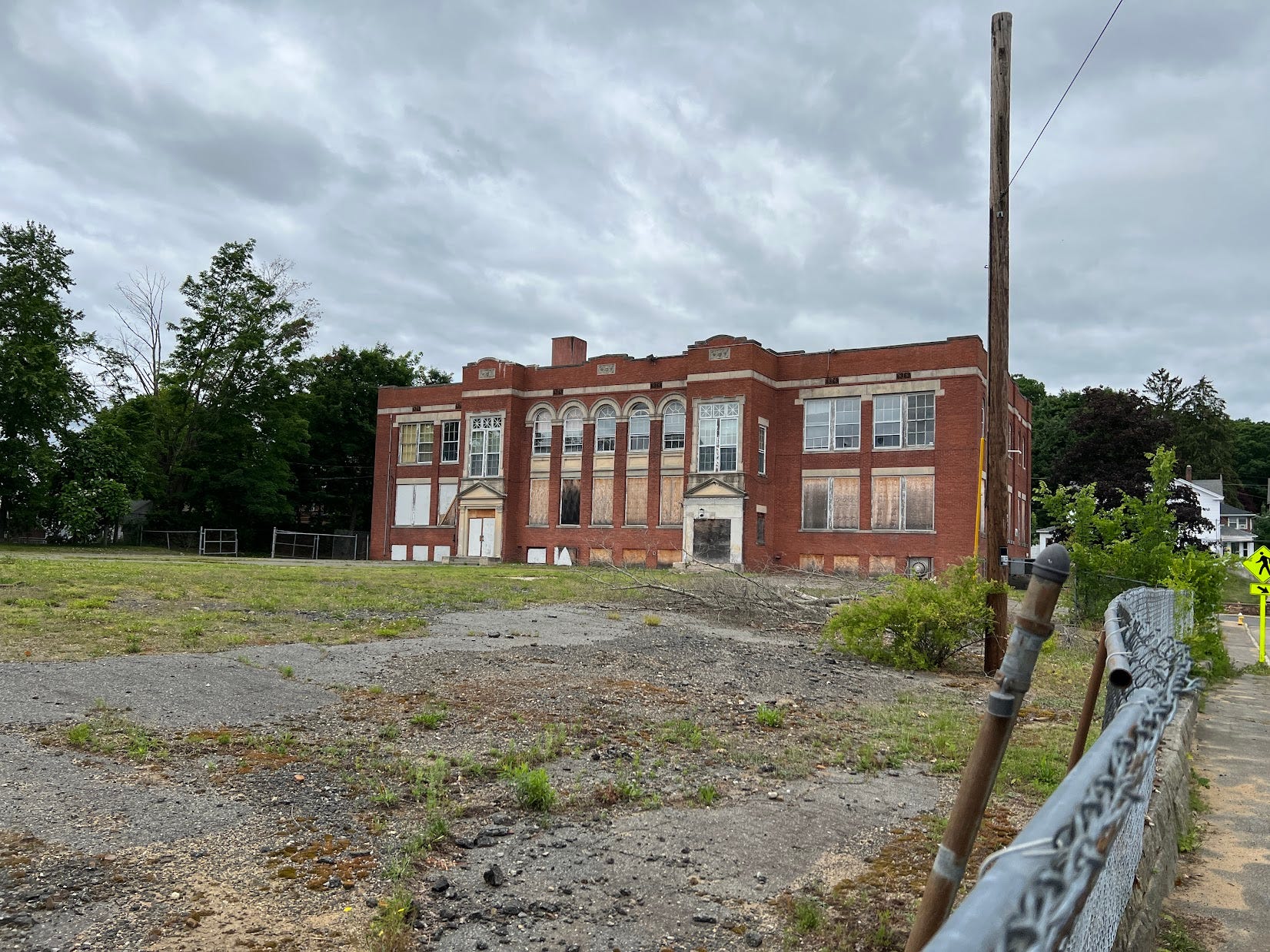
But the trees I spent every day climbing were all cut down, the barn where I played with my brother torn down, the school I walked to and spent every day on the playground was boarded up and abandoned. “Salvation Springs,” as my wife took to calling my childhood hometown, turned out to have nothing salvific to offer.
People who know me in person know that I am often verbose to a degree that borders on manic. I will hold court in kitchens or living rooms with diatribes about this or that topic I am passionate about, often failing to realize I’m overwhelming my listeners with the sheer force of my opinions.
But in New Hampshire, I was borderline catatonic. I felt that my entire life had been gutted to the studs. My Catholicism had been my whole identity, and now it had burned out, dried up, and blown away like ash in the wind. I had spent 30 years honing myself to be an apologist for a faith I no longer found credible, and had never developed any part of myself that did not exist in service of that end. I had no career, no professional development, no ladder that I had climbed through hard-won expertise, that was not inextricably intertwined with that one thing I had prized above all others.
And now it was gone.
There were times when I would try to form a sentence and feel that words completely eluded me. I would sit, staring at my wife, a lump in my throat, tears welling up in my eyes, unable to speak. It was terrifying. There were random moments when I would be so overcome with grief that I would break down and cry. The sense of loss was so overpowering that my once-formidable resolve was no match for its force or finality.
I had lost who I was, and most of what I cared about, and there was no going back.
But even desolation that deep can’t last forever. “What doesn’t kill you makes you stronger” turns out to be at least partially true. I didn’t die, so I had to begin to survive. Piece by broken piece, I began to Humpty Dumpty my life back together. To appease my wife, I started doing acupuncture, which was shockingly effective at breaking the emotional blocks I had in place. Great, gaping chunks of things I’d kept buried began floating to the surface like icebergs, demanding to addressed. I started writing again, slowly at first, but then, with more frequency. Much of it was confessional and therapeutic. I couldn’t find a therapist who knew how to help, and as the money ran out, I couldn’t even afford to look for one. I resorted to watching videos on YouTube, trying to piece together an understanding of just what the hell had gone so wrong with me.
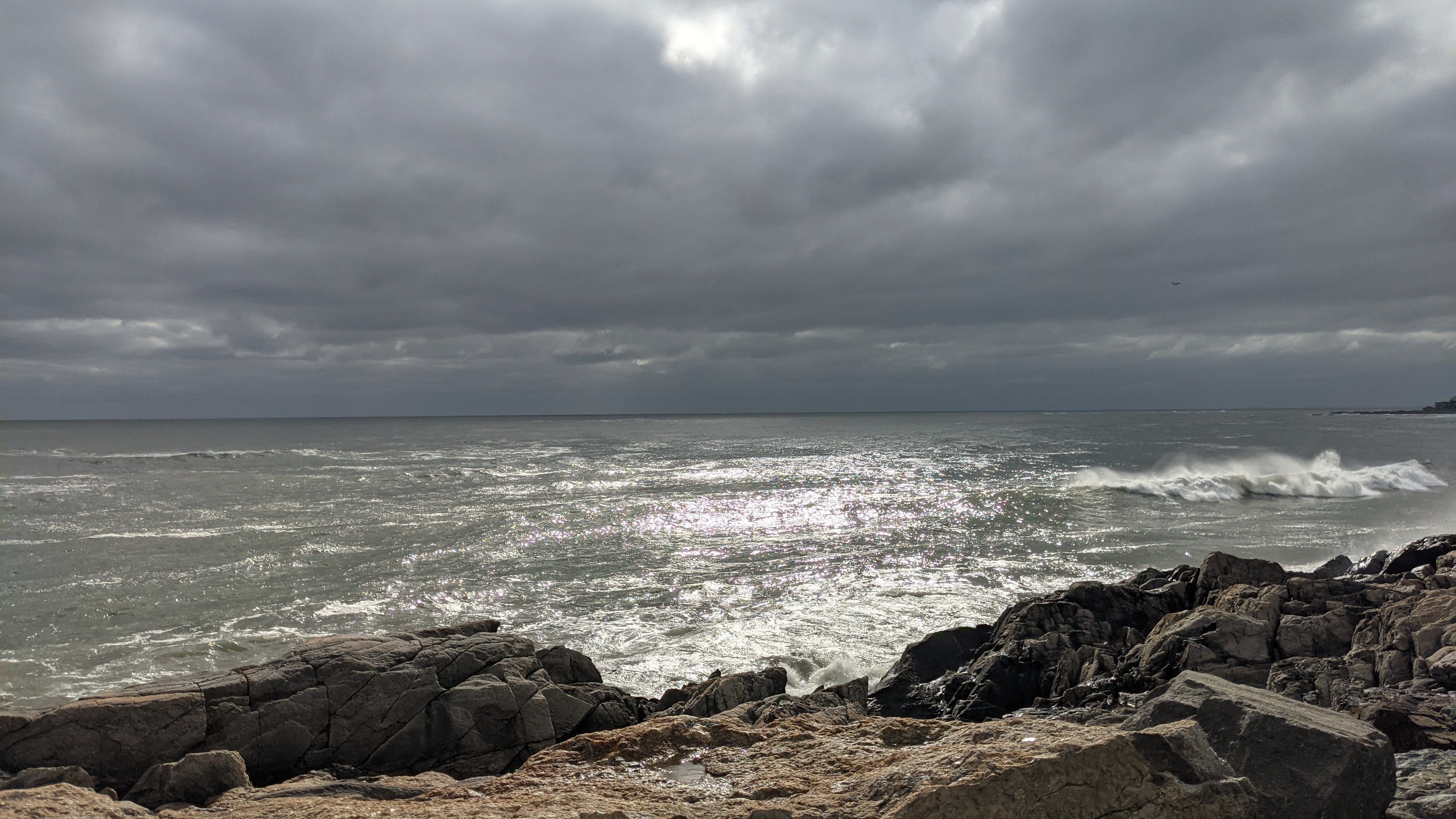
We saw pretty early on that the move to New Hampshire had been a mistake. The place was beautiful, and wonderfully close to the coast, where I have always sought solace, but the energy was completely wrong. We did not fit there, and we knew we never would.
My wife realized before I did that I was not going to be fully functional before all our savings ran out. We’d spent a lot of money on the move, and in the end, we’d end up losing even more by leaving, but we were forced to cut our losses and go back to the desert, where the kids could be put back in their old school and she could work, while I tried to pull myself out of the darkness.
Two years later, her father died, severing her last tie to Arizona. In the months leading up to his death, she felt a call to go and find home. It was profound. It was overwhelming. It was inevitable.
Four years after it all started coming apart, here I am. Still not mended, but moving forward. We are in a new place again, and this time it’s one we actually love and want to stay in, but we are way behind the ball. Our savings wiped out, our investments gone wrong, our income dwindling as inflation drove up prices, forcing us to rent instead of buy, our hopes for a fresh new start half-strangled under the weight of crippling financial stress. The strain my complex trauma-derived dysfunction has put on our relationship over 21 years has not made things easier. Damage, and distance, remain, though we continue to fight for this family that we built.
I married a good woman. She deserves better than I’ve given.
This week, I’ve spent most of my time applying for jobs I don’t want, trying to get back to a career I never had, doing work I am not interested in. My only real prospect so far is a job delivering packages for Amazon for less pay than I even want to talk about. It won’t get us out of the hole, but it might staunch some of the bleeding.
I just need more time to build my Substack, I keep telling myself. I just need to get the subscriptions up. But even I know that it will take years to make this project into a sustainable living. I may have a best-selling Substack, but 213 paid subscriptions only covers a fraction of the bills.
I cannot escape the feeling that I am a colossal failure, even though some part of me knows that I had no choice but to go through this brutal, grueling, restructuring of myself. You cannot live a whole life in a house built on sand. You cannot walk on a poorly-mended broken bone. Sometimes, the injury must be re-broken and re-set. Without faith, it is hard to see a “plan” in all of this. Is this really something I was “meant” to go through? And if so, who is intending it, and to what end?
On the other hand, for a man who has lost belief in the idea of a God who was once his everything, I still talk to that great, inaccessible silence quite a lot.
“I don’t know if you’re there,” I’ll say, “ or if you care, or if you want to hear from me at all. But I sure could use your help. I need more time to heal. I need to get better. I need to know what I’m supposed to believe. But I also need to take care of my family. I don’t know how to do this alone.”
Is this vestigial faith? Or is it just the desperation of the agnostic in the proverbial foxhole?
I used to believe that the success I achieved in the past was something nobody could take away. That I could always use it to remind myself what I was capable of, and do it all again. And I am trying to recapture it, even though I am riddled straight through with imposter syndrome. It feels like every effort we make hits a wall, every attempt at winning is met with yet another defeat.
I cannot see hope from here, but neither will I relinquish the belief that it may, in fact, exist.
Sometimes, I feel like we’re on the cusp of a breakthrough. That whatever scouring we are being forced to endure will let up soon. That the storm will finally break. That normalcy, and peace, are almost within reach. That the vice grip of unrelenting stress and worry will finally release.
Last night, fed up with trying to get my podcast re-encoded by midnight and finally coming to bed, my gaze fell upon the sweet face of my youngest — the tiny little boy with the huge personality whose conception surprised us so much in our mid-40s. I held him gently as he slept. I pressed my forehead to his, and took his little hand in my rather large one.
I need to spend more time with you! I thought. I need to take you outside and throw the football, and go for walks, and be present in your tiny life before you grow up like your siblings are doing. And they need us too! If I only had the time!
At nearly half a century of age, I cannot fathom starting over from nothing, but we are precipitously close. We can rebuild something. I’m sure of it. We’re too smart, too resourceful, too unwilling to give up the fight for any other outcome.
But at what cost?
I made decisions years ago that set us on a different path. Decisions I believed were right at at the time, but now I’m not so sure. Decisions that have put us in this difficult spot we find ourselves in now, although I could never have seen the outcome at the time. Working late. Always busy. Never sure if we can pay that next bill. Never truly present even when I try, because the gnawing teeth of worry never rest.
I am closer to the official age of retirement than to my college graduation, and yet I feel like I am first starting out all over again.
I say “I don’t know how I got here” a lot, but in a way, I kind of do. I can’t take any of it back. I can only find a way to move forward. But I am not a young man anymore. The idea of spending ten hours a day on my feet, delivering packages to closed doors, for a few thousand dollars a month, is daunting to me. The email sits in my inbox, waiting for me to schedule an interview.
Is this what I’ve become? All this talent, wasted on a broken life full of abandoned potential?
I am a catastrophizer. It’s baked into a person who grows up in constant fear. You always expect the other shoe to drop. You’re always waiting to be attacked. You cannot afford to be an optimist, because it leaves you vulnerable to the inevitable attack. “Hope for the best, but prepare for the worst” is practical advice, but even that feels trite. When do you stop hoping for the best, when the worst seems to be the most common result?
I had a contentious exchange with my youngest sister over the weekend, over old disputes, and her migration to the political Left. We both said things in anger. She blocked me on Facebook. I sent a nasty text. She told me that she used to hope that I would heal, but now hopes my suffering eats me alive.
“Don’t worry nobody misses you. :) bye,” she wrote. It hit like a suckerpunch to the gut.
I loved her so much when she was small. She was still in elementary school — about the same age as my youngest daughter — when I left home. She would write me letters telling me how much she missed me, and how thinking of me made her cry. And now, we’ve been estranged for years, and things have only gotten worse. The loss of closeness to my family has been one of the hardest things I’ve endured. But we fundamentally disagree on some very essential things. My sister accuses me of “villainizing” my family of origin by writing here about the difficulties of my childhood, my struggles overcoming my abuse, and my sense of betrayal over decisions they’ve made that undermined our parental interventions in the life of our oldest child. But that child has grown up a lot, and we are rebuilding a relationship.
My sister, I may never see again. I see no choice but to cauterize the wound. I have no more time for wallowing in pain, and I will not compromise my principles for the sake of a false peace.
Our exchange ruined my morning, but by the end of the day, I felt a weight lift. If there’s nothing you can do, there’s nothing you can do. Time to move on. I have my own family to worry about.
There are good things in my life, and I will not relinquish gratitude. We may be renting, but our home actually feels like home, for the first time in forever. It is lovely and serene. I have seven children still in the house with us, and their presence is a joy. Some very difficult circumstances with our oldest and her now-husband have plagued our relationship with her over the past eight years, but despite my trepidation, we have invited them (and our two grandchildren) to spend Thanksgiving together with us. It may be awkward at first, but we will rebuild what we can rebuild. We only have each other.
I have a lot to learn about forgiveness and healing. I am taking baby steps.
This is not where I thought I would be as I approach 50, but it’s where I am. This is not the end. We have a lot of work to do to dig out, and I won’t pretend it isn’t incredibly daunting, but we will put our shoulder to the wheel and keep on pushing.
When I saw those dragonflies everywhere all summer, and discovered that they are often seen as an omen of transformative change, I grew excited. I thought I was ready. I wanted desperately to turn the page. I admittedly forgot how painful transformation usually is. Like re-breaking and re-setting bones.
But maybe, just maybe, it’s the new beginning I’ve needed so desperately after all.
So here’s to the next 47 years — or at least, as many of them as I get to have. Here’s to writing a better story with the last half of my life than the one that came before.
“The truth is that Jesus begins by making His followers suffer,” the writer J.K. Huysmans wrote, “and explains himself afterwards.”
btw, I was 47 when I walked away from LifeSite and moved to Norcia and started finding a new way in life.