


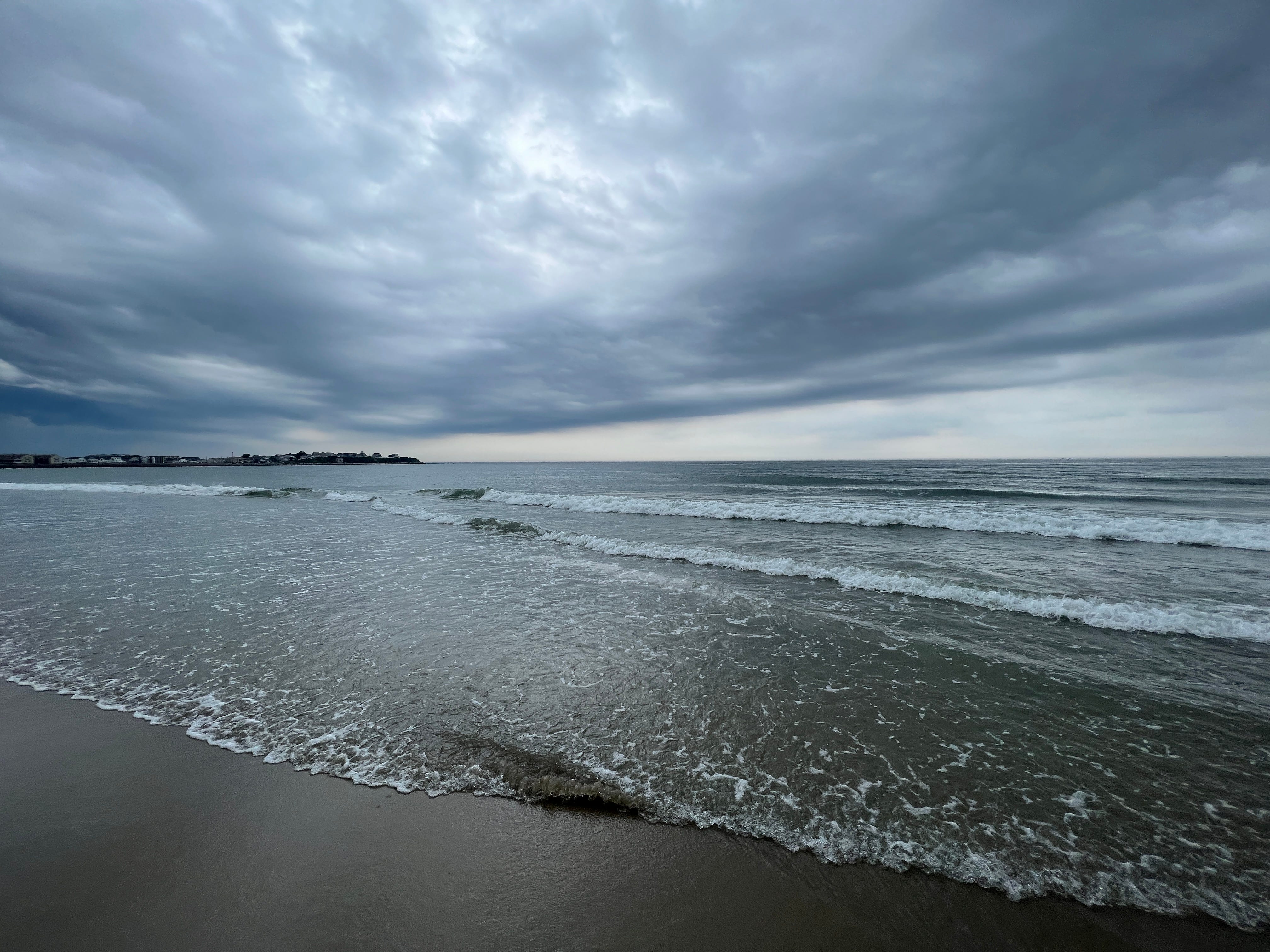
I can’t stop thinking about the coast.
There’s a constant debate running in the back of my mind about whether I should just drop everything and go. Week in and week out, it suggests itself to me, like a lover trying to gently coax their brooding beloved into softening by looking them in the eyes.
It feels overly indulgent, with everything I’ve got going on, to drive hours to the Atlantic just to sit there for a while and stare at the waters, listening to the surf crashing against the shore, only to turn around again and drive hours back home.
But that’s exactly what I’d do if I went. I don’t go to the coast to surf or to swim or to fish or collect seashells. I go because it’s the only place left in the world that feels like church to me. The closest thing to heaven touching earth; a glimpse of the power and presence of an invisible, ineffable God.
I don’t know when I first realized this, I only know that the revelation came late.
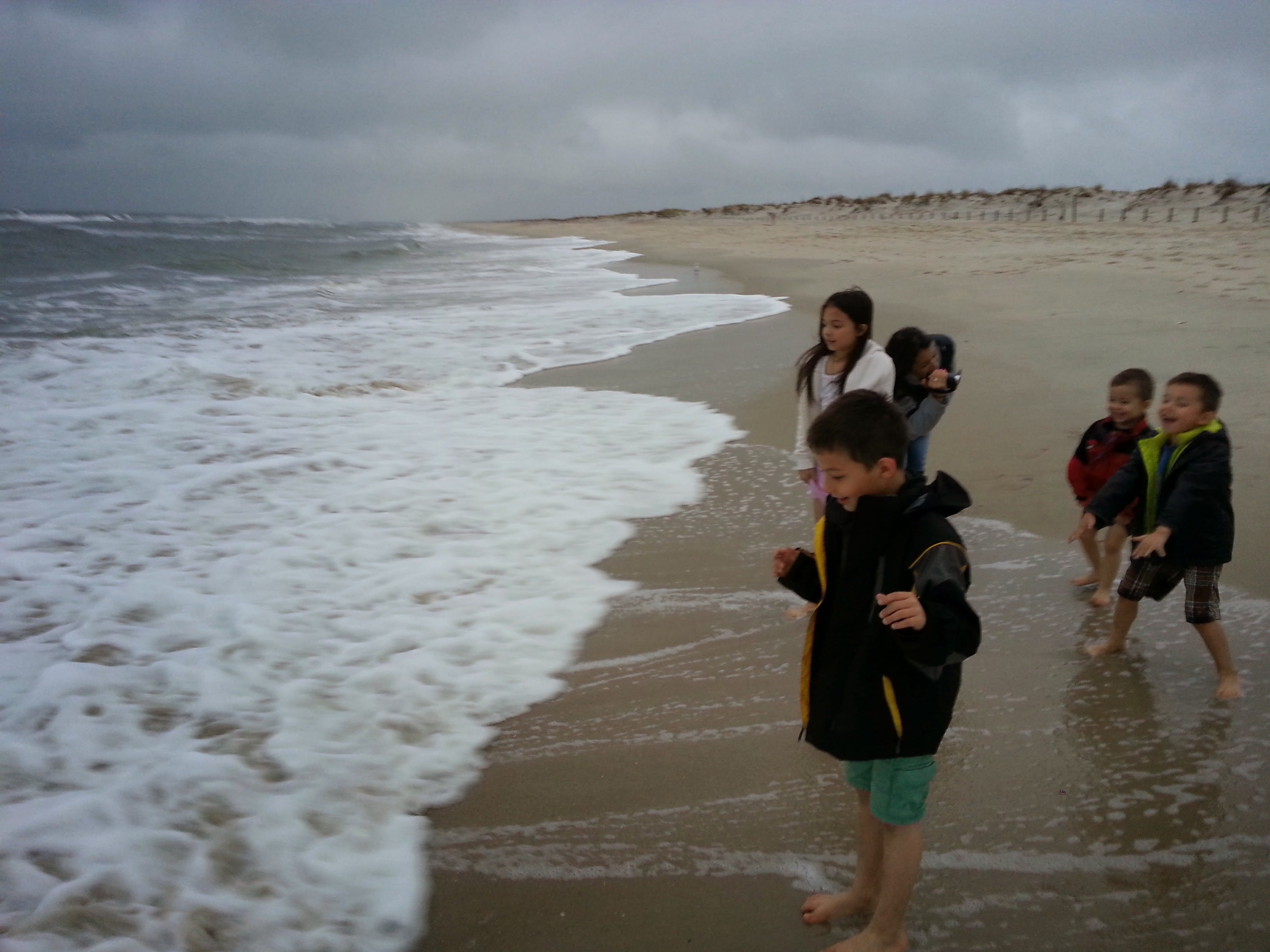
If I had to trace it back, I’d guess it was the time, back in October of 2014, when we’d just found out we’d lost a child to miscarriage only a few months in. It was the first time we’d had a pregnancy go wrong, and on a whim, we grabbed the other kids on a chilly, misty day and drove all the way out to Assateague Island — the first time we’d ever been. We ate lunch in a dark-wooded, dingy pub along the way, flanked by the light and sound of old pinball and arcade games. The kids wore their winter jackets together with shorts as we walked barefoot on the sand and into the bracing chill of the foaming water as it lapped our toes.
I don’t remember if we had told the children what had happened yet, or why we came. But I know that the ocean somehow swallowed up the sorrow and the worry, like it was bigger than all the chaos I had raging inside. I noticed it that day like I never had before, and ever since, I’ve always preferred visiting lonely, deserted beaches on days when the water seems troubled and the skies are swathed in layers of steel gray.
I think I needed something that could take everything I threw at it and more, and remain there, unchanged, implacable, the rhythm of the waves like listening to the slow, steady breathing of some ancient, world-spanning beast.
They say that the noise of the water synchronizes your brain waves to a frequency that calms you, brings you down to level. Brown noise or green noise or ocean-colored noise lying somewhere in between, I don’t know which. I just love the way it drowns out everything else, sucks you in, makes the whole world fade away until it’s just you, being bled of your discontents. Just your mind and your heart and your weary soul, soothed by the steady, soaring percussion of crash, crash, craaaaash.
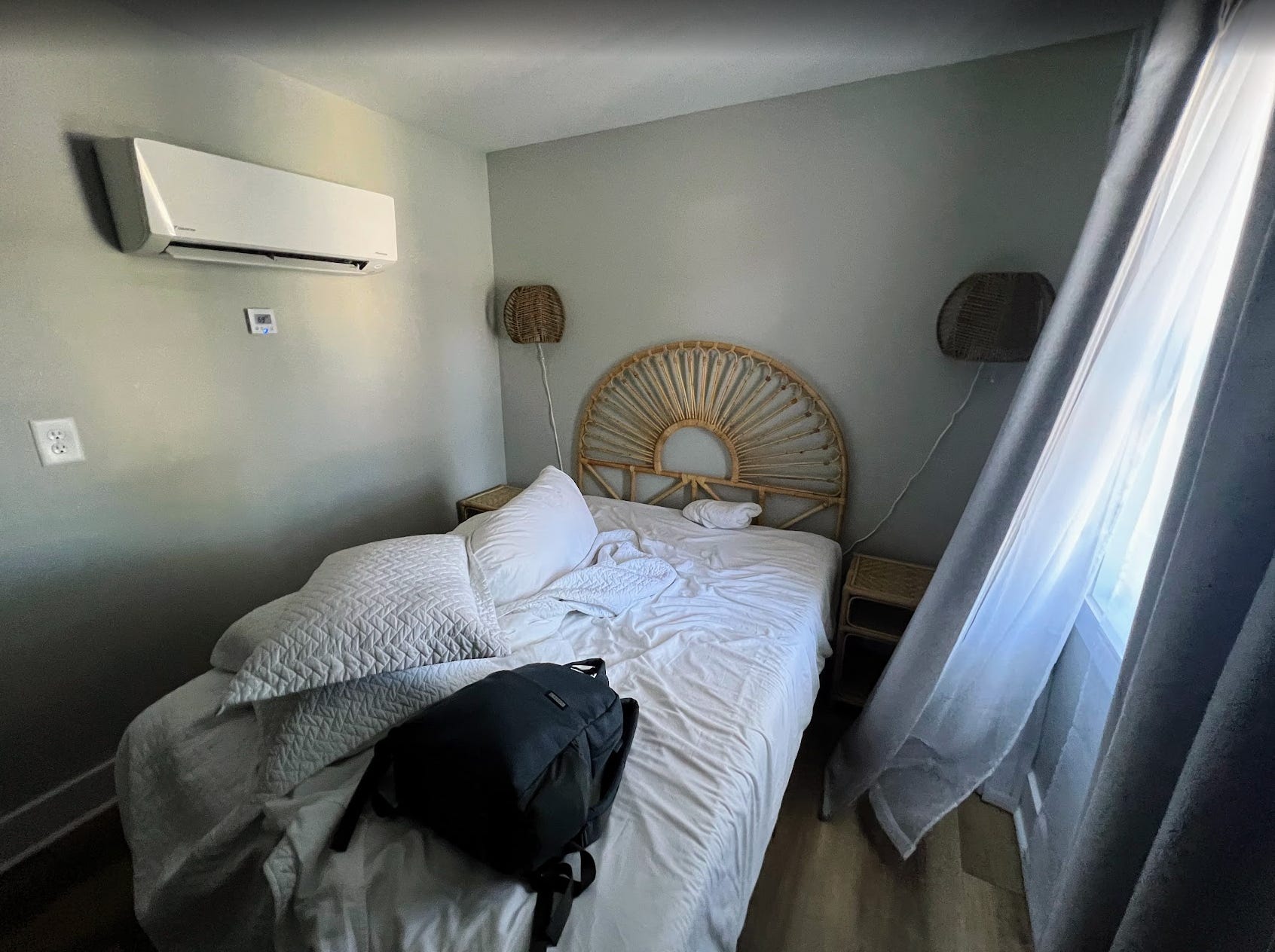
On the night I was forced to leave for the last time as a daily, integral part of the family we’d built together for the previous 22 years, the coast was my first stop. I rented a room in a neat little motel just a couple blocks from Carolina Beach, and I drove through the darkness for hours just to get to the waves, too numb to even feel the grief. I arrived too late and too exhausted to try to calm myself by the shore, so I waited until morning, when the sun was too bright and the day already too hot, but I still walked over to make my visit before heading out on the long and lonely road.
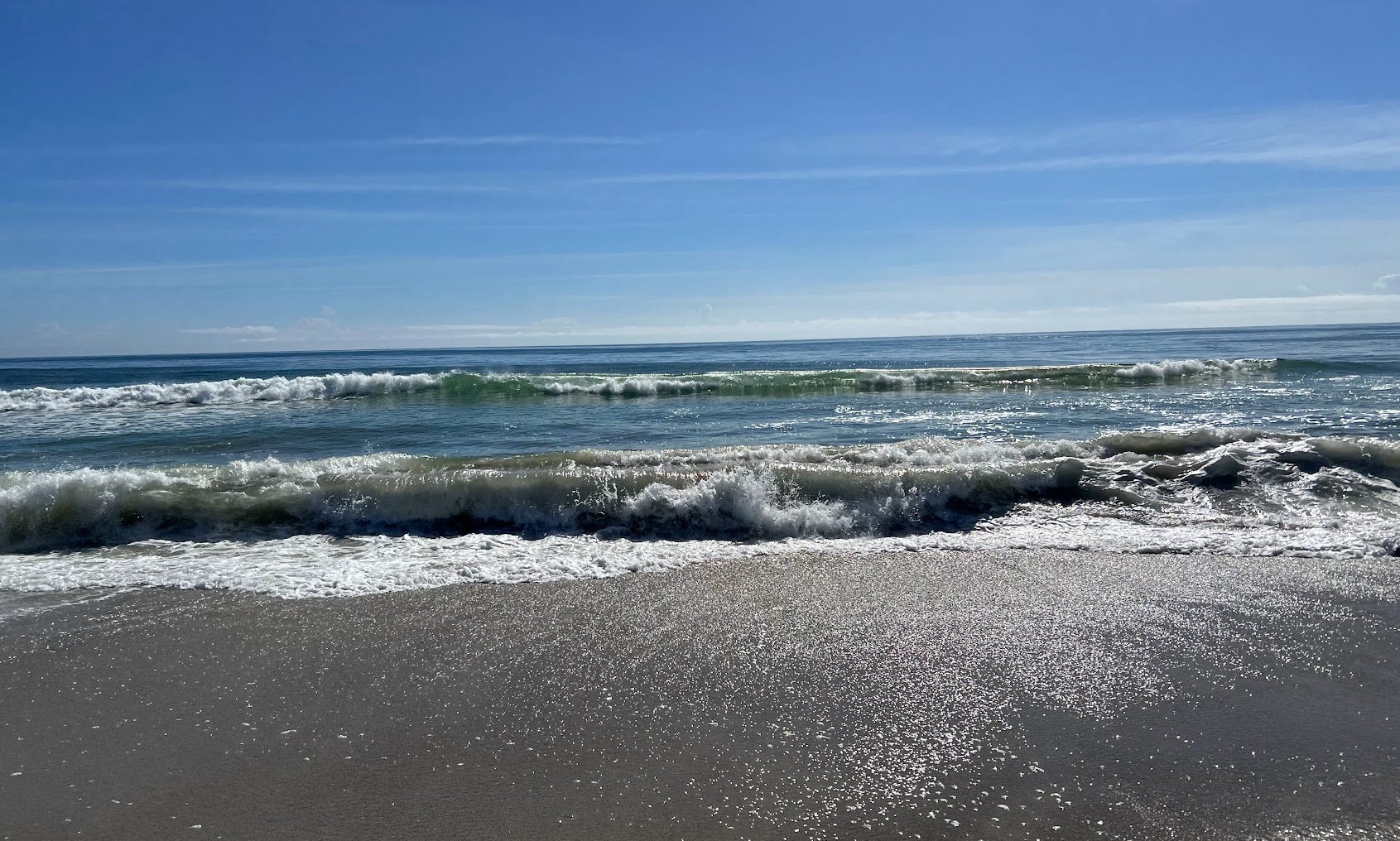
I stayed with the coast as long as the road would let me, eventually veering inland as I visited friends on my way to Rhode Island — The Ocean State — where I stayed with Kale Zelden for the first real stretch of my exile. While there, I took advantage of the proximity, and visited as many beaches as I had time to see.
Five years back, right at the beginning of everything in my life falling apart, we sold everything and moved from Scottsdale, Arizona to Southern New Hampshire. I wanted to get away from the desert, from the people, from everything that had become familiar and normal and suffocating. I wanted my kids to have the seasons and go sledding and play outside in the woods and jump in the piles of leaves. I wanted to recapture the magic of the New England childhood I enjoyed back in Salvation Springs, where I’d spent so many of the most idyllic moments of my own young life.
It didn’t take.
Well, it didn’t take for my wife. She hated it there. The kids and I were pretty okay with it, although I don’t think any of us were made for small town living in the long term. But from where we were, it was a little less than 30 minutes to the coast, and that was a revelation. It was the closest I have ever come to living at the beach. If I had a bad day, I’d just get in the Jeep, put the top down, and drive up Ocean Boulevard, with the big, beautiful mansions of Rye on my left, and the rocky Atlantic shore on my right. I went as often as I could, not knowing I would leave only 9 months after arriving, but still trying to soak as much in as I could as somewhere, deep down, I knew something that good could never last. I’d buy dirt-cheap lobsters straight from the fishermen and take drives through the bright autumn leaves near the rock-strewn shore. Sometimes I’d keep driving up to Portsmouth and walk past the shops. It wasn’t a long time spent there, but it was full of things I needed, and would have liked to have had more of.


I miss that Jeep, so perfect for those drives. But I miss the scenery even more.
My personal happy place is a very specific stretch of California Pacific shoreline called Enderts Beach, just south of the Redwood Forest. It’s craggy and cliff-studded, and the first time I laid eyes on it the sun was setting and I was with my family on an impromptu autumn road trip to the Redwoods after other travel plans had gone wrong. We made so many great memories on that trip. Not just on the way up, but coming back down the Pacific Highway, all the way to San Diego, where we rented a little place so close to the water you could hear the waves through your open window at night. Each morning on the southern end of the trip, we’d get up early while the fog was still clearing out and walk from our little Airbnb to a surf-themed coffee shop around the corner, then walk to the cliffs, steaming cups in our hands.
It was one of the best trips of my life.


When you learn to meditate — something I’m absolutely terrible at — sometimes they tell you to think of a scene that gives you a feeling of peace and serenity. My mind always goes right back to that first evening at Enderts, the scenery looking just like this, except the colors a little more saturated, hues of purple and pink lingering as the sun dips below the horizon, like a synthwave fever dream:
I’ve only been to that spot twice: once on the way up to the Redwoods and once on the way back, that same trip. Maybe it’s all the more special because it only looks the way it does in my mind.
If I could, if I had no people I loved left in the world, I think I would move out to Northern California. There’s not much that’s big or fancy up there, but I could see heading out to Crescent City or Eureka, or maybe even up into Southern Oregon somewhere along the way. I’d write under the soft glow of old-fashioned incandescent lamps and visit weird old book shops and find the best local coffee place and hover over a hot latte as I stared through the condensation on the glass at the rainy gloom. I’ve never felt more at peace than when I’m in the coastal old growth forests of the Pacific Northwest. I think it’s the closest thing I’ve found to the environment I was made for.
But made for it or not, maybe it was never meant to be.
The future is a weird place, because it’s so damn hard to see. There’s no map to take you there, and you never know quite when you’re going to run out of road.
But the past is strange, too, full of hazy, half-remembered things about places and people you no longer have before your eyes, at least not the way you used to. All these moments that get burned into our hearts and into our souls, that play like stitched-together reels on an out-of-focus old 8mm machine.
They tell us the stories about who we thought we knew and who we thought we’d be. But they are strangely soundless — or at least they are for me.
All except the memories of the coast. I can hear those every time I dream.
If you liked this essay, please consider subscribing—or send a tip (Venmo/Paypal/Stripe) to support this and future pieces like it.