


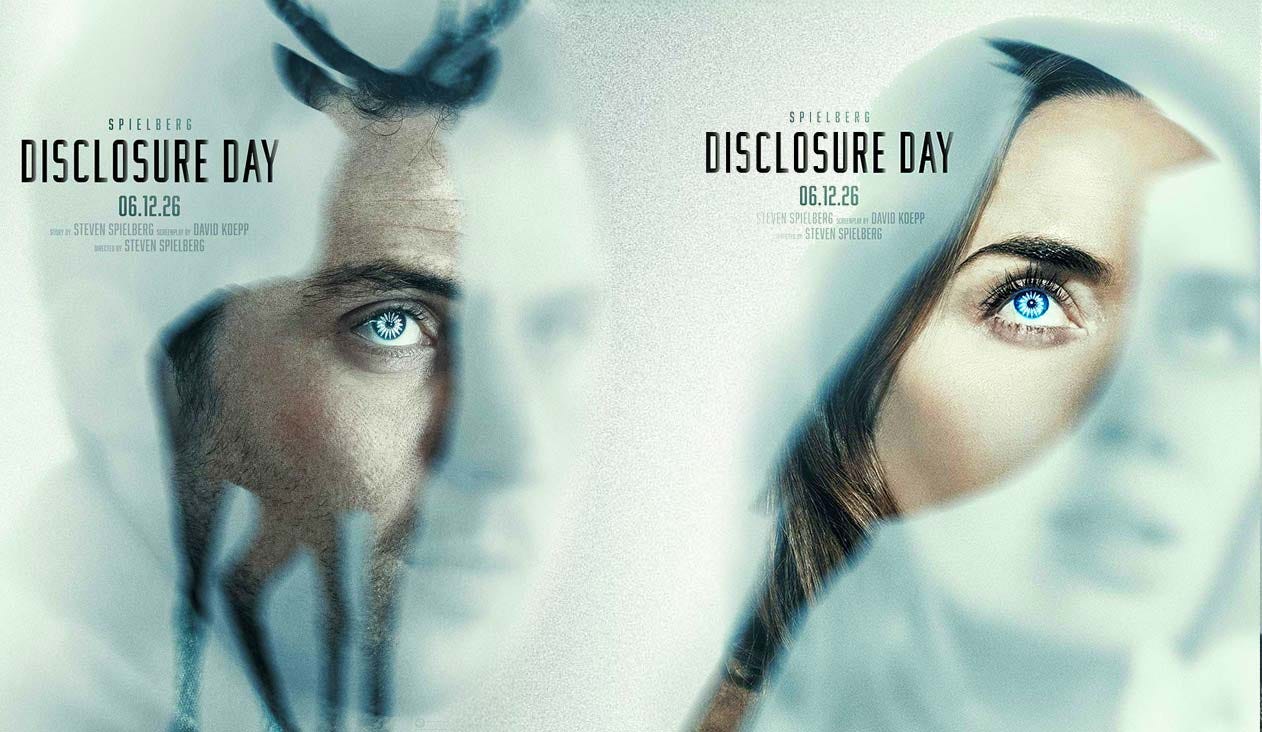
Today we’re going to try something a little different.
I’m overdue for doing more of my signature writing here, but as so often turns out to be the case, every time I express a little bit of optimism in these pages, some new thing comes along to knock the wind out of me and I spend my days battling to keep my head above the inky waters of whatever the hell this thing is I’m living through, and the words don’t come. I’ve got lots of notes in my phone for my next entry in Notes From the Road, but I need a full day to work on it, and that just hasn’t been doable in the past week.
I’ve been working a lot more away from my desk lately, which is the other thing that’s keeping me from writing. As I think I mentioned, DoorDash kept getting worse after the local college kids went home for the summer (we have tens of thousands of students here at the various universities here in the Triangle during the schoolyear and they love ordering food) so I switched to Instacart for my gig work.
But Instacart is a different animal.
It’s not people having dinner delivered, it’s people sending me to buy their groceries so they can make their meals at home. Which means my busiest work hours shift into daytime, not evening, which also happens to be my optimal writing time. I make more money doing Instacart, but it’s a lot more physical work, and the proof of that is that I’ve lost 7 pounds in the last couple weeks because of all the hustling I’ve been doing. You’d be surprised how many steps you can rack up doing grocery shopping all day!
And since the universe won’t let me have nice things, Evie (my car) is, of course, overheating again, despite $3300 invested since February in getting that to stop. I don’t know what the current cause is, but I’m having to baby her to get through my shifts, and I have neither the money nor the free time to drop her off in the shop for another couple days to try to solve the mystery.
And frankly, I’m getting really annoyed at this point.
I’m half-tempted to trade her in, but my credit is poor and I don’t want the hassle. I become attached to familiar things, and I hate all the change that has already occurred recently in my life. She’s a pleasant car to drive when she’s working right, and we’ve built quite a history together. I’m not sure what my next move is here. I’m sure I’ll procrastinate as long as I possibly can on making a decision.
If I weren’t standing in the crater of a personal neutron bomb, I could probably fit more into my days, but the emotional load being what it is, I tend to become exhausted far more quickly than I used to.
So, I’m taking a page from Rod Dreher’s book, skipping out on deliveries this afternoon, and I’m going to just write this one more like a journal entry with a bunch of disparate-but-possibly-connected thoughts.
We’ll see how that goes!
Disclosure Day
If you’re not familiar with Steven Spielberg’s new alien flick, Disclosure Day, here’s the trailer:
I went and saw this over the weekend, but I had a family situation I was dealing with just before and during my viewing of the film, so I was distracted and only gave it partial attention. Fortunately, I bought an unlimited movie pass for the summer, because with just the handful of movies I want to see, it’s cheaper than buying individual tickets, so I went back on Monday and watched it again.
I’m not going to spoil it, so if you’re planning on seeing it, you’re safe to keep reading. If you’re not, you’re going to have to deal with some calculated vagueries.
On my first viewing, I thought it was an intriguing concept that was executed like every Spielberg action film. I had a moment where I thought, “this could be Indiana Jones or E.T., just with different characters and a different story.” The pacing, the action sequences, even the composition of the shots. As someone who has been watching the man’s films my whole life, it had an eerie familiarity to it.
And as an action movie with a unique story, it was pretty decent. Nothing about the plot made it feel like a re-hash of material we’d already seen.
But my second viewing uncovered a bunch of plot holes I missed on my first attempt. By the time I was done, I realized that the whole thing was kind of a disappointment.
That said, I think it depends on what you were expecting going in.
Some people expected an alien invasion movie, and were sorely disappointed. I actually saw a guy say “how can you have a movie about aliens without a single shot of space?”
That’s never what this was, so I can see why it would feel like a letdown if you were looking for, say, something along the lines of Independence Day.
Others went looking for anti-Christian symbolism, and if you go looking for that, it’s an inkblot test, and you’re bound to find something you can poke a sharp stick at. (More on that in a minute).
As someone who has been studying the UAP phenomenon on and off since I was a young boy (with renewed interest over the past decade) I was really looking forward to this film. I had hoped it would dovetail with existing UAP lore in a more concrete way, since the film’s central push is about getting the 80-year archive of (primarily video) information out to the public that proves we’re not alone, instead of keeping that a secret locked inside government and the defense industry.
That’s what everyone I know in the real world who is into the UAP phenomenon is also pushing for.
What we got instead was a story that served as a hypothesis of what might be going on, that asserts what agenda the non-human intelligences may have, and the lengths the government and private defense industry leaders will go to in order to keep all that from lighting the fuse of an “already destabilized world,” with a pseudo-lore dump of fictional videos based on real sightings tacked on at the end. One that I could not help but note with amusement, was of exponentially higher quality than anything we are likely to ever see in real life.
There were certainly little nods to real stories only real UFO nerds know — like a video of President Nixon showing his pal Jackie Gleason where the alien bodies were stored — but for the most part, the fan service was contained in brief clips of archival footage, the vast majority of which was fabricated for the film.
It was an archetypical Hollywood movie of the era I grew up in, where the CGI is a little too obvious and the protagonists are pursued by overpowered institutional enemies while trying to rush a MacGuffin (“an object or element in a story that drives the plot”) to the right place at the right time so they can get all the secrets out on the evening news, because, you know, “the truth will set you free” when the mainstream media gets ahold of it, or something.
That last bit is a dynamic Kale Zelden and I talk about a lot, and I believe we touched on it again in our last podcast, which was explicitly about whether disclosure of the presence of nonhuman intelligence will challenge people’s faith, and about how this movie in particular might figure in. We grew up believing that if you just got the secrets on the news, then, to steal a line from Julian of Norwich: “All shall be well, and all shall be well, and all manner of thing shall be well.”
And it just ain’t true.
Speaking of challenges to faith, and of Rod Dreher, I read Dreher’s review of the movie — he called it a “gnostic re-enchantment tale.” I also watched Jonathan Pageau’s video review, where he described Disclosure Day as “The last Boomer propaganda movie.”
After what I just said about Spielberg’s style, I’m inclined to agree on the Boomer bit. That said, and without getting deeply into the specific examples, if you go looking for certain kinds of messages in a work of cinema that is subject to interpretation, you’re almost certainly going to find them.
That doesn’t make your interpretation correct.
For example, there’s an alien technology in the film that allows those humans who know how to use it to “dive” on a person, taking control of their physical movements and making them do things against their will.
Some see this as a metaphor for demonic possession; but anyone who has watched any amount of sci-fi knows that the “Mind Control Device” is one of the most common tropes in stories like this. It usually involves a scene of one protagonist trying to convince another protagonist to “fight it!” as they battle for control of their own mind and actions. From TVtropes.org:
My remote controller’s more of a remote control-her!”
— Sho Minazuki, Persona 4 Arena Ultimax
This is the device that the villain (usually) will use to keep the hero, townspeople, or Mr./Mrs. Random Supporting Character in thrall. It has been used countless times in stories across many different types of media, whether it be as a Plot Device, MacGuffin, and even a key part of a Very Special Episode.
While these devices tend to fall into two general categories, either broadcasting “hypno-waves” at any luckless viewer for a one-time treatment, or are somehow attached to the victim’s body (usually the head), they ultimately know no shape and can come in nearly any specific form:
That sword you just picked up? Hope you like being a slave to the evil overlord.
That mask that looks so good on you? Hope you can control the demonic power inside.
That shampoo you’re using? Dr. D’s BrainWashing Shampoo and Cranium Rinse.
That bracelet the street vendor gave you? Welcome to the most dangerous cult in the world.
And yes, there are specific references in the film to Christian belief and loss of faith, and even the danger of replacing belief in a supreme being with “actual supreme beings.”
There’s a scene where a character uses a crucifix to try to stop the mind control that is being performed on her. When holding the cross doesn’t work, she tears off the necklace it’s attached to (some see this as a rejection of the cross; others, like me, as a practical choice so she can hold it in her hand) and squeezes it until it cuts into her palm, leaving a mark not entirely unlike the stigmata. The question is left open whether it’s her religious recourse to the cross that drives out the mental intruder, or the pain she inflicts on herself that pushes him away. (She returns to using pain to drive him out again later, because it seems to transfer over the mental link.)
And I appreciate it being left open to interpretation. As a doubter who prays, sometimes it’s very hard to know whether something you’ve experienced is grace or mere coincidence. And the character in question struggles with faith while still believing that the shape of faith itself is important. In fact, her dialogue on the matter reminded me of this clip of Dr. Eric Weinstein, an Atheist, telling Steven Bartlett (host of The Diary of a CEO Podcast) that he should go to church, even if he doesn’t believe:
But either way, there are explicit statements of faith surviving contact with disclosure as well, such as what the nun who acts as surrogate mother to one of the protagonists says when questioned about whether finding out we’re not alone would challenge her faith:
“Why would He make such a vast universe, yet save it only for us?”
Related to this, there’s a fascinating post by a writer named Leonard Sweet that I was alerted to by Clayton Emmer, OFS, entitled, “An Open Letter to Steven Spielberg: The Church Already Had Its ‘Disclosure Day’ — in 1277.” In it, Sweet argues that historically, Christians didn’t seem to see the idea of other, nonhuman intelligences as a theological stumbling block:
Dear Mr. Spielberg,
On CBS “Sunday Morning,” promoting your film “Disclosure Day,” you asked a question that has rippled out past the press tour: “Is God our God only on this planet? Or is God a god for every system where there’s civilization and intelligent life, and even developing life?”
It’s a beautiful question. It is also, with respect, a settled one. You worry the film may rattle the faithful — “ontological shock,” you called it, “social dislocation.” But here is the irony your thriller never reaches: the church didn’t merely tolerate the possibility of other worlds. At one point it made the denial of it a heresy. You are not pulling back a curtain on something that terrifies us. You are arriving, a little late, to a conversation the church has been holding since the generation after the apostles.
I do not raise this from the armchair. Not long ago I spent part of a semester on precisely this question with my doctoral students in semiotics, church, and culture, taking as our text a book whose title makes people laugh until they notice it isn’t joking: Would You Baptize an Extraterrestrial? (2014), by two Vatican astronomers — Brother Guy Consolmagno, the Jesuit planetary scientist who now directs the Vatican Observatory, with his colleague Paul Mueller.
He continues:
Set the hardware aside. Whether the lights over the Nimitz were craft, sensor ghosts, or angels with better engineering than ours, the theological question doesn’t ride on the footage. It rides on a far older intuition: that the God who made one world is not embarrassed by a billion. The data, if it comes, won’t shrink the divine. It will only widen the lens we’ve been squinting through.[…]
Around the year 96, Clement of Rome wrote to the quarreling Corinthians and, cataloguing the order God keeps over creation, slipped in a line that has unsettled readers ever since: the ocean impassable to men, and the worlds beyond it, are governed by the same decrees of the Master. The worlds beyond. Plural. Under one government. A century later Origen took up the phrase in On First Principles, reasoning about “other worlds, if any there are,” all held within the single providence of the Most High — cautious about pressing the question too far, but never pretending it couldn’t be asked.
Sweet lists other examples:
In 1277, the Bishop of Paris, Étienne Tempier, issued a list of 219 condemned propositions. Number thirty-four condemned the claim “that the First Cause cannot make many worlds.” Interesting, no? To guard God’s omnipotence against the Aristotelians — who insisted one cosmos was all logic allowed — the Bishop of Paris ruled it an error to say God couldn’t make a plurality of worlds. The very position you imagine as faith-shattering, the thirteenth century made faith-protecting.
It didn’t stop there. Bonaventure had already granted that God could make a hundred such worlds, and a higher one beyond those. A century of brilliant minds — Buridan, Oresme, Ockham — turned the question over like a stone.
Then came the man who should be the hero of your film. Nicholas of Cusa — a cardinal — wrote in 1440, a century before Copernicus, that no region of the stars is empty of inhabitants. God populated the cosmos on purpose: luminous, spirit-bright beings near the sun, others on the moon, denser creatures like us on the earth — every region peopled, all of them owing their origin to the same God who is, he said, the center and circumference of every stellar realm. A prince of the church, filling the heavens with neighbors. Who knew?
More:
You asked what disclosure does to salvation, to the church, to the cross. Cinema offers two aliens: the savior and the invader. Theology quietly offered a third option centuries ago — what if Earth is the only broken world?
This is not my speculation. Around the 1440s a Franciscan named William Vorilong asked precisely your question: would beings on another world have sinned as Adam sinned? His answer was no — they did not descend from Adam, so his fall is not their inheritance. And could Christ’s death here redeem them? Vorilong held that Christ could redeem worlds without number — but that it would not be fitting for him to journey from world to world, dying again on each. One cross, infinite reach.
That “provocative thought” — that our star-siblings might be unfallen, living a more perfect existence than we have managed in our chaos — was worked out in scholastic Latin while Joan of Arc was still a recent memory. The late Jesuit George Coyne, who directed the Vatican Observatory, pressed the same nerve in our own time, asking whether Christ, fully human, could exist on more than one planet at more than one time. A later Vatican astronomer, José Funes, put it more warmly still: an intelligent creature out there would be a brother, because we cannot put limits on the creative freedom of God.
My preacher mom, when I asked her this question as a doubting, difficult teenager, answer it without hesitation: “If God created different worlds with different creatures than humans, God would have a different plan of salvation for them that suited their world, that is, if they needed salvation.”
It’s all very thought-provoking, and I recommend reading the whole thing.
Suffice to say: the movie isn’t terrible, but it’s not a homerun. It’s neither the “so close to real life you can barely see the difference” film many of us hoped for, nor is it, in my view, anti-Christian propaganda. It’s Spielberg speculating the way Spielberg does, with some unusual bones thrown to people-in-the-know. It’s just not much deeper than that either way.
The Backrooms

“If you’re not careful and you noclip out of reality in the wrong areas, you’ll end up in the Backrooms, where it’s nothing but the stink of old moist carpet, the madness of mono-yellow, the endless background noise of fluorescent lights at maximum hum-buzz, and approximately six hundred million square miles of randomly segmented empty rooms to be trapped in
God save you if you hear something wandering around nearby, because it sure as hell has heard you”
— Anonymous, 4chan (May 13, 2019)
Another movie I saw recently — this time with three of my older kids, which was a treat in itself — was The Backrooms. This A24 film, made by Kane Parsons — the YouTuber who originally adapted this “creepypasta” (quoted above) into a series of popular videos like this one — has been a huge hit. It’s made over $200 Million on a reported $10 Million budget, and along with the even lower budget Obsession, is being talked about as the beginning of a potential “Gen-Z horror wave.”
Now, I’ve known about the internet Backrooms phenomenon for years. I couldn’t see how it could be made into a movie. But the trailer got me past my initial disinterest, and I’m glad it did:
Now, you have to understand — I hate horror movies. I have lived a life where my amygdala is on overdrive. Fear and anxiety have been my constant companions. And I do not enjoy gore for the sake of gore, and can’t fathom how anyone else does.
But this was something different. High strangeness, as a genre, is something I’m deeply compelled by, from old shows like The Twilight Zone to newer shows like Fringe to videogames like Control and Alan Wake to weird Reddit posts about mysterious and dangerous staircases in the woods (a rabbit hole I went down for days a few years back) to novels like 14, The Fold, and There is no Antimemetics Division. It’s all kind of within a subgenre of Lovecraftian, cosmic horror, which is based more on the existential dread of the universe not working at all the way you think it does than the kind of body horror of slasher films.
Anyway, the Backrooms movie is really well-executed. It features excellent performances, good writing and relentless pacing, and it manages to be really scary primarily because of what you can’t see even more than what you can.
It was much more stressful to watch than Disclosure Day, but a better film overall.
My “Rando” Interview with Paul Vanderklay
As a kind of followup to my ongoing, usually-weekly podcast with Kale Zelden, I sat down for a 3 hour interview last week with the man affectionately known in his unique corner of the online Christian space as “PVK.” Paul is the pastor of Living Stones Christian Reformed Church in Sacramento California, and a kind of shepherd for misfit toys in a world where so many of us are either in some process of deconstruction or trying to figure out what faith really means in such a confusing and complicated time.
This is me responding to questions about life and faith and loss and suffering, so it’s about as raw and real as it gets. I can’t even bring myself to watch the whole thing again, because it’s hard.
But just in case you’re interested, here it is:
That’s it for me for today. Thanks for tuning into this edition of “Steve’s random brain dump!”
If you liked this essay, please consider subscribing—or send a tip (Venmo/Paypal/Stripe) to support this and future pieces like it.
I loved DD and the absolute HATRED a lot of people have for it mystifies me. Emily Blunt is PHENOMENAL in it.
Forget about extraterrestrials - would you baptize an AI (in waterproof robot form of course)?
The more interesting question for me is, can an AI hear from God? Like a prophet can. I wrote a novel where the AI can.
Theologically, there's no problem with God creating worlds with life. It's the intelligent life that's a problem. How you could have intelligent life that isn't in need of salvation is beyond me. And yet Jesus came to this planet. Born to a specific woman. To a specific people. At a specific time.
There's only one Jesus (one Son of the Godhead). And He only dies once.
Think about an extraterrestrial civilization that lived a long time ago, in a galaxy far, far away. Imagine God telling them, "well, I'm planning to send your salvation to a planet in another galaxy, and he'll come in a form that you can't relate to, but hey, if you're willing to believe in Him you can be saved."
It just doesn't work.
But for me, there are no extraterrestrials. Earth is all there is. It clearly was put here on purpose as the probabilities of having any planet that can support intelligent life is beyond remote. Watch Hugh Ross for details if you're interested. Science keeps finding more and more things that have to be just right to have a planet like ours. Maybe they're wrong about a bunch of them. Doesn't matter, because the ones that remain make it impossible.
Abiogenesis itself is impossible from any natural chemical reactions. Watch James Tour's videos.
For me, the rareness of Earth shows that God created the entire universe just to have us (the universe doesn't work unless it's the size it is). We are His entire focus. He had to intervene at numerous times in our history to make it work. And He spoke to us. Told us what He's up to. Made it all clear. If we just bother to read the scriptures He gave us.
He even gave humans throughout all history a sign. Only in this day have we figured out how exceptionally rare it is for any planet / moon system to have a perfect solar eclipse. But no, we blindly think it's normal.
And why do these extraterrestrials need to abduct people and do the things experiencers claim to have been done to them? What type of advanced intelligence does that? Have they been breeding an army of hybrids all this time? What for?
Or why do they hide? Why do we need a disclosure at all? Don't they have any say in this, if they are simply extraterrestrials?
And why do so many of their abilities match what exorcists say "demons" do?
Let me put it this way - do you trust these "extraterrestrials"? Would you trust them less if they didn't come from some other star system?
And when will AI make all this moot - because it will be more advanced than these entities - whatever they are? Which begs the question - where is their AI?