


“I’ve got a message for you,” the old woman drawls. She appears to be in her late 70s, and she’s wearing an oversized purple t-shirt and a floor-length floral-print skirt. She looks at me through rimless glasses, her shoulder-length steel gray hair tied up in a pony tail. A second ago, we almost ran into each other as we both rounded the corner with our fully-laden carts from our respective frozen food aisles at the Food Lion.
Oddly, she looks a little like photos I’ve seen of my great grandmother.
“What’s that?” I ask, genuinely curious what message she, a perfect stranger, could have for me.
“Jesus is coming.”
She says it so matter-of-factly, it’s like she’s delivering a postcard. I think about the mid-aisle near collision and my mouth fires off a response before my brain is done considering it.
“Thank you ma’am,” I say, “but I’m glad I didn’t meet him just now.”
“Me too,” she laughs, her voice fading in a doppler effect, as she walks the other way without looking back.
I was glad she understood it was a context joke, and not just me making fun of her random supermarket apocalypticism.
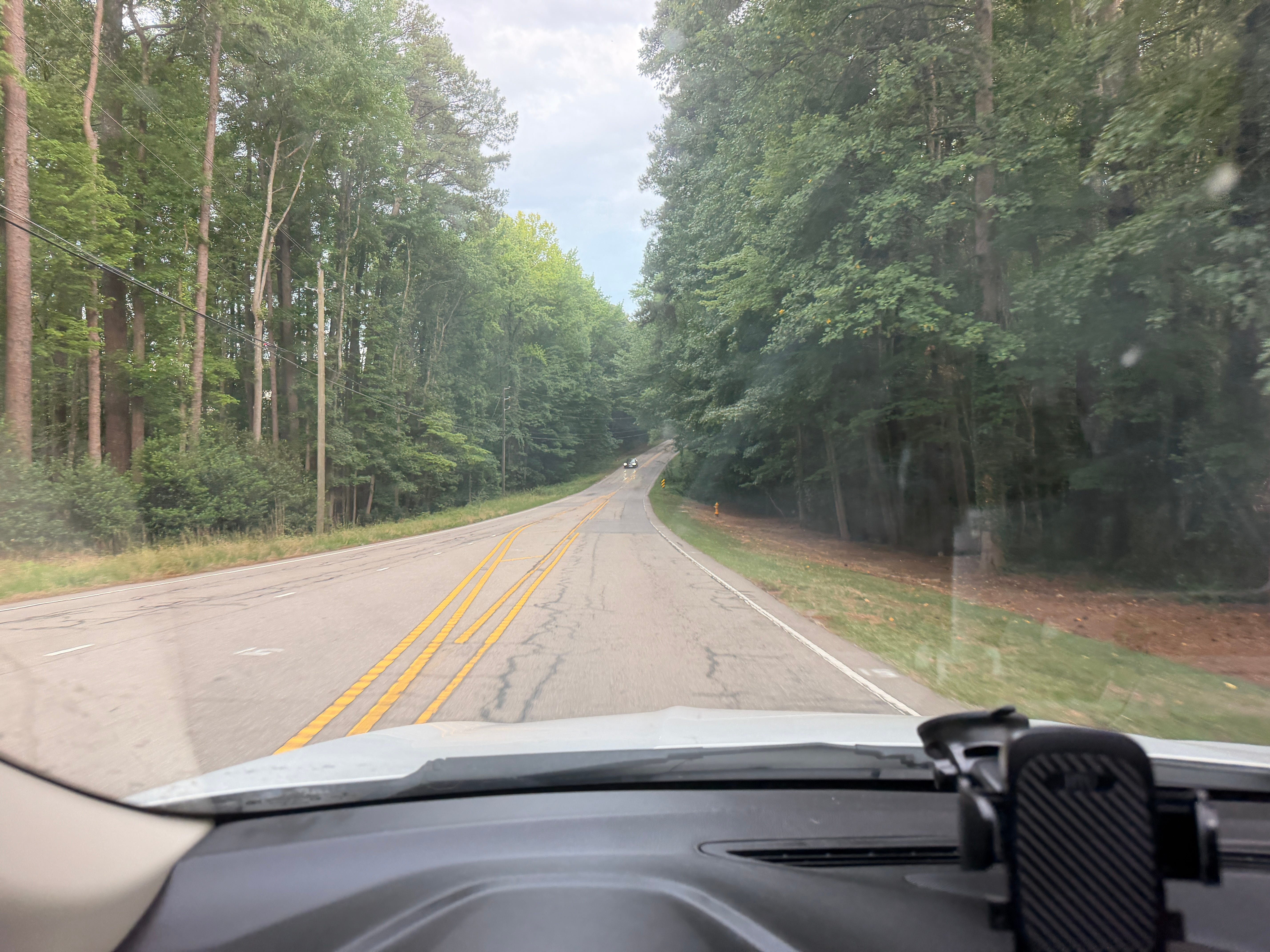
I tend to take the long drive orders these days. The ones that go 20 or 30 miles. Sometimes even more. If the pay is right, they’re basically subsidizing my need to drive, and see the beautiful countryside, and think. North Carolina is a gorgeous state. One of the prettiest I’ve seen. Increasingly, I find that although the work I care about most is done at my desk, I hate being cooped up all the time. I want to be out seeing the world, listening to books, thinking my life through, not staring at a glowing screen inside an apartment that feels more like a cave.
I drop off a prescription to a plump, pleasant man at a house in the country. I’m required to check his ID, and as I look at his birthdate, I note with chagrin that he seems too old to be not-quite-my-father’s age. He’s wearing a tucked-in gray t-shirt and khakis pulled up too high, belted around the widest part of his spherical belly. It reminds me of children’s book illustrations of Humpty Dumpty. But I genuinely like the man, and we get to talking on his front stoop. He’s warm and intelligent and kind. As we talk, I make some comment about how I never expected to be delivering groceries at 48, which leads to us stumbling into a discussion of lost paths and failed marriages. He tells me a little about his first wife, and how they split after over 20 years. He gave her the house and a car, but it wasn’t enough for her. She wanted to destroy him, he says with a laugh.
“But I don’t wish her any harm,” he said. “I loved her for a long time. I wanted to make sure she was taken care of.”
He says that his second wife is his soulmate, and that he treats her children and grandchildren as though they are his own. Just then, she yells at him from the living room to close the front door, because it’s 90-some degrees out and he’s letting all the air conditioning out. From where I’m standing on the outside, she doesn’t come across as anyone’s soulmate, but I can tell by the way he speaks about her, and the way he loves to spoil the grandchildren that aren’t even his own blood, that he sees something very different. His words are shaped by a glowing smile, and I know he means every word of it.
As we speak, I notice my first dragonfly of the season land on the white-painted brick near his front door. A little punctuation mark for a conversation that does little to assuage my sorrow, but registers as a real human interaction at a time when I have too few of those.
As the weeks go on, I see precious few of my little flying harbingers of metamorphosis, but when I do, it always seems to come at a moment where I’m knee deep in grief, inasmuch as many of my car rides serve as protracted sessions of personal excavation. And since their oddly specific cameos keep happening at a time of year when they should be plentiful but are almost nowhere to be seen, each visit feels like a pointed reminder that I need to stay on this path, even though it’s brutal and I don’t know where it’s going. On one particular day, when I could barely keep my head on straight enough to work, I wound up stuck behind a woman in Costco, only to notice that she had a big dragonfly tattooed on the back of her left arm. It was the only visible ink she had.
I had to laugh.
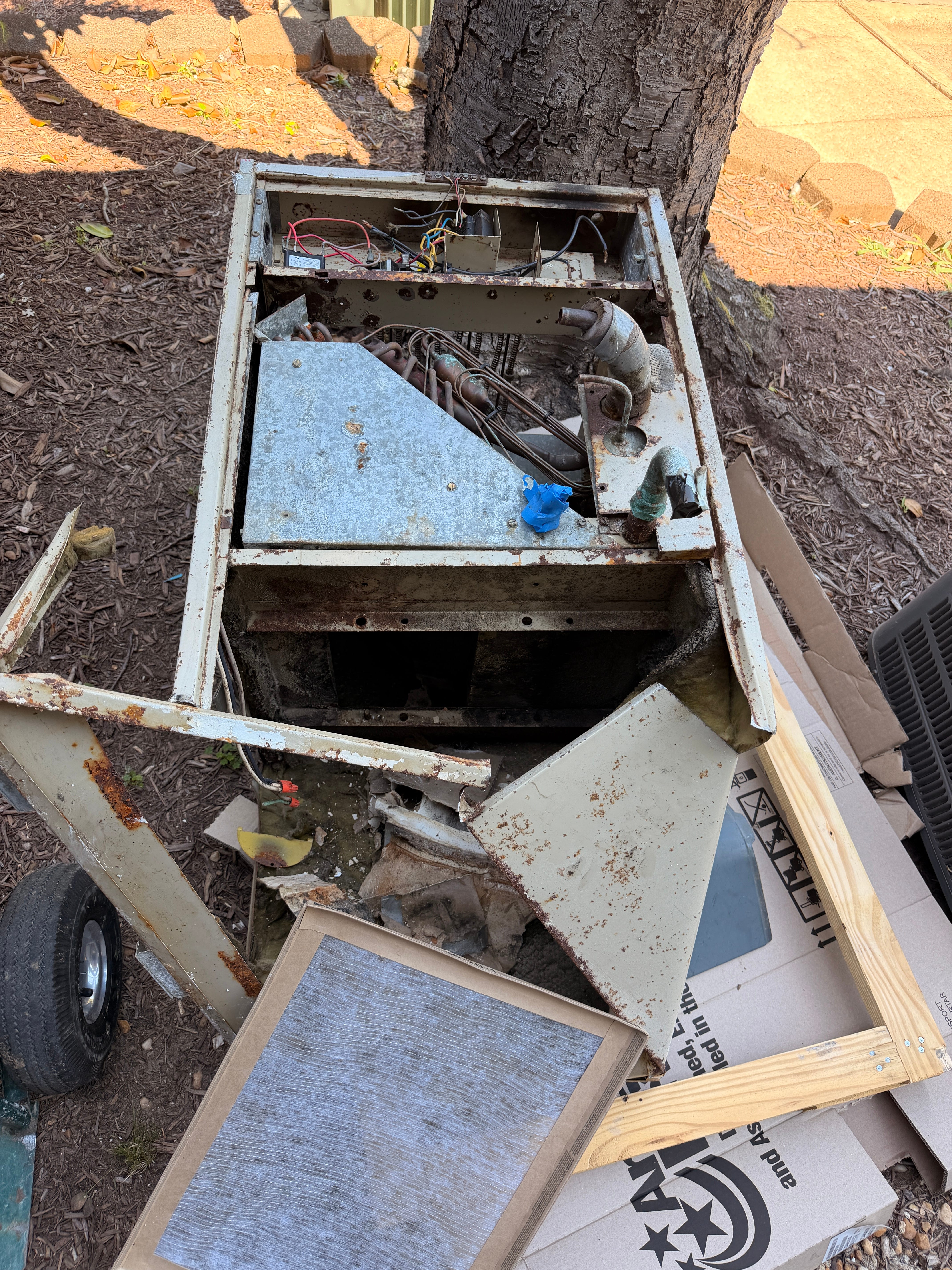
As for the real dragonflies, I don’t know if their scarcity this year has to do with the heat this summer, or if it’s something else, but Raleigh’s been a furnace since the beginning of June. Fortunately, I made friends with a man named Seven, the maintenance supervisor for my complex, and he made sure my old rusted-out HVAC system got replaced in May. My electric bills immediately dropped, and instead of sounding like a jet engine kicking on, it now registers as barely a whisper.
There’s a man in the Wegmans’ ice cream aisle who is dressed like a woman, and he has a young boy in the child seat of his cart. I feel an immediate irritation. I don’t know how to react. It’s bad enough when they’re caught in their own delusion, but bringing a four year old into it feels like a kind of cruelty that shouldn’t be tolerated. My thoughts race. Should I say something? Should I ignore it? I’m working. What good will it do? What power do I have to change the madness that has spread through our world? I force myself to stay focused on my task, feeling like a coward, but knowing there’s no version of an interaction I could have that wouldn’t make things worse.
A gaunt woman who looks and sounds like she’s smoked herself very nearly into mummification is haranguing her exhausted husband in the dairy aisle. “You got beans and vegetables but no plan?!” she says, loudly enough for everyone to hear. “You’ve got no strategy!” He tries to avoid looking at her. I get the feeling that he wishes he could be anywhere else but near her acid tongue.
A black man in a baseball cap who looks to be in his 30s is standing near the frozen vegetables with a huge bouquet of roses in his hand.
“What did you do?” I ask through a smile. His laugh comes instantly, deep and rueful, but he doesn’t say a word. He knows I know. Men don’t need to discuss this particular version of hell. We all know exactly what it feels like. Words are superfluous.
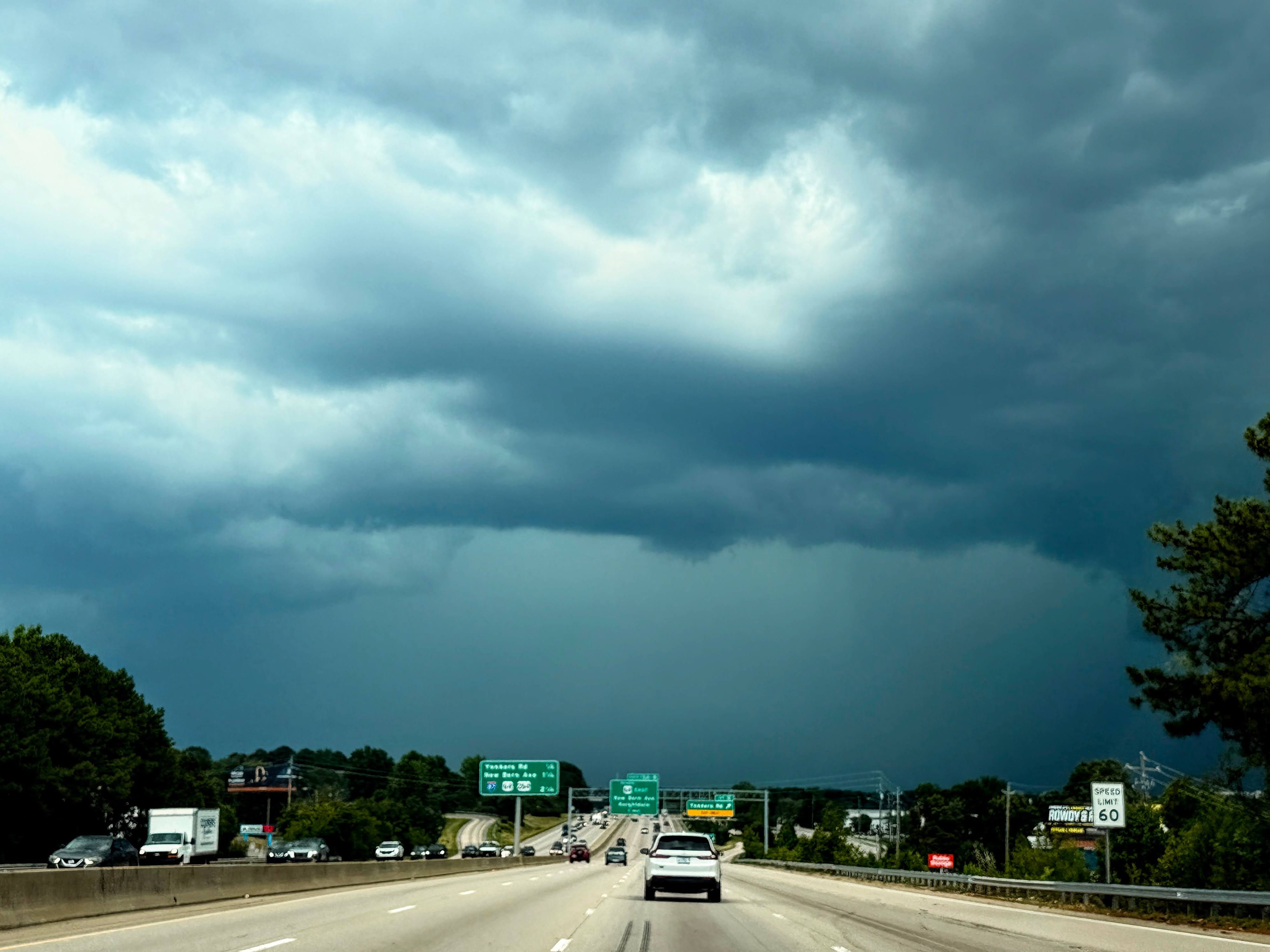
On an overcast Sunday, I drop off an order at the door of a lovely two-story home in midtown, but since there’s wine in the order, I have to check ID. I ring the doorbell, but it takes a while before anyone answers. The woman who finally comes to the door is about my age, blonde, with a pretty face, wearing a black cardigan and a cream colored dress with orange flowers on it. She has the kind of sweet Southern drawl you only hear in the Carolinas.
“My daughter is worried, because there’s a man at the door, that you’re going to sweep me off my feet and take me,” she explains with a laugh.
I smile back.
“How old is she?” I ask.
“Fourteen,” the woman says, handing me her license. I scan it with my phone, then swipe absently through the verification steps.
“I’ve got eight kids,” I say. “I get it.” The woman hears that and begins a rapid, running commentary on her surprise about my family size. I notice she’s not wearing a wedding ring.
“Are you married?” the daughter asks from deep inside the house, her head poking out horizontally from a side room into the hallway, but only her head.
“Technically,” I say, but nobody hears me. The woman is too busy going on about how a man with eight kids isn’t going to be interested in her. I don’t bother telling her the rest of the story. It really doesn’t matter. At worst, it’s a flattering interaction with a twinge of awkwardness. I wish her well and continue with my deliveries.
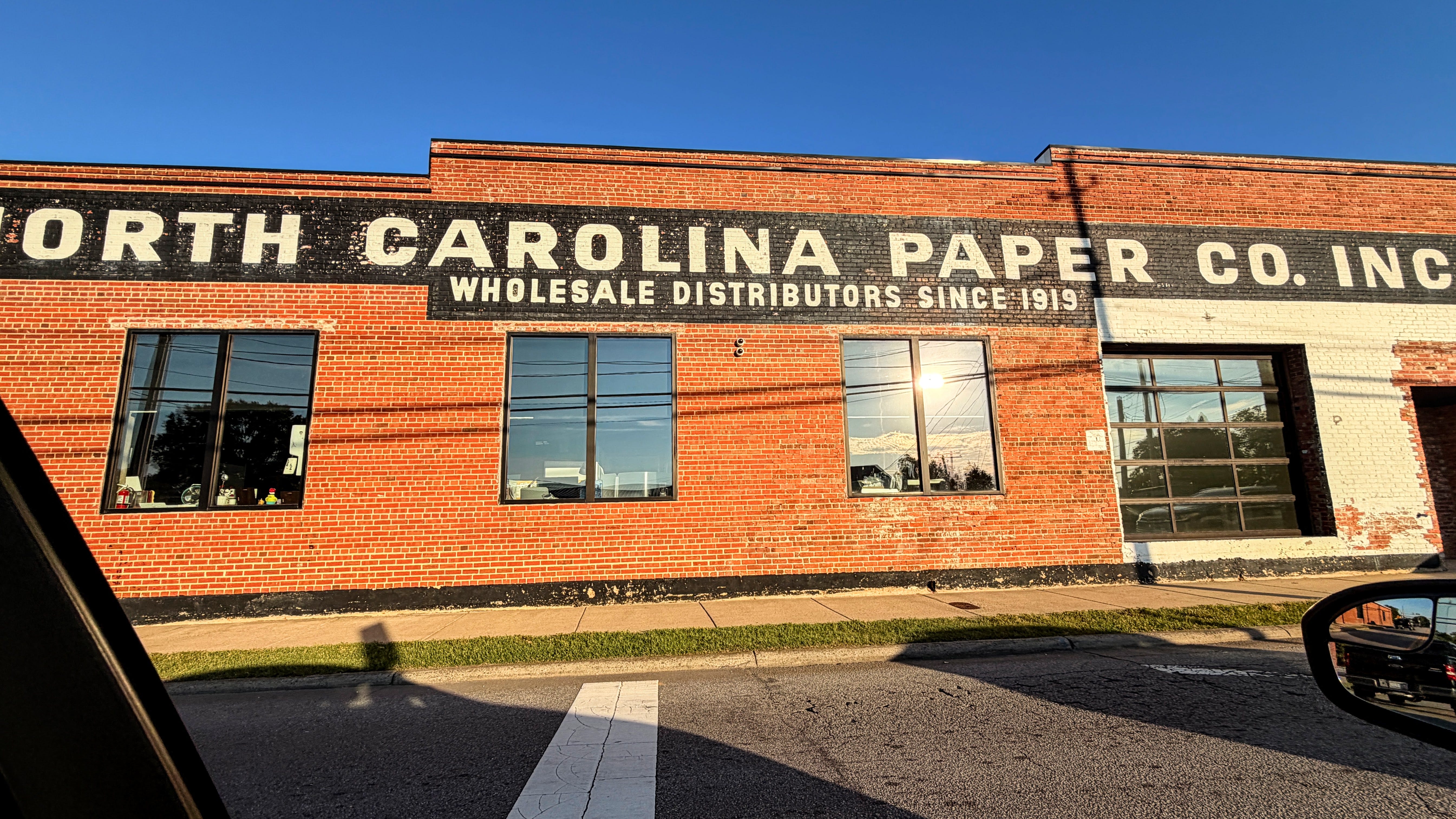
I pick up an order that goes to an apartment complex I’ve never been to. The route is… weird. Pavement turns to gravel and dirt. A skeletal black woman, clearly a tweaker, is flailing around on the road shoulder in a movement that can only be described as somewhere between a dance and a seizure. She’s wearing a tube top and short shorts. She seems to have no idea where she is. I turn on a side road just before I reach her, but the directions are wrong, and I have to back up and go past her down the gravel road after all. Another car is parked in the middle of the road there, doors open, the occupants seeming not to care whatsoever about blocking the path. I go around with just enough room to spare, and find myself in a brand new apartment complex that has no paved roads going into or out of it. Hundreds of units. I’m confused about the lack of infrastructure, so I Google it, and sure enough, it’s some kind of subsidized housing. The parking lot is paved, but I guess the residents weren’t deemed worthy of actual asphalt roads in and out. My delivery goes to the third floor, and a number of the residents are sitting outside their apartment doors as I haul the groceries up the steps. I am the only observable white person in the entire complex. A group of men, sitting outside an apartment on the second floor, having a conversation, watch me going up the steps.
“You play football, big man?” one hollers after me.
“I did,” I say, dropping my first load and making my way back down for the rest.
“Catch this Hail Mary!” he says, and laughs, as I get to my car and open the door.
“I didn’t play receiver,” I huff, making my second trip up the stairs.
“Whatchu play?” he asks.
“Defensive tackle.” I say.
“I TOLD YOU!” he shouts to his friends.
“I tried to play running back,” he says to me, as I approach the group, my order now completed. “But they told me I was too short.”
“You’re never too short to play RB,” I said. “Just makes you harder to catch.”
“That’s right!” he exclaims, and they wish me a blessed day. It’s the kind of interaction that starts out with you thinking there might be trouble, and winds up just being funny.
On my way back, I notice that the tweaker has moved into the tree line, about 50 yards back from the road shoulder. There are others there. They all have their own kinds of rhythmic, drug-induced motion. It’s sad as hell, but there’s nothing I can do, so I shove the observation aside and keep going.
Near the Planet Fitness on Western Blvd., I see a ginger-headed man with a big bushy beard and afro, waiting to cross the street. He’s wearing a shirt that says “Bada Bing!” and is at least two sizes too small.
On the radio, the Oasis song Wonderwall is playing, and every time I hear it, I’m a senior in high school again, my girlfriend telling me that the song always makes her think about me. No other girl I ever dated told me that there was a song that made her think of me. Maybe that’s why it stuck.
And all the roads we have to walk are winding
And all the lights that lead us there are blinding
There are many things that I would like to say to you
But I don’t know how
Because maybe
You’re gonna be the one that saves me
And after all
You’re my wonderwall
I find myself doing little things out of an archaic personal sense of integrity, even though they add up to not much at all. I bring an extra pack of Diet Coke back to Publix downtown after I realized I had one more than I’d paid for. I drive a couple of zucchinis 13 miles out of my way to a third-floor apartment where I accidentally failed to drop them off, even though gas is nearly $4 a gallon. I help a woman with a wrist injury load her large case of water into her car in a busy Costco parking lot on a day where it’s over 100 degrees and I just want to get inside. I offer to help short people reach things off the top shelf in multiple stores, because after all, “All this tall has to be useful for something.”
I used to tell people that my wife was 5’2” and I was 6’4”, and she only married me so I could help her get things down off the high shelves, but that joke isn’t funny anymore, and a story that used to be cute is now just sad.
I don’t know why, exactly, I do these things, other than I guess it’s who I am. I wonder if it means anything good about me, or if that’s just what I like to tell myself when I reach for low-hanging fruit instead of the harder kinds of virtue.
On what might be the hottest day of the year, I walk into the Costco produce cooler to see a bearded man in a black t-shirt sitting between the blueberries and the cherries, steam pouring off his back, just trying to cool off. He’d been working outside.
“When your body starts smoking,” I say to him, “that’s when you know you’re working too hard.”
“I’ve been outside for three hours,” he says, no humor left in him to join in the joke. “I can’t do this anymore.”
When I’m lucky enough to make an evening run in the more rural parts of town, I notice that the fireflies are back in numbers this year. They came out in early May, even though they usually don’t show up until June.
Where I grew up in Upstate New York, we were surrounded by thousands of acres of state-owned forest. I’d sit on my parents’ back porch in the summertime at night and just watch the thousand little yellow-green lights blinking on and off, drifting through the darkness. It was the closest thing I think I’ve ever experienced to magic.
When Jamie first moved out there after I left Arizona to go home, back when we were dating, she’d sometimes sit out there with me. They don’t have fireflies in the desert. She’d never seen anything like it. It was as novel to her as deep, lush forests, autumn leaves, and blankets of new-fallen snow.
On one particularly difficult evening, I wiped the tears out of my eyes and blew my nose and went into Harris Teeter with my game face on. It was a pretty big order, but the poor customer had been abandoned by the previous shopper and I was determined to give him a hassle-free experience.
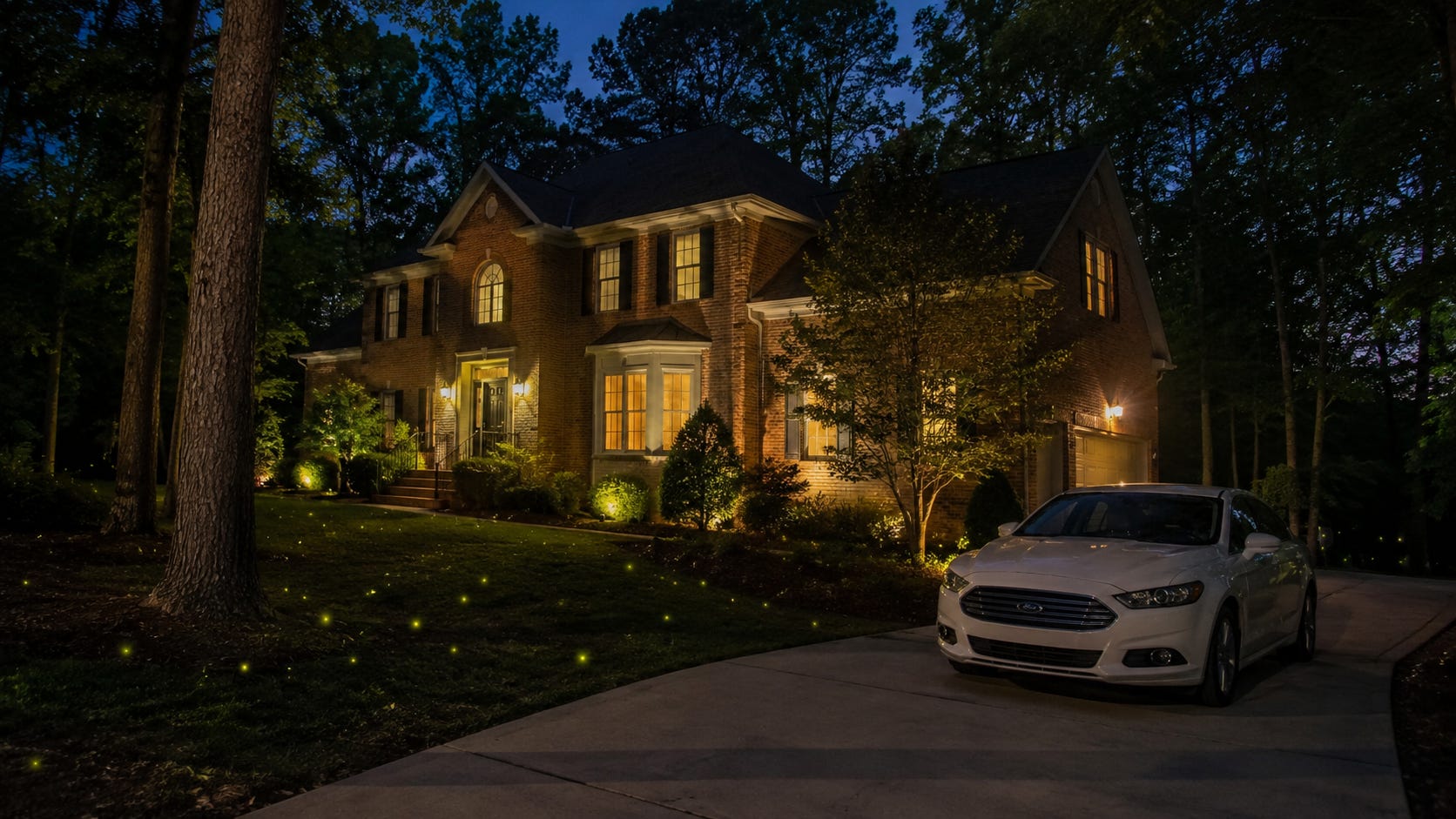
When I finally arrived at his big, brick house in the woods after twilight, the fireflies were out. He had ordered a case of beer, so I had to check his ID, and I saw that his birth year was 1983. Six years younger than me, and from where I was standing, it looked to me like he had it all. A beautiful home on beautiful land, groceries delivered to his door, and an adorable little blonde-haired, blue eyed girl who came running out in her underwear to help bring in the groceries.
“Sorry,” he said, “I know it probably seems a little weird, her coming out half naked…”
She was busily unloading bags from my trunk, taking as many as her little arms could carry, talking enthusiastically the whole time.
“I’ve got eight kids,” I said with a smile I hoped looked genuine, turning his license to catch the waning light so I could scan the barcode on the back. “You don’t have to explain anything to me.”
“Wow! Eight kids!” Standard response. Everyone is always floored. I never bother to tell them I don’t get to live with any of them anymore. He was a nice guy, and it was a positive interaction. I wasn’t going to ruin that. If there was a sour note in it, it belonged to me alone.
I turned to back to his daughter.
“Are you FIVE?” I asked, pumping extra enthusiasm into my voice. She looked at me like I was a wizard.
“HOW DID YOU KNOW THAT?” she asked.
“I just know things.” I said.
“I bet you already know my name,” she said.
“I actually don’t!” I admitted.
“It’s Scout!” she said.
“Hey!” I said. “That’s an S name. I also have an S name. My name is Steve.”
“I HAVE A FRIEND WHOSE NAME IS STEVE,” she exclaimed, “AND HE’S OLD TOO!”
“We’re twins!” I exclaimed.
I finished the order and started to get into my car.
“WAIT!” she yelled.
“What is it?” I asked, one foot in, and one foot out.
“HUG!” she proclaimed. She said it exactly the way my daughter Mia does.
I got back out as she came running, and she gave me the biggest embrace a little girl could give.
“She’s a hugger,” her dad laughed.
“Thank you!” I said. “I needed that!”
It was, at that particular moment, the first hug I’d had in weeks. The first physical human contact of any kind. And it was so sweet and so innocent and so surprising I experienced it as pure love. The kind only a child can give. A child a large bearded stranger somehow made feel safe enough to offer such a gift.
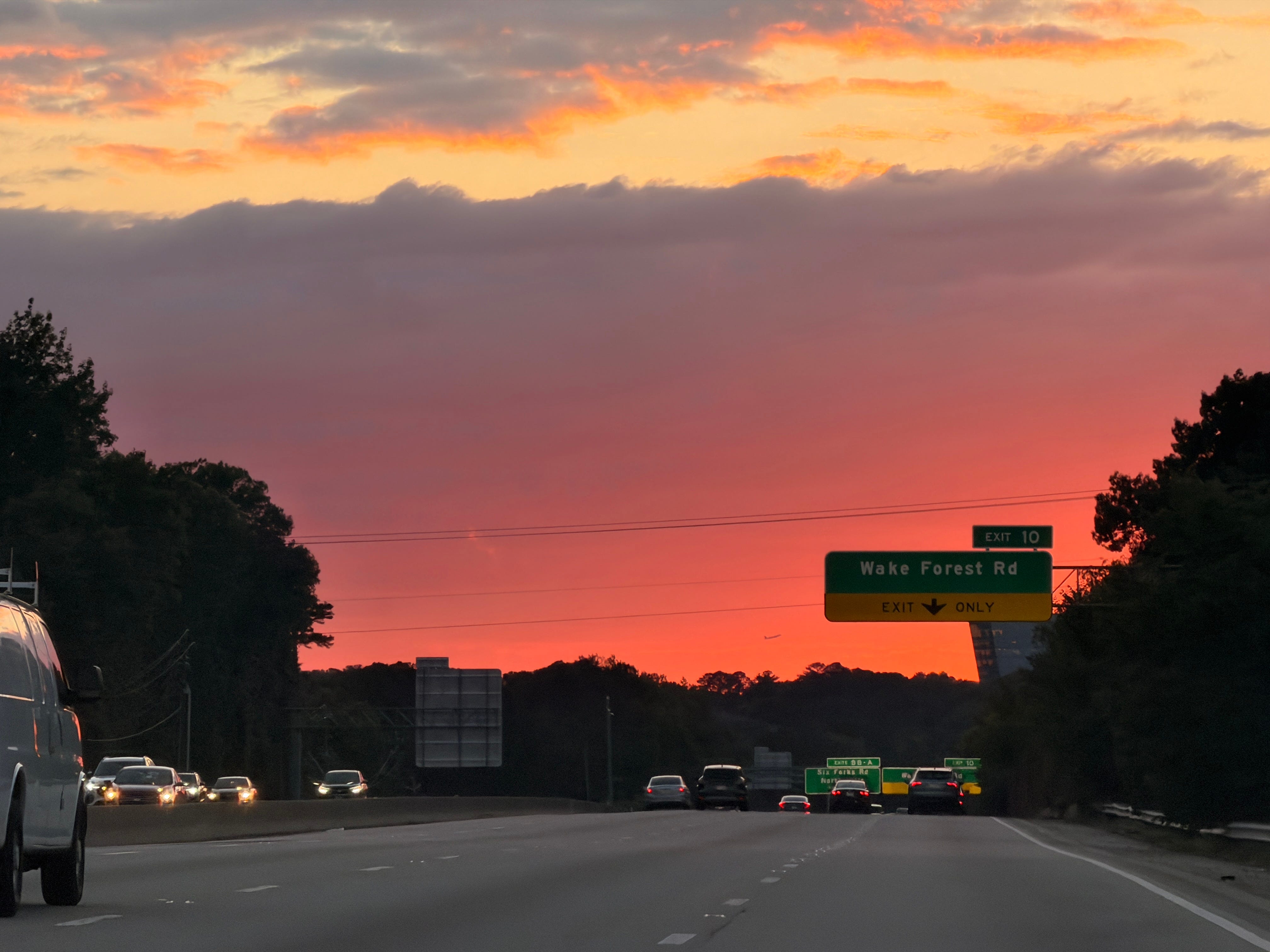
I said goodnight to them, and got back in my car. As I made my way down the driveway, the fireflies twinkling around me, I punched in my home address into the GPS.
And then I drove off into the twilight, trying to see through eyes filled with tears.
If you liked this essay, please consider subscribing—or send a tip (Venmo/Paypal/Stripe) to support this and future pieces like it.
Steve, in the midst of all your grief you’ve probably made each of those people’s days at least a little bit better, maybe even restoring their faith in the fundamental goodness of humanity. That’s not nothing.
This was beautiful, Steve! One of your best.