


This is a free post made possible by paid subscribers.
Writing is my profession and calling. If you find value in my work, please consider becoming a subscriber to support it.
Already subscribed but want to lend additional patronage? Prefer not to subscribe, but want to offer one-time support? You can leave a tip to keep this project going by clicking the link of your choice: (Venmo/Paypal/Stripe)
Thank you for reading, and for your support!
If you’re like I was until recently, you might not really understand how the Iran we’re dealing with came to be.
Maybe you’ve seen images or video clips of a secular, Western-style Iran back in the 50s and 60s, and you wonder, “How did it become a place where women and girls are sent to prison if their hair is showing and they’re seen by the morality police?”
Well, I’ve been doing some homework, and I’m going to try to explain it:
For Iran to get to where it is today, there’s no better way to say it: there was a lot of f*ckery involved — from the Americans, the former Shah, and the Khomeini crowd.
But the Americans and the Brits bear a lot of the responsibility for the mess we’re now cleaning up. I have a tendency to think of Operation Epic Fury as more than just a move to stop an apocalyptic, psycopathic death cult from obtaining a nuclear weapon. It’s also the righting of a very grievous wrong we are in large part responsible for half a century ago.
See, in the 50s and 60s, the CIA was going around the world, covertly meddling in the governments of other countries. Guatemala, the Congo, the Dominican Republic, South Vietnam, Brazil, Indonesia — and perhaps most significantly, Iran.
In the 1950s, Iran was a constitutional monarchy. They had a king (or “Shah” as they say in Farsi) named Mohammad Reza Pahlavi, as well as a democratically-elected parliament and a democratically-elected prime minister. In ‘51, a guy named Mohammad Mossaddegh was elected to the PM position. He was popular, he was nationalist, and he believed in Iran-first policies: they should control their own resources and destiny.
But Iran had lots of oil, and the Brits controlled most of it through the Anglo-Iranian Oil Company, which would later become British Petroleum, or just “BP.”
Mossaddegh led a parliamentary vote to nationalize the oil industry so the Iranian people could profit from their own oil instead of it fattening the wallets of the Brits. There was huge Iranian support for this, but back then, the UK still had some backbone, and they were furious.
The CIA was in its heyday of doing basically whatever it wanted, wherever it wanted to, and the thinking back then was very Cold War-coded. If Iran could take back its oil from the Brits — a major ally — would the other countries in the Middle East start doing the same? And why was Mossaddegh so friendly with the Iranian communist party? What if he could be brought into the Soviet Union’s sphere of influence?
President Truman would not authorize an Iranian coup. But when Eisenhower took office, persuaded by the fear that Iran could join the USSR, he gave the greenlight.
So in 1953, the CIA and MI6 started a clandestine effort -- called “Operation Ajax” -- to get rid of the Iranian prime minister. They initiated whisper campaigns, bribes, propaganda, false flag riots, and pressure on the Shah to get rid of Mossaddegh.
The first effort at a coup was unsuccessful. Under pressure from Wester intelligence forces, the Shah signed “firmans” — royal decrees removing the prime minister and replacing him with the CIA-backed General Zahedi. Mossaddegh refused to leave his position. He had been tipped off, and was ready with his own personal guards. He had military and popular support. He went on the radio to tell the whole country what had happened, and that the attempt to overthrow him had failed. The Shah, realizing the gravity of his miscalculation, left Iran in fear.
But the CIA wasn’t done. Led by Kermit Roosevelt — Teddy’s grandson — they ignored stand-down orders from Washington. They spent real money astroturfing protests in favor of the Shah. They paid off ranking members of the Iranian military, who brought tanks to quash resistance.
Just days after the failed coup attempt, a second attempt succeeded. Though no official count was ever released, it’s believed that as many as 300 people died in the fighting that ensued. Mossaddegh ended up surrendering to stop the killing. He ended up convicted of treason and lived first in prison, then under house arrest, until he died 14 years later in 1967.
Shah Pahlavi returned. He was very pro-Western. He spoke English. He was anti-communist. He wanted to keep a good relationship with the Americans and the Brits. A new oil deal was negotiated with his government that gave a much more significant cut of the oil profits to the Iranian people. He became a vital ally of the US in the Middle East for the next two and a half decades.
But here’s the problem: the Shah was an autocrat. A dictator. He had a secret police force called SAVAK, and they were brutal. Arrests, torture, murder — they deployed any means necessary to keep people in line.
And he was too pro-West for the Muslim population of Iran. A lot of those videos you see of very Western-style Iranian women in modern garb, in the days before full Islamic dress for females? That made a lot of Iranians angry.
The oil money also created greed and corruption around the Shah. A lot of the people began to think maybe he was just a puppet of the Americans.
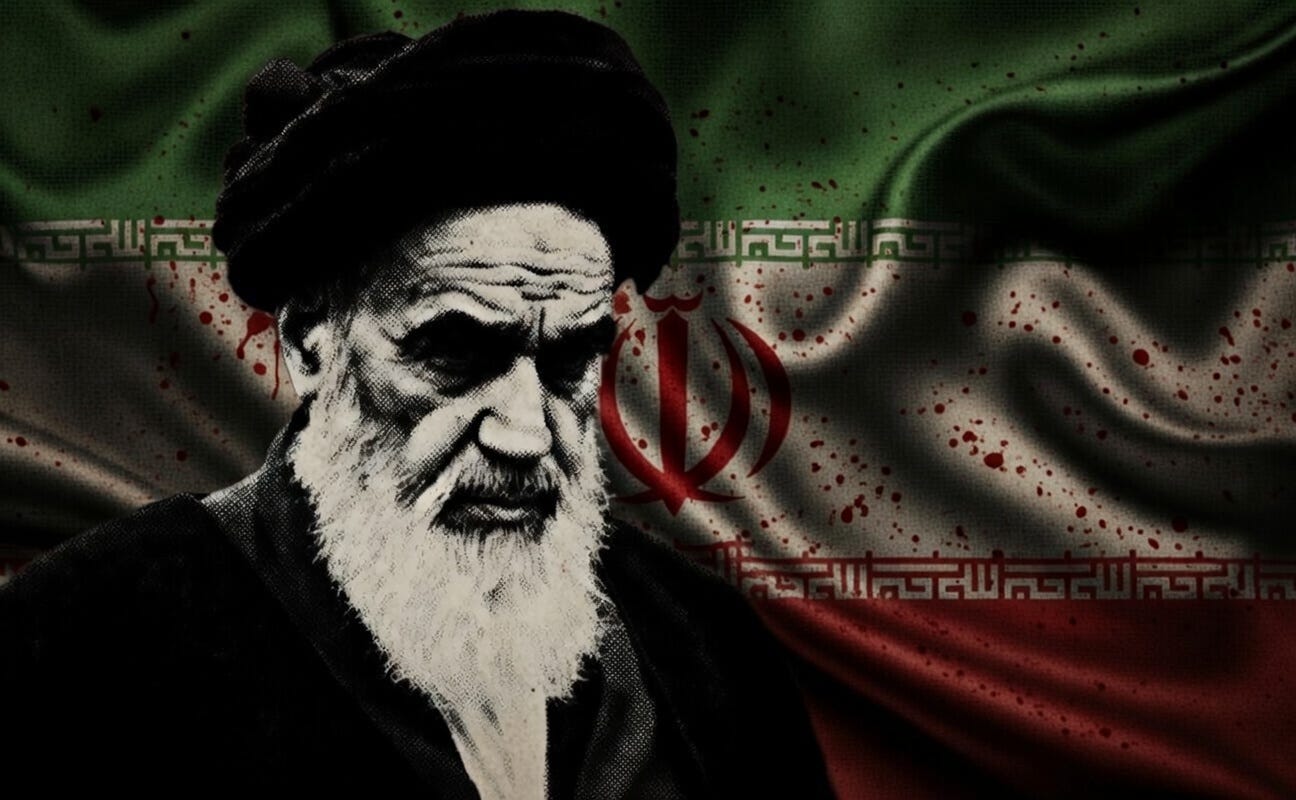
Opposition to the Shah’s regime grew, but it was very factionalized. Some were more democratic, some were more inclined towards the USSR, and some were rallied to the cause by a firebrand Islamic cleric called Ayatollah Ruhollah Khomeini — who had been exiled in 1964 for his critiques of the Shah, and was living in France. He was talking a big game — see the video below (source) — about a democratic Islamic republic with modern rights and a constitution.
From 1978-1979, protests began to break out across Iran. The Shah had his thugs crack down hard. But it didn’t work. The people wanted change, and the Shah fled the country again in 1979. Ayatollah Khomeini returned to Iran to popular acclaim. The monarchy collapsed with the Shah in exile, and Khomeini began a very different kind of regime than the one he promised — brutally oppressive, theocratic, and ready to go to war with the world.
The American involvement in the 1953 coup was used by the new Islamic government to paint the US as “the Great Satan” that had ruined Iranian democracy and put a dictator in its place. The U.S. embassy was seized in November of 1979 by Iranian students. 66 Americans were taken hostage, and most of them were held for 444 days. A military operation to rescue the hostages failed, and 8 US servicemen died in the attempt.
The relationship between the US and Iran has been hostile ever since.
But the Iranian people have come to realize that the Ayatollahs were not what they claimed to be. Islam is a religion in serious decline in the country. Over 80% of the people reject the Islamic regime. Many are calling for the leadership of Reza Pahlavi, son of the former Shah of Iran who died in exile after the Islamic revolution took hold. He seems to want democracy. Elections. A modern Iran. With the historical problem of such claims from prospective leaders having been self-serving lies, it’s hard know, from an outside perspective, what to believe.
It’s too early to say what the next version of Iran will look like, but I hope it’s safe to say that the age of the Ayatollahs has come to an end.
If you liked this essay, please consider subscribing—or send a tip (Venmo/Paypal/Stripe) to support this and future pieces like it.