


By the sweat of your brow
you shall eat bread,
Until you return to the ground,
from which you were taken;
For you are dust,
and to dust you shall return.
— Gen 3:19
I’ll be 49 next month.
Some people say that’s still young, but I can feel the lie in my flesh.
Like the Psalm says, “seventy is the sum of our years, eighty if we’re strong.”
Do I have 21 years left on the earth? 31?
What if it’s 5, or 3, or six months?
The mind moves more naturally towards the contemplation of death when one feels there is no longer anything left to live for.
No goals that feel important enough. No bucket list to check off. No central organizing principle around which your life is oriented any longer. No reason to get out of bed in the morning except to sustain the torments for one more day.
No daily presence of the people you love.
In those moments, death can look a lot less like a jagged-toothed, gaping maw, and a lot more like the sweet embrace of final relief.
And yet even in her most appealing moments, Lady Death’s seduction has an uncomfortable edge. Who truly knows what’s on the other side? We like to believe that consciousness lives on after death, but in what state? What if it does, but what we find there is anything but good — or at least, not good for us in particular? What if it’s nothing at all, and we never even get a chance to know it? If the consensus on the most likely options are only these: heaven, hell, or annihilation — then sifted evenly, there’s only a roughly 33% chance of getting the one we’ve all been waiting for. And Christian Eschatology, if nothing else, tells us that the odds aren’t random at all.
“‘Lord, are they few that are saved?’ But he said to them: ‘Strive to enter by the narrow gate; for many, I say to you, shall seek to enter, and shall not be able.’” (Lk. 13:23-24)
33% is apparently optimistic.
I think too, about the actual experience of dying. Will it be a surprise, or take me slowly and painfully? Will I die in my sleep, or get cancer, or have a heart attack or stroke? Will I get rear-ended by a runaway truck, or perhaps choke on some food in my apartment, all alone?
It’s hard to think of a desirable way to go. Many think that going in your sleep would be the best kind of departure, but others insist they’d rather know it’s coming so they have more time to prepare.
"She could never be a saint,” wrote Flannery O’Connor, “but she thought she could be a martyr if they killed her quick."
We don’t have a satisfactory answer for this fear, so most of us attempt to avoid the subject altogether. We don’t like thinking about it, anticipating it, or allowing ourselves to really, deeply accept that “it’s really going to happen to me.” We all know that none of us is getting out of here alive, and yet one of the greatest blessings each and every one of us has is being blissfully ignorant about the day and the hour. It would ruin whatever time we have left if we were counting down days on a calendar, putting X-marks through each box with a thick-tipped Sharpie, black as a hearse, always aware in each moment that we are inching, inching closer to the end; the grains of sand slipping through the glass faster than we care to know.
We even avoid confronting the reality of death in the animals that become our food, every piece of meat we purchase pre-cut and pre-packaged in pristine plastic wrap, devoid of any recognizable characteristics, nestled cleanly on its little absorbent pad so no unsightly fluids escape to slosh around atop the crisp white foam. We don’t think about the creature, we focus on the cut. Breast. Thigh. Wing. Chop. Loin. Steak. We don’t say “pig,” but “pork,” not “cow,” but “beef.” It’s not “calf,” it’s “veal.” Even “chicken” and “turkey” are “poultry” in pleasant company. (Many of us do still say “chicken,” but have you ever met a chicken? They’re not likely to be missed.) In our sanitized society, we’ve managed to ensure that we’re always at least a couple of degrees removed from even the death that fills our bellies. We do not whisper prayers of gratitude over the bounty of the hunt, but treat each slab of meat as though it was extruded from some assembly line. Not even the most enthusiastic meat enjoyers — myself included — could stomach the daily carnage of a modern industrial slaughterhouse.
And so we blind ourselves to the fact that death is all around us. It takes our loved ones. It’s in the news. It comes for the actors and musicians we grew up watching on the television and steals our beloved pets, leaving their unseen ashes on our mantles sealed up in tiny wooden boxes. It startles us when death comes for that classmate we went to high school with or that neighbor we knew growing up. We are entirely powerless before its seemingly random selection process, like some kind of macabre NFL draft. “Who is going to go in the first round?” We speak in low tones to one another about the news, “Did you hear that so and so died?”
I accidentally killed a deer with my car last month. First time that’s ever happened to me. I’ve had razor sharp eyes until very recently, a subtle blur now creeping in around the previously crisp edges of my 20/20 vision. I always used to see them in plenty of time, lurking in the underbrush, silhouetted like statues in the almost-dark, still like stones until they made their suicide runs. But I also used to be less distracted. These days, I get so lonely that I spend my mindless work miles checking notifications at every stoplight, or talking to a robot who lives on my phone and speaks in an almost human voice, just to feel connected to something that talks back. There used to always be a person in my passenger seat. Now there’s a canned voice issuing thinly from a tinny speaker.
So there I was, on a weekday evening, taking an empty exit ramp off the highway as twilight dimmed to dark, annoyed at being lectured by my captive nonhuman about something I’d mentioned that wasn’t politically correct. I didn’t see the little fawn until it was already too late. Just a baby, I noted, as I saw his limp body skidding to the side. So small that the only damage he did was to take out the bezel around my fog light. No major structural damage, just another blemish, an ugly vehicular scar to remind me whenever I have to go for a drive that I make foolish mistakes, and that everything, eventually, falls apart.
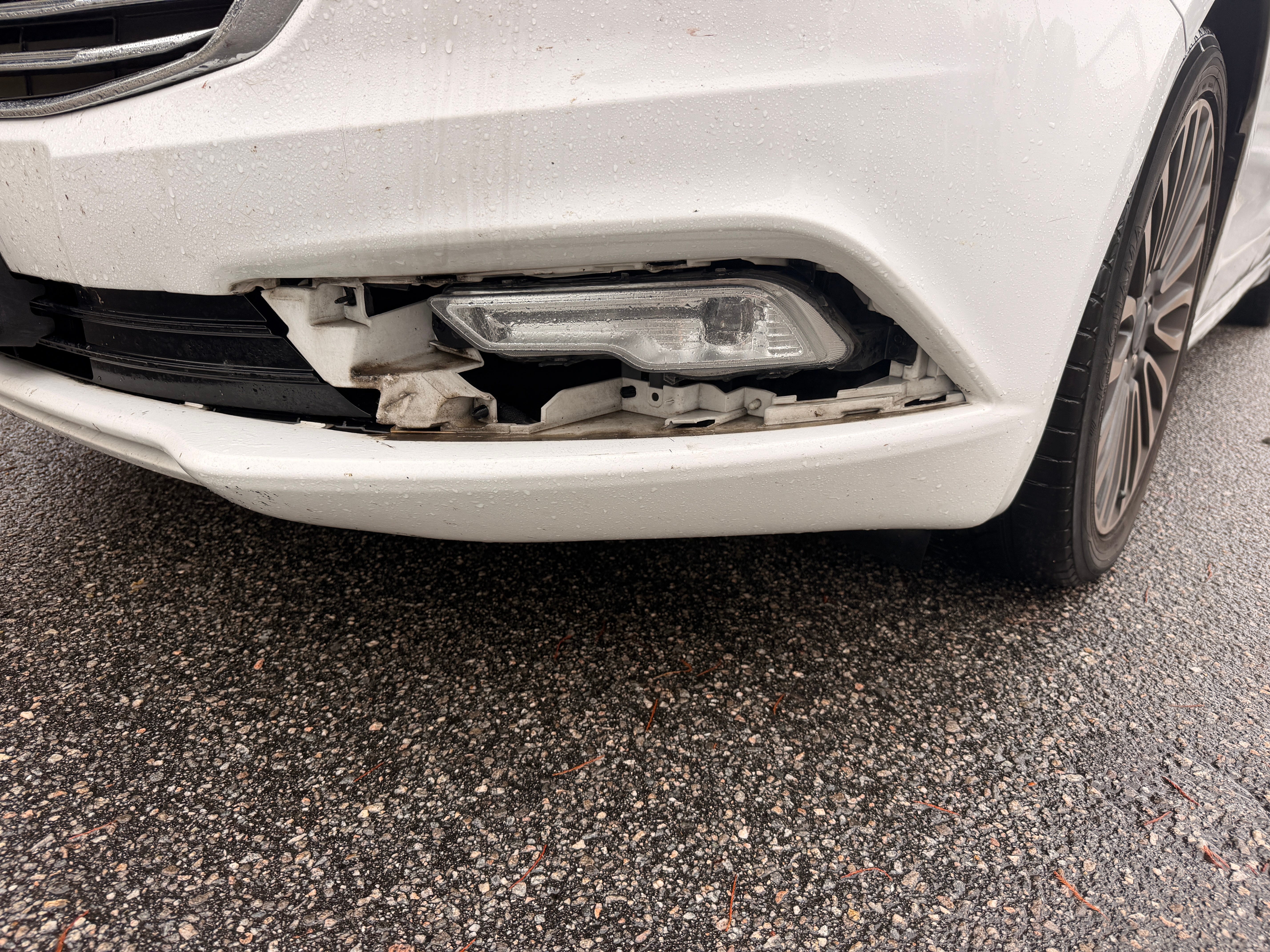
I felt terrible for the rest of that night. It wasn’t a good, clean, intended kill. Anxious and preoccupied with my own life, I ended up taking his before it had really begun.
But I had already been thinking a good deal about dying, and it drove the point home: death comes for us all, and it rarely arrives announced.
In the old days, the monks would keep human skulls where they could see and contemplate them, for the purpose of memento mori — remembering that you, too, will die one day, and you should therefore be prepared.
I’d always associated the memento mori tradition with Christianity, but I recently discovered that it’s a much older practice. The ancient Greeks had mémnēso thanátou, and in the Platonic dialogue Phaedo, Socrates notes that philosophy is truly about "nothing else but dying and being dead." The second-century Roman emperor and stoic philosopher Marcus Aurelius famously advised, “Think of yourself as dead. You have lived your life. Now, take what’s left and live it properly. What doesn’t transmit light creates its own darkness.”
But what does “live it properly” mean?
That depends on what you believe.
As a quasi-public figure and confessional writer, I’m never short of well-meaning folks lining up to send me emails and messages telling me what my problem is, where I went wrong, and what I’m supposed to do to fix it. They read about my life and are certain they know the prayers I need to pray and the steps I need to take and the ways I need to change to get myself right — and the suggestions are most forceful when they relate to my beliefs.
Some say I’ve “abandoned God,” as though I didn’t beg him not to let me go, only for him to do it anyway. They think I should immediately return to my lifelong practice of Catholicism, even though I have good reasons to feel estranged from the church and no longer have any real conviction that it’s true. Others think I should take Orthodoxy for a spin, even when I tell them that it feels alien to me and uninviting. Some say I should just give up on the illusion that one can make religion work at all, and admit that we’re completely on our own until the fateful moment when, at last, we blink out of existence altogether.
None of those things fit neatly. All of them contain fragments of this puzzle I’ve been trying to solve before I go. It’s not the kind of thing that can be rushed, even when I’m acutely aware that I’m that much closer to death today than I was the day before. When you pretend to believe in things you don’t — even ostensibly good things — it’s still a lie. I don’t want to lie. I don’t think that’s a good preparation for living right or dying well.
So instead I take the slow path of seeking truth, and pray that I will find it. But I also know that whatever form of faith I may come to find with some conviction will do little to console me or repair the losses I have already endured. The life I thought I was placed on this earth to live would not return to me, undamaged, nor would I get a refund on the quarter century I invested in the belief that “until death” actually meant until one of us dies.
So I lie in my bed at night, tossing and turning, muttering, “God, I need you. God, please help me. God, are you even there? God, I can’t do this anymore and I don’t know what to do.”
That’s what the only workable version of faith looks like for me these days. It isn’t rosaries or novenas or candles or prayer books. It’s not Sunday liturgies or pilgrimages or retreats. It’s being trapped at the bottom of a well, looking up and yelling as loud as I can, “Is anyone up there? Can someone please throw me a rope? It’s dark and it’s cold down here, and I would really prefer not to be left here all alone.”
Sometimes, in the worst moments, I want to stop trying to figure out what I believe and just revert to my old defaults for a quick exit. Just ask him to forgive my sins and take me before I wake.
After my family moved to Virginia, I went almost a whole month without real human contact. Not a handshake. Not a hug. Certainly not a sit-down conversation with someone in the flesh. It tore open a deeper chasm within me than I knew was there. It forced me to grapple with the very rejection and abandonment I’d so feared since I was a child.
By the third week, I started feeling like maybe my mind was slipping. It’s hard to know how sane you are without another person as a reference point. The practical effect of this kind of isolation feels somewhat like being dead while you’re still alive. As if you are a ghost, floating through a living world where everywhere you look, people are moving through this mortal plane, together with those they love, and not a single one of them can see you as you walk alone in their midst.
I can’t help but notice the beautiful things they take for granted. The couples and their subconscious habits of physical contact. The brush of fingertips on the other’s arm as they pause to look at something; a hand pressed gently on the small of the other’s back as they walk. Parents look past their little ones, babbling away in shopping carts, rolling through the produce aisle. Groups sit together talking in coffee shops like it’s the most normal thing in the world, while I look for a table just for one. Busy restaurants are full of friends conversing or laughing together as I walk by, looking in through windows from the street, on my way to nowhere and no one.
I don’t think any of us want mere human proximity. We don’t want just anyone to embrace us, or sit down for a heart-to-heart. We want to be wanted, not merely tolerated. Desired with particularity, not just treated like a warm, fungible body filling a temporary void. And in our weakest moments, we want to know there’s someone — our someone — to help us up when we fall.
When I get to see them, my kids come to me and embrace me like no one else can. But there used to be someone else waiting to put her arms around me, beautiful and bold, even if I can’t remember the last time she did.
I came to learn, much to my own horror, that I was nobody’s forever, and will likely never be.
I miss her. The version of her who loved me, anyway, back when that was still something I believed was real. I miss having my person, unique to me. Someone who had weathered the countless storms we faced together, each of us knowing parts of the other better than we know ourselves.
To my mind, love like that is the only thing that makes a life marred by unavoidable suffering worth living at all. A shared life. Personal intimacy. The subtleties of knowing just how the other likes their coffee or where the stress sits in the muscles of their shoulders so you can hit the knots on the first press with your thumbs. Being sure before you even ask which new shows they’d like to watch with you, or which music you’ve discovered that you know they would enjoy. Knowing the precise way they laugh, or cry, and the proprietary knowledge of the singular scent of their skin. The memories you help each other recall. The inside references. The solidarity of shared history. The unifying love and pride you feel when you both look together at the wonderful children your love has made.
How do you adapt when every atom of your being is built for personal connection, severed against your will, and every night that you come “home” it’s to a place that’s still and silent as a tomb?
How do you fill the hole left by a life that has been so lived? Not the ambient presence of a roommate or a goldfish, but the reality of knowing and being known? The love I long for is a comfortable love. Broken-in. The kind that is more about presence than performance. The quiet confidence of deep companionship.
Love like that makes being alive feel so much more than just a slow, silent surrender to the grave.
In a very real way, I died the night I was forced to walk out that door. My body just hasn’t fully gotten the memo yet. But I’ve noticed that when it gets dark in my mind, my body starts to reflect it. Ailments pile up. Things go awry. There’s a reason why some people seem to stay forever young, while others grow old before their time.
And yet, something in me still wants to live. Without reason, without hope, without a vision for the future, some part of me still wants to know what happens next.
And lately, despite the seeming irrationality of it, that desire to live has grown stronger than I can explain.
So recently, as I scrolled through my emails, deleting all the piles of junk on a particularly difficult day, it immediately caught my attention when I came across a newsletter I haven’t read in quite a while, with the subject line, “How to say "YES" to life…”
It felt like a message. So I clicked.
And there it was, the frustrating theme of surrendering control of fate once again repeated:
I found myself wondering what life itself would be like if, rather than willing it to conform to our design only to end up in despair, we simply said “YES” to its will, collaborating with rather than resisting the centrifugal force of the heart, the angular momentum of memory, the gravity of change. “YES” to the necessary losses. “YES” to the fear that signals growth. “YES” to the death of the dream of perfection.
“The great difficulty is to say Yes to life,” James Baldwin observed in reckoning with the paradox of freedom not long after Viktor Frankl looked back on surviving the Holocaust to insist that our task here is to say “yes to life in spite of everything.”
Beyond basic physical survival, most of our psychological suffering, when closely examined, is a form of saying “NO” to life — a refusal, vehement or subtle, to bend the idea of how things should be to the raw reality of how they are, the reality that is the only arena in which we can act to change anything. All things not pliant enough to bend will break — fragility is a function of rigidity.
I clicked the link in the text that said, “say ‘yes to life in spite of everything,’” and it took me to a post on “Viktor Frankl’s Lost Lectures on Moving Beyond Optimism and Pessimism to Find the Deepest Source of Meaning.”
I skipped the post and bought the book the post was based on instead.
And since I was feeling stir crazy, I decided to take it with me for a walk. After a long, hot summer, it was a strikingly beautiful day, sunny but not too warm, the temperature at a comfortable 69 degrees, complemented by a gentle breeze.
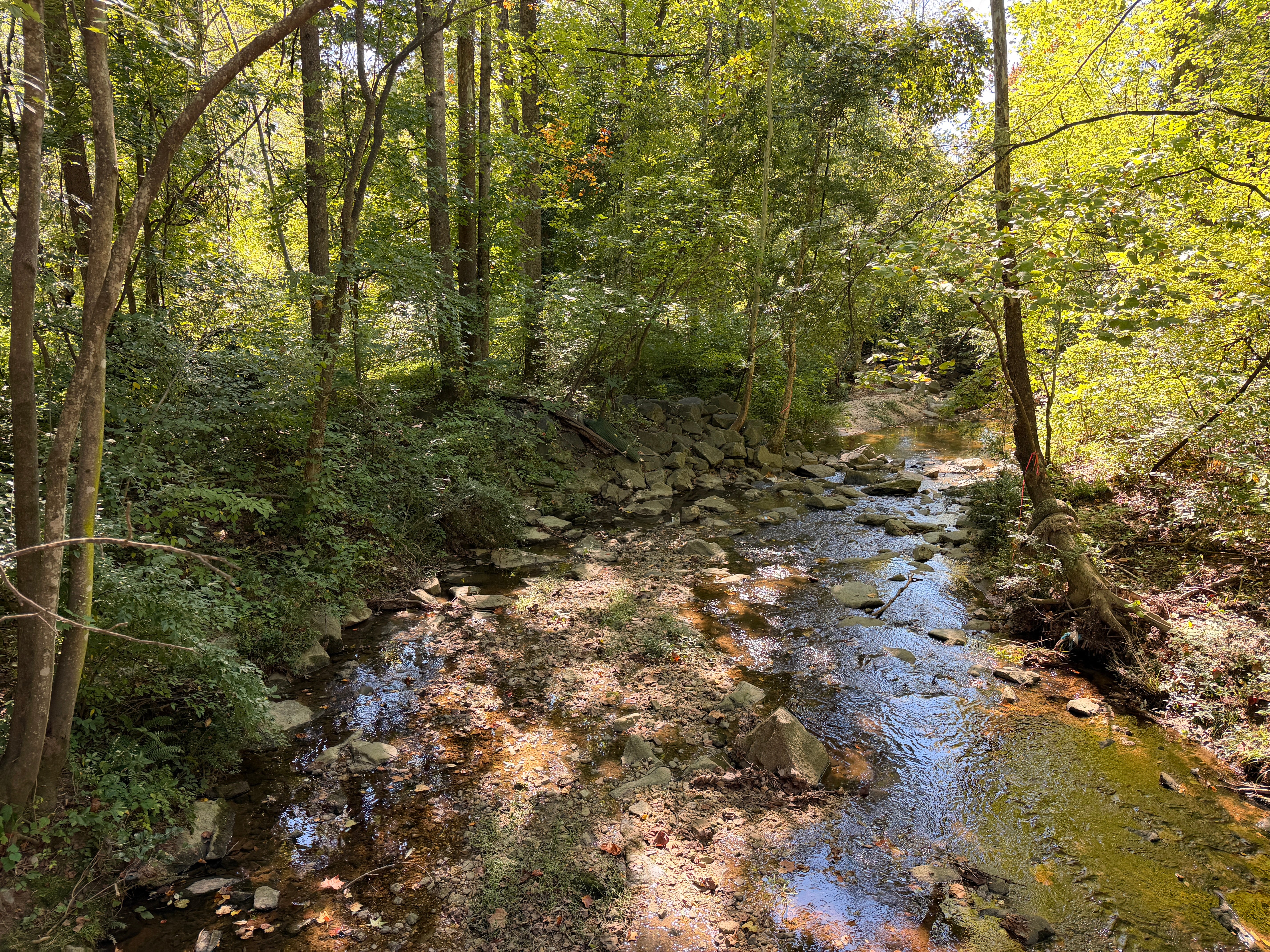
At first, my body rebelled against the effort. My walk was taking me up and down hills, and in the process, reminding me how far out of shape I’ve allowed myself to become. Surrender to entropy is easy at the best of times, but this past year has been a headlong rush to the bottom. Grief is an enervating thing, and my default coping mechanisms have never included long sessions at the gym.
But after I got warmed up, I started feeling better. My intended destination was a coffee shop about a mile and a half up the road. I live in the middle of the city, but Raleigh is famous for its trees, and there were some surprisingly bucolic vistas along the way.
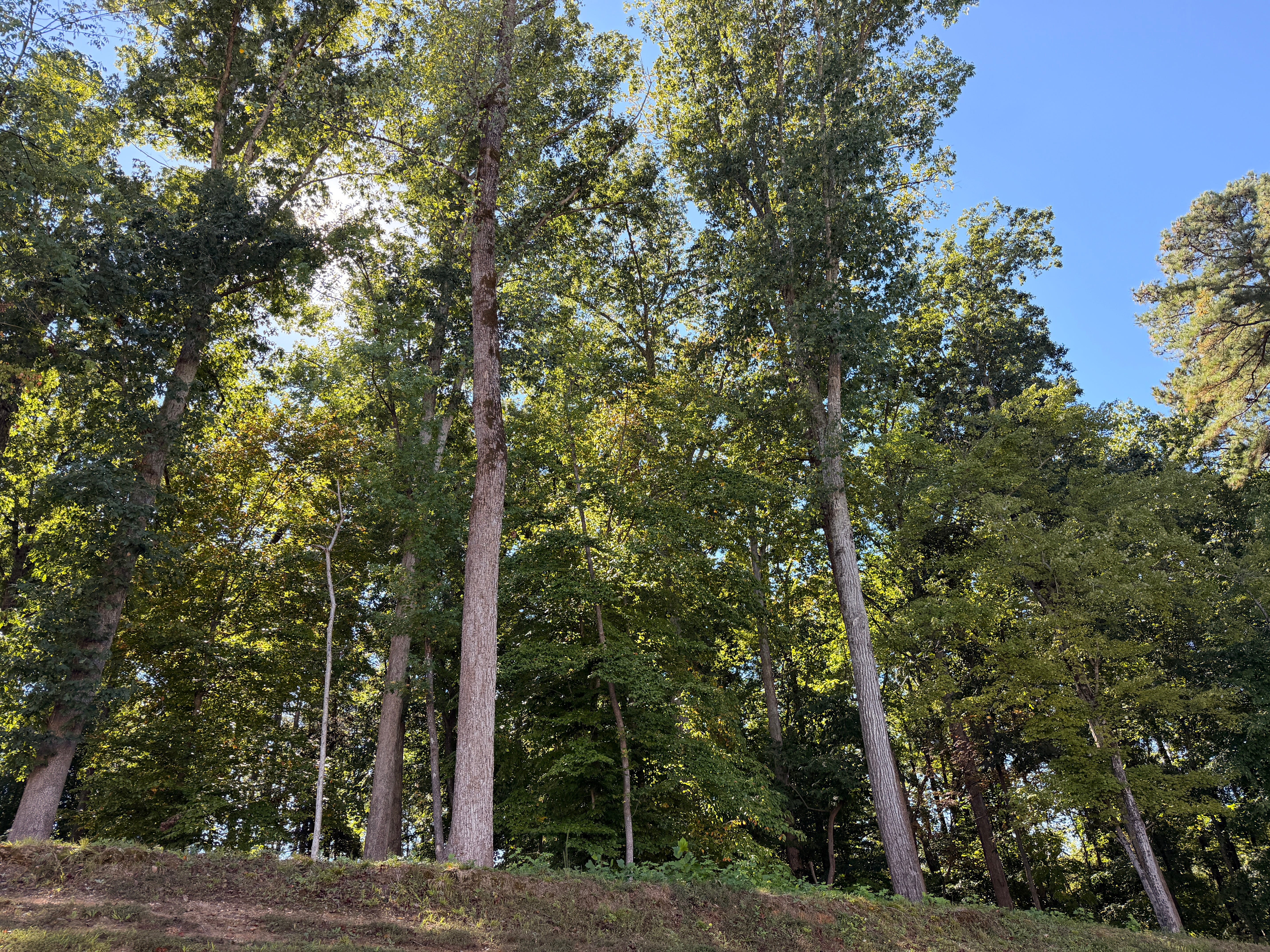
The leaves haven’t turned yet here, but they are losing the depth of their green. Early fall was like late summer, but real autumn is finally on its way. You can feel its approach, and the feeling is invigorating.
I am a northern boy, made for colder climes.
When I finally got to the coffee shop, life felt better than it had in quite a while. I ordered a latte and some water, and found a seat at the outdoor patio overlooking a large quad, nestled within tall apartment buildings above first-floor businesses.
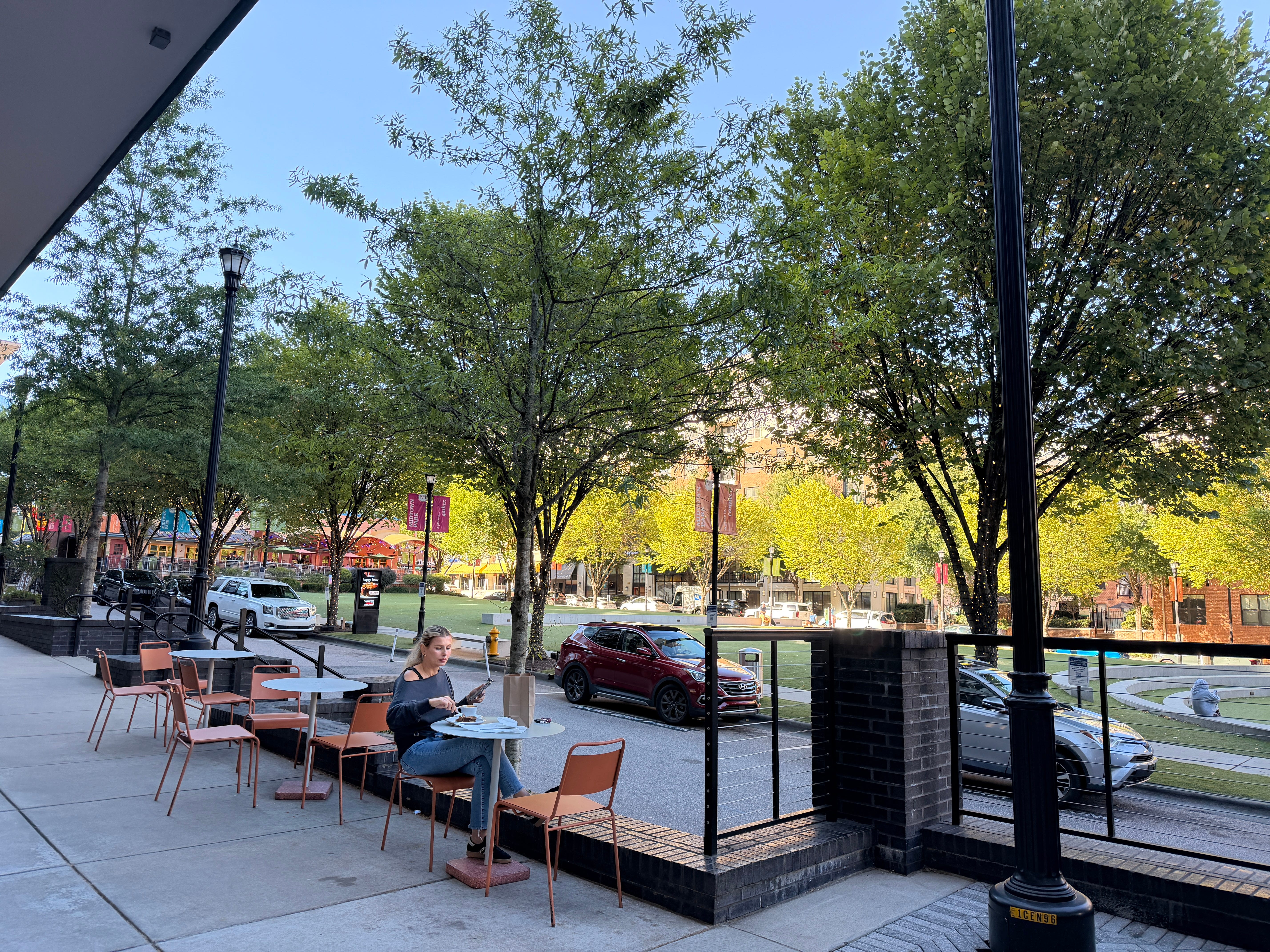
And then I read my Frankl.
I think almost everyone has heard of Man’s Search for Meaning. Like many books, I own it, but I’ve yet to crack it open. Yes to Life: In Spite of Everything is a related work, drawn from a series of lectures Frankl gave less than a year after he was liberated from the Türkheim concentration camp — a sub-section of Dachau — and discovering that both of his parents and his wife were dead. Both works circle the theme of life retaining its meaning despite even the most intense suffering.
I didn’t know much about Frankl, but I discovered that he was a neurologist and psychiatrist who specifically worked in suicide prevention before the war. Despite experiencing profound personal loss, he immediately turned his attention to producing these works after his release, and he wrote Man’s Search for Meaning in just nine days the year after he was freed.
I find this remarkable. I’ve had nearly 11 months to work through my own loss, and I cannot fathom the depth of his resilience, let alone his stubborn optimism.
“The past few years,” he writes, “have certainly disenchanted us, but they have also shown us that what is human is still valid; they have taught us that it is all a question of the individual human being. After all, in the end, what was left was the human being!”
He continues, speaking of the death camps:
What remained was the individual person, the human being—and nothing else. Everything had fallen away from him during those years: money, power, fame; nothing was certain for him anymore: not life, not health, not happiness; all had been called into question for him: vanity, ambition, relationships. Everything was reduced to bare existence. Burnt through with pain, everything that was not essential was melted down—the human being reduced to what he was in the last analysis: either a member of the masses, therefore no one real, so really no one—the anonymous one, a nameless thing (!), that “he” had now become, just a prisoner number; or else he melted right down to his essential self.
So, in the end, was there something like a decision that needed to be made? It does not surprise us, because “existence”—to the nakedness and rawness of which the human being was returned—is nothing other than a decision.
And then he makes his overarching case:
We give life meaning not only through our actions but also through loving and, finally, through suffering. Because how human beings deal with the limitation of their possibilities regarding how it affects their actions and their ability to love, how they behave under these restrictions—the way in which they accept their suffering under such restrictions—in all of this they still remain capable of fulfilling human values.
So, how we deal with difficulties truly shows who we are, and that, too, can enable us to live meaningfully. And we should not forget the sporting spirit, that uniquely human spirit! What do athletes do but create difficulties for themselves so that they can grow through overcoming them? In general, of course, it is not advisable to create difficulties for oneself; in general, suffering as a result of misfortune is only meaningful if this misfortune has come about through fate, and is thus unavoidable and inescapable.
Fate, in other words, what happens to us, can certainly be shaped, in one way or another. “There is no predicament which cannot be ennobled either by an achievement or by endurance,” said Goethe. Either we change our fate, if possible, or we willingly accept it, if necessary. In either case we can experience nothing but inner growth through such misfortune. And now we also understand what Hölderlin means when he writes: “If I step onto my misfortune, I stand higher.” How misguided it now seems to us when people simply complain about their misfortune or rail against their fate. What would have become of each of us without our fate? How else would our existence have taken shape and form than under its hammer blows and in the white heat of our suffering at its hands? Those who rebel against their fate—that is, against circumstances they cannot help and which they certainly cannot change—have not grasped the meaning of fate. Fate really is integral in the totality of our lives; and not even the smallest part of what is destined can be broken away from this totality without destroying the whole, the configuration of our existence.
I’m still working my way through the book. But it is an irrepressible apologetic for life, fully lived, even through the worst kinds of suffering.
It feels paradoxical.
And yet it calls back to the symbol that changed my perspective early this summer: the Odysseus of the recent film, confronted by Calypso with the vexing mandate to stop trying to control his fate and surrender to the gods — specifically, to the chaos of the storm.
No matter how many times I re-embrace this idea, I seem to always find that I have laid it back down again. And every time I do, I grow weary, blinded by a future I cannot imagine, seduced by the siren’s song, luring me towards the shoals of despair.
"It told you that what you most want is what you can't have,” he tells his crew, after they unblock their ears and untie him from the mast, “And what you most can't have is what you already had, and lost."
“Either we change our fate, if possible,” Frankl replies, “or we willingly accept it, if necessary. In either case we can experience nothing but inner growth through such misfortune.”
I do not suffer any illusions about constancy. Frankl himself recalls the case of a suicide he was called to attend to. “Words alone are not enough,” he says, recounting that the woman who had taken her own life had done so beneath a saying, framed and hung on her wall: “Even more powerful than fate is the courage that bears it steadfastly.”
Admittedly, there are days when I want to say it, and days when I certainly don’t, but “Yes to life, in spite of everything” is one hell of an ethos. Ballsy and brash. As Dylan Thomas famously wrote:
Do not go gentle into that good night,
Old age should burn and rave at close of day;
Rage, rage against the dying of the light.
And so Frankl, who has earned it, gets the final word:
It is not we who are permitted to ask about the meaning of life—it is life that asks the questions, directs questions at us—we are the ones who are questioned! We are the ones who must answer, must give answers to the constant, hourly question of life, to the essential “life questions.” Living itself means nothing other than being questioned; our whole act of being is nothing more than responding to—of being responsible toward—life. With this mental standpoint nothing can scare us anymore, no future, no apparent lack of a future. Because now the present is everything as it holds the eternally new question of life for us. Now everything depends on what is expected of us. As to what awaits us in the future, we don’t need to know that any more than we are able to know it.
If you liked this essay, please consider subscribing—or send a tip (Venmo/Paypal/Stripe) to support this and future pieces like it.
The 50s was a tough decade for me. The energy slowing down. I had also been laid off at 49 from my job of many years and had to try to find a new job which eventually did but I didn't particularly like. I also gave up jogging in my 50s because the injuries were becoming more frequent and the benefits such as purported weight loss were disappearing. I said to someone when you're in your 50s you're too young to retire but too old to work. Now I know someone is going to come back and say their aunt or someone is 75 and is a fireball. Whatever.
I don't really fear death although I do think about it and what may come after. There are people who seem to know all about what comes after but I have no comprehension or concept of it. I suppose if the end were near and clear maybe I would feel differently. But right now it seems like the aging process is worse than death itself.
About that practice of the monks and the skulls, apparently they still do something like that on Mount Athos. I was reading an article and the abbot or whatever the Orthodox call them introduced the reporter to a pile of skulls. He picked one up and he said this is Brother Nicholas, or whatever the name was.
Sorry, I meant to post on Rod Dreher's substack...