


There are stars in the southern sky
Southward as you go
There is moonlight and moss in the trees
Down the Seven Bridges Road
— The Eagles, Seven Bridges Road
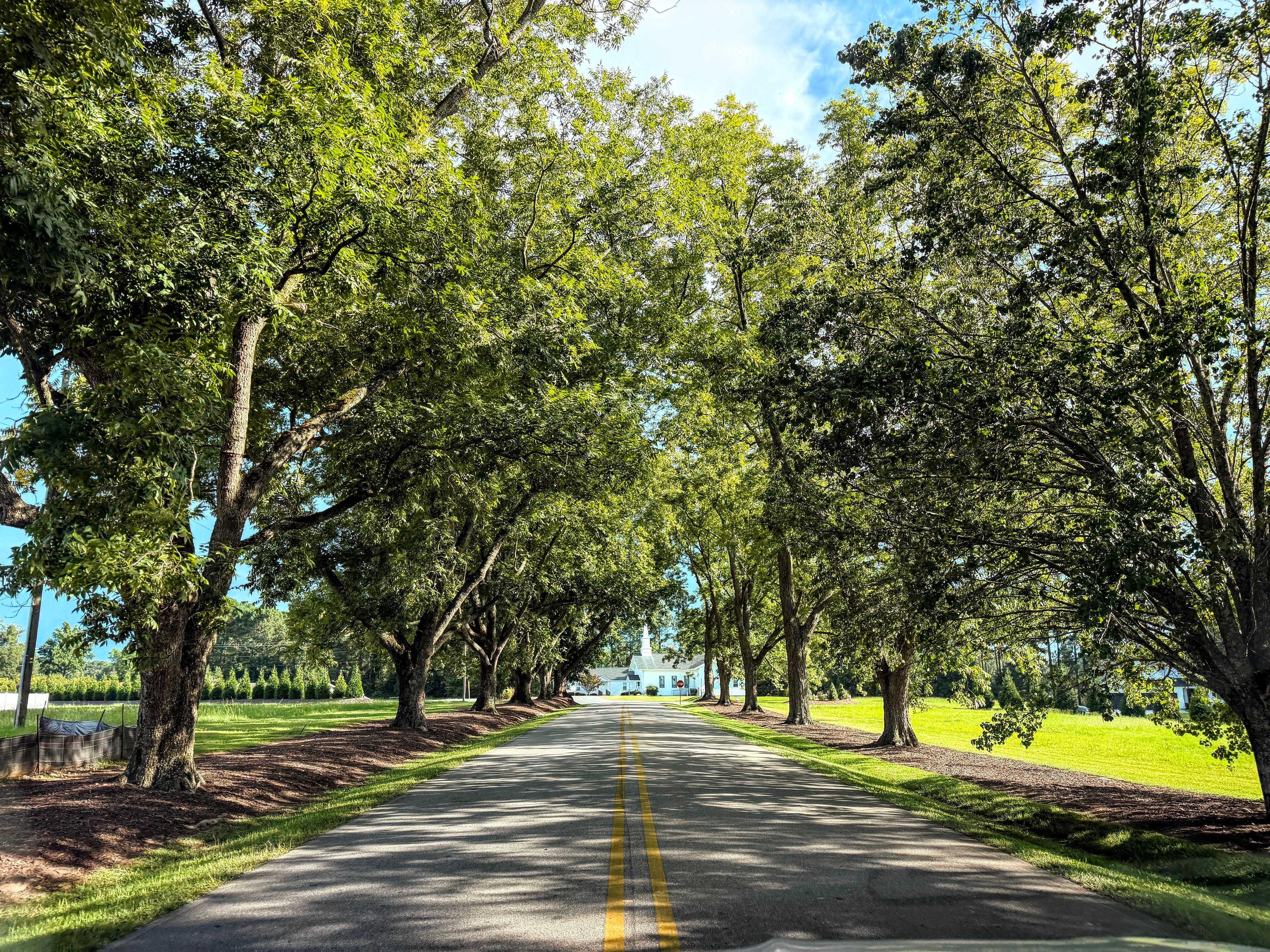
August rolls on through the lull of lazy afternoons. The summer heat remains, but lies languid, like a lover dozing, passion spent, in a sea of tussled sheets.
These days, it rains more than it does anything else, chiaroscuro storms and bright thunderclaps punctuating foreboding skies. The humid haze creeps heavy through old windowpanes and slips under the cracks beneath doors, turning every cool surface slick with condensation.
The muggy air enervates me, so I drive uncounted miles under a freon-frigid gust, issuing from dashboard vents, through the backroads of east-central Carolina, delivering bags and boxes of goods to little towns I’ve never heard of, let alone been to. As I watch through the glass of my little mobile biosphere, the countryside unspools vague memories of a visit made to Glenville, West Virginia, when I was still quite small. A trip to attend the funeral of my great-grandmother, Mammy Moore. There’s something in the trees, the old white farmhouses, the way the light falls, that brings me back to that time, staying in the home of my Great Aunt Madeline, my first-ever visit south of the Mason-Dixon Line.
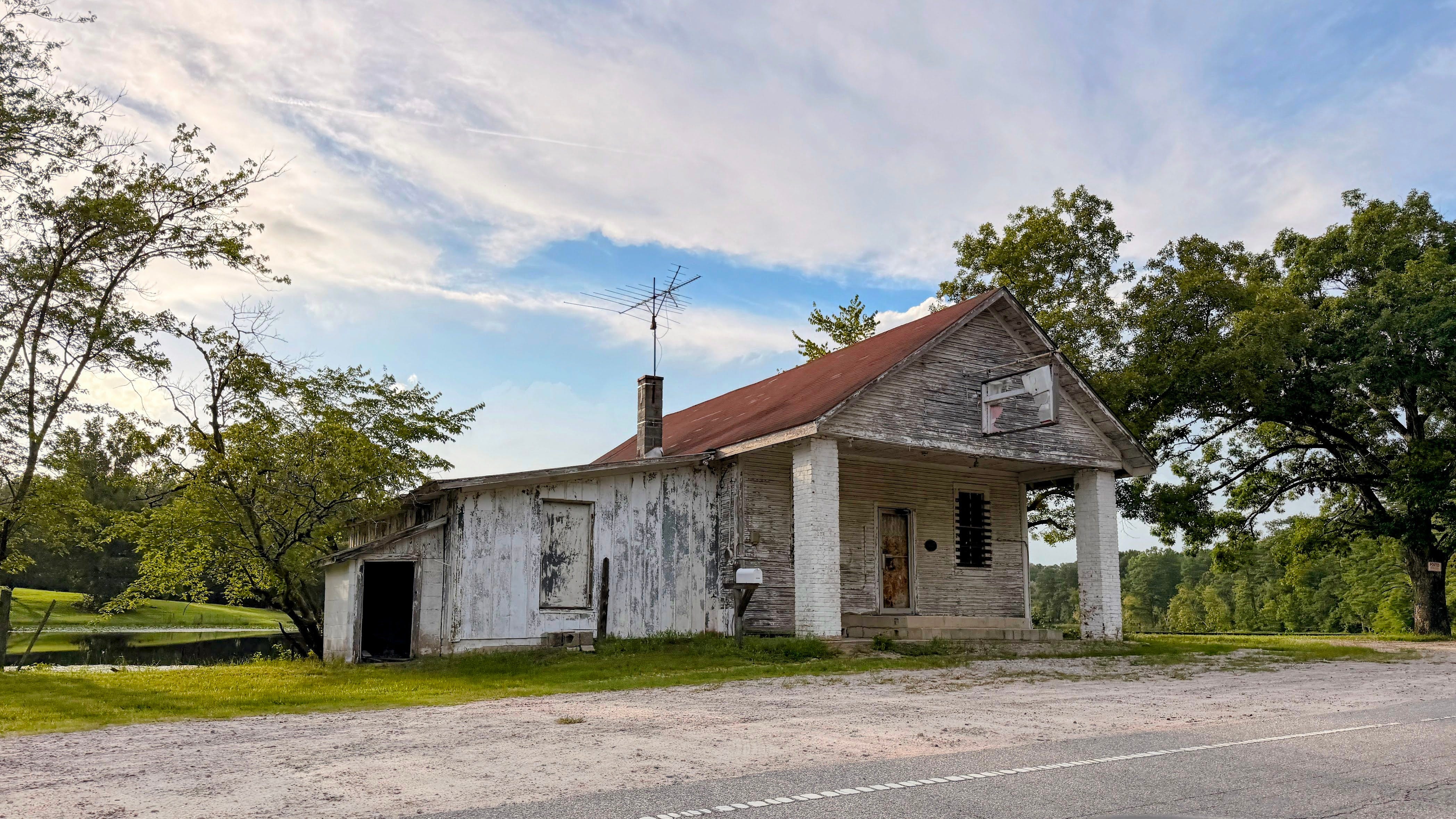
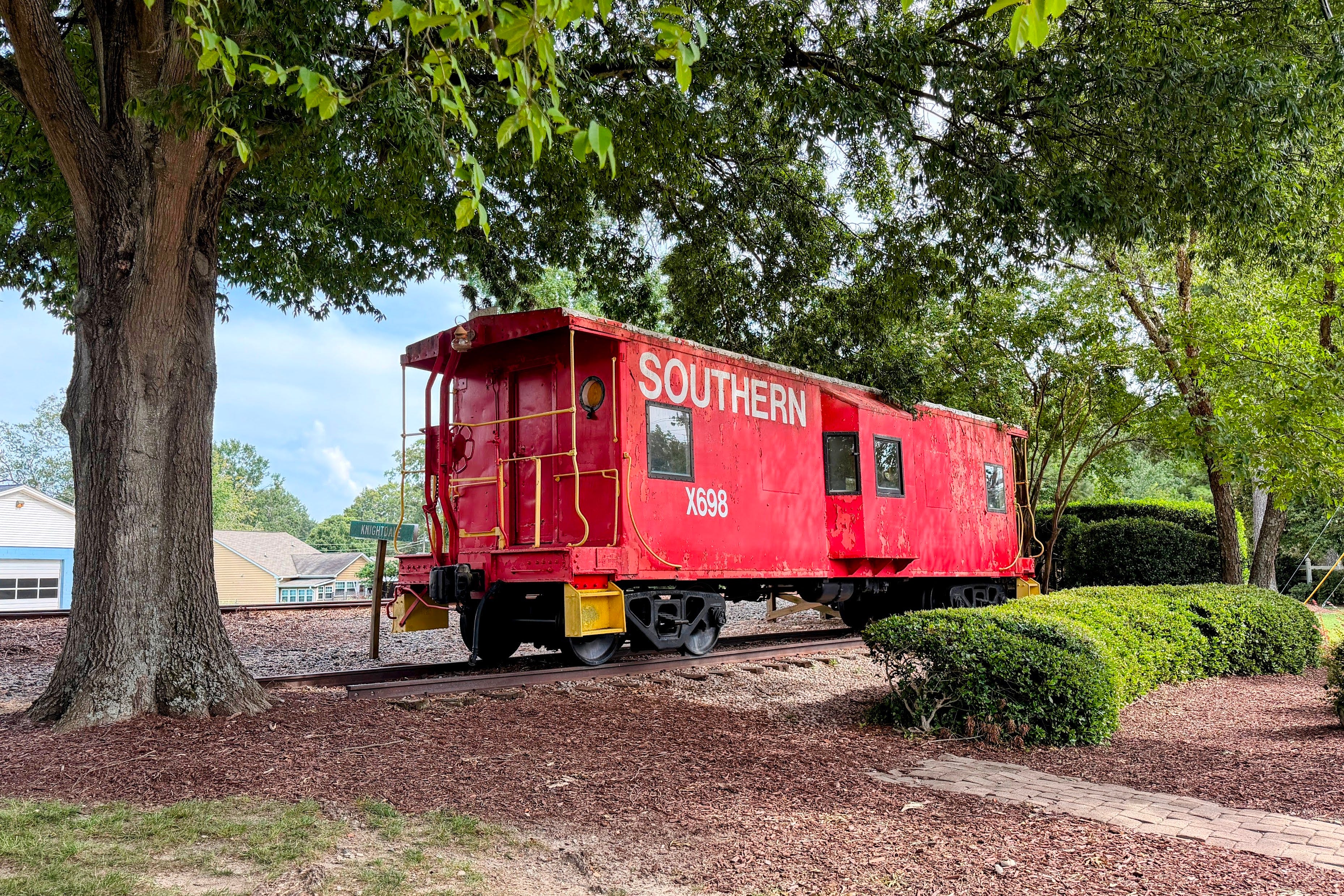
I’m a Yankee living in Dixie, but most cities these days feel largely indistinguishable whether you’re north or south, east or west. The names on some of the stores and restaurants change, but the structures are all more or less the same. There are bougie neighborhoods and bad ones, old homes and new subdivisions, rural suburbs and city living. My apartment sits in midtown Raleigh, nestled between downtown and North Hills. I enjoy the amenities of city life, but lately I find that it’s only when I drive the two-lane roads through small farm towns in the rural periphery of the city that I feel like I’m somewhere real. Some nights, I sit and smoke a cigar on the steel and concrete steps outside my apartment, not even bothering to try to see the night sky through the harsh light of the streetlamps, and find myself dreaming of backyard bonfires under a sea of stars.
I might not be long for North Carolina. Things are changing. I felt it in the wind a few weeks back, watching dark clouds roll across the heavens through my windshield in a supermarket parking lot, a kind of energy I can’t explain that tells you things are in motion that are bigger than you can see. I spend an afternoon trying to figure out what the feeling means, only to have it spit out an idea like a Magic 8-Ball:
Virginia.
I text the stranger who occupies the same physical body as the girl I fell in love with a quarter century ago, asking if she’s planning to move back to Virginia after all. Virginia, where we started our life together and were married at little church called St. Catherine’s in 2003. Virginia, where all but two of our children were born. Virginia, the first place either of us ever really made into a home away from our respective childhood homes. She replies with a list of reasons why she’d rather not go back, so I drop it, but the feeling lingers.
And then, as the weeks roll on, the shape of things changes. The next time I see her, it sounds as though it’s increasingly likely that my intuition was correct. For reasons neither of us understands, she has always flourished there, and opportunities have been opening up for her there in a way they haven’t here. She takes a drive up there to look at rental houses. She tells me she’s been talking to old colleagues there about work.
Nothing is certain yet, but where my kids go, I go, though I don’t relish the idea of return. The entire DC metro area is planted thick with memories, a place that was home for quite a long time, right up until it wasn’t. It’s changed a lot in the intervening years, and the last time we tried to make it work, it felt like touching a 9-volt battery to my soul. The energy was wrong. Sour, somehow. It made me uncomfortable, and she felt it too. It’s how we wound up here. But we’re long past the season for making decisions out of pure preference. As the old saying goes, “Needs must when the devil drives.” I tell her, sitting in the living room that used to be ours but now is only hers, that I think she should give strong consideration to going back if she can, because she’s got two years of data on Raleigh, and it doesn’t point to anything good, at least financially.
I asked for help on my family’s behalf, and help came. But now they’ve got one shot to pay off debts and get positioned for whatever comes next, and they’ve got to make it stick. There are no more safety nets.
I don’t have anything to cling to here in Raleigh, except that I’ve come to love it here. No family, no friends, no community, no nothing. Still, it’s a beautiful city, and a place I’ve come to think of as my own. It’s taken quite a bit of time, but I’ve gotten to know the place in a way you only can if you’ve done the work of frequent exploration, your mind mapping the geographic connections between seemingly disparate things. I know the best coffee shops now, some good taco spots, where to find the tastiest pho and where to go for pizza. I have favorite supermarkets, a preferred library, neighborhoods I love, and a general sense of enjoyment of the hybrid small town/big city vibe. If things had worked out differently, I could have seen staying here for a long time.
Maybe even forever.
But this place, where I genuinely thought we were coming for a fresh start, has become the locus of our deconstruction. Maybe that was the point. Maybe it was the calling we thought we heard. Maybe this was all supposed to happen for reasons that aren’t clear yet, even though that’s a hard damn thing to fathom.
If I have to go, I will miss the ancient, gnarled oaks and the tall, too-skinny pines and the broad-leafed tobacco fields and the stretches of Kudzu-draped forest and farmland. I will miss North Hills and Five Points and Glenwood Ave. and Hillsborough St. I’ll miss the long, gorgeous drives to Clayton and Wendell and Garner and Holly Springs. I’ll miss being just two hours from the coast, even if I barely ever go.


On an early Sunday evening during one of the long delivery routes I always seem to take, out towards a little town south and east of the city, I drop four crisp paper bags of groceries on the front stoop of a brand-new home. And as I do so, I find myself daydreaming of that coast. I fantasize about quitting work early so I can just keep driving until the ocean comes into view.
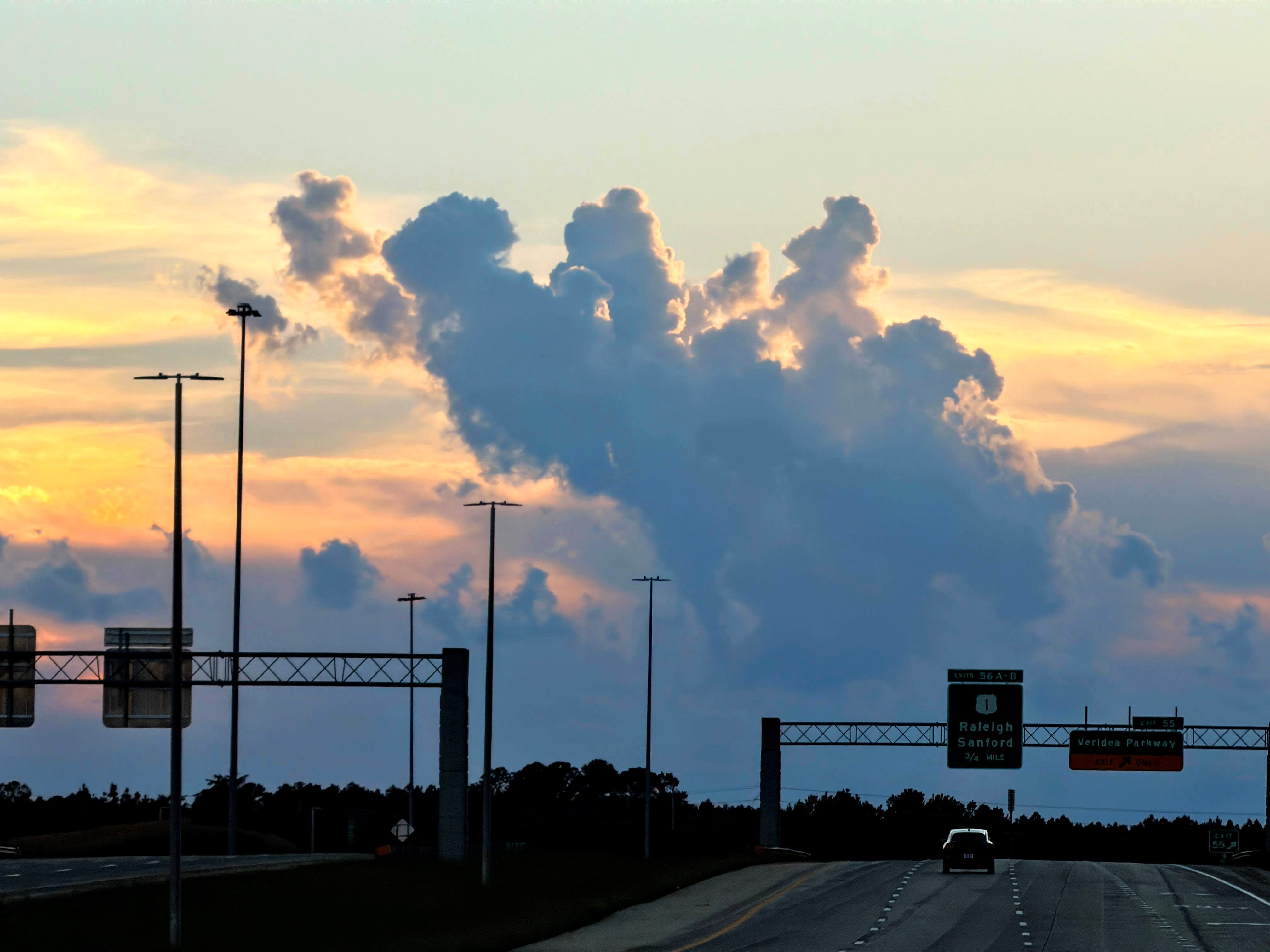
I look around. To the south, there’s a dark storm brewing. To the north, the deep blue sky is filled with huge, white, puffy clouds. To the west, the sun is sliding low, spilling light through the trees like liquid gold. To the east stretch the long shadows of an August afternoon.
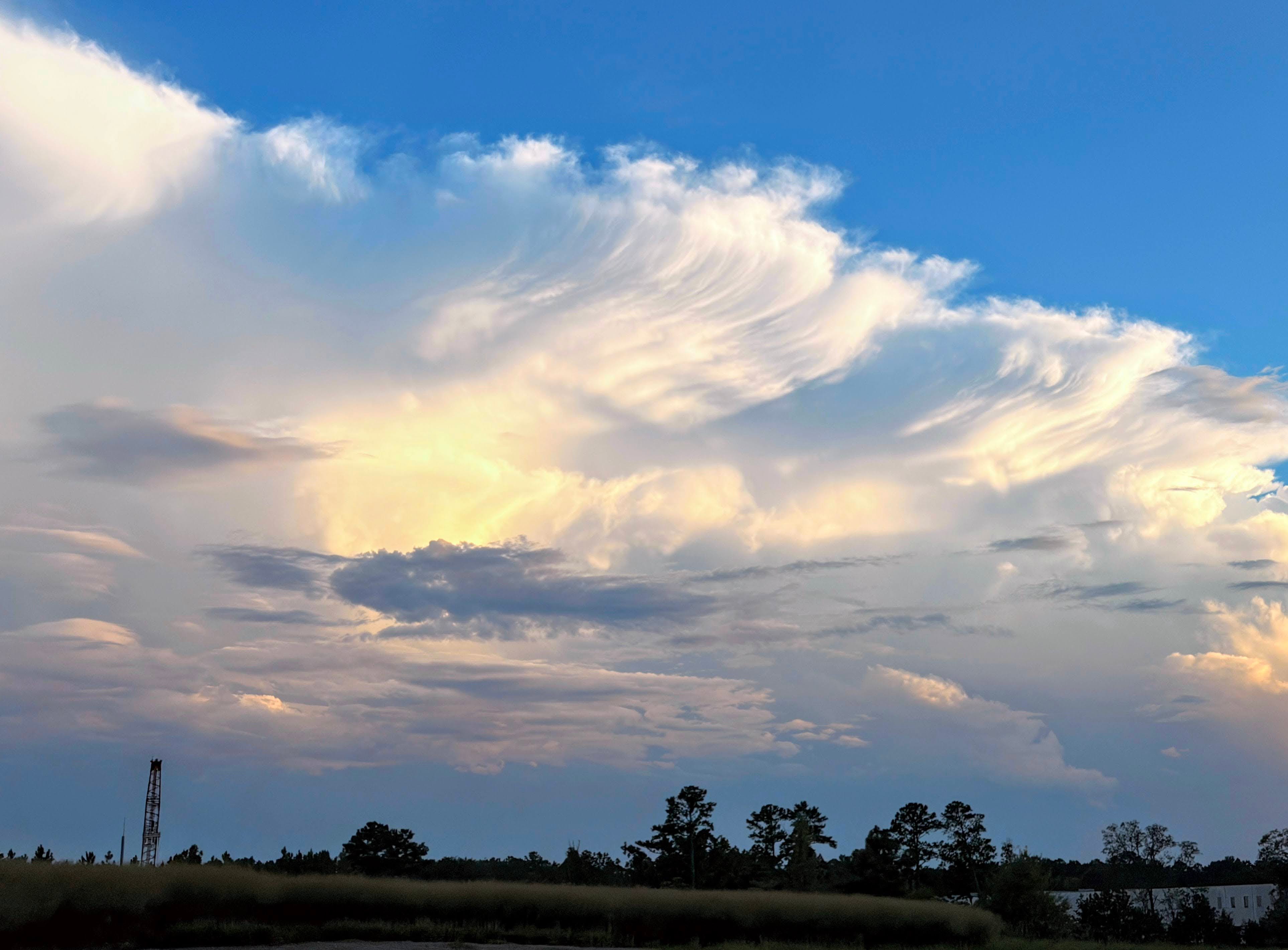
I sit in my car for a few minutes at an empty intersection, trying to decide. Even if I drive straight to the nearest beach with no additional stops, I’ll barely arrive in time to see the sun go down.
Part of me aches for the impulse decision; the spontaneity I never seem to allow myself these days. That same part of me also aches for the open road. But there’s another part, one that yearns for my bed, and for much-needed sleep. And there’s the quiet, nagging voice of responsibility, reminding me that I’ve only made a little over half my earning goal for the day. My stomach, feeling left out, clears its non-existent throat and issues a point of order: It’s 6PM and you haven’t eaten a bite of food since dinner last night.
I feel the gestalt collapse into unity of purpose, and I’m in motion. I’ve chosen to do the responsible thing, to finish work and eat and sleep, and save the ocean for another day, even though I need it now. Need it to absorb all the chaos and confusion inside me and calm me down as I lose myself in the roaring, calming cadence of the waves.
I speed off back towards town, where I take one last order that drags me to the western suburbs. En route, I receive a text from the wife-but-not. She is telling me she she needs to use the air compressor I keep in my car, and offers me a sandwich in return. My hunger surges a bit at the thought, and I tell her I’m heading that way anyway, and that I’ll be there after my delivery.
When I arrive, everyone is in the kitchen, milling around, snacking on chips, getting ready to make their sandwiches from the spoils just brought home from the store. They haven’t made much progress yet, but I can see the evidence that they’ve been actively packing. They only have until the end of the month, and the approval for a rental they thought they had has mysteriously evaporated, so they don’t even know where they’re going. This worries me, of course, but there’s nothing I can really do, so I once again surrender to the storm, trusting that the tides of fate will take us all wherever it is that we need to go when the time is right.
And the winds of change are still blowing, even if we can’t see where they lead. I have dinner with the people I love most, we use the compressor to fill the hand cart tires, and then I say my goodbyes and head back to my little cave, where I tumble into bed much earlier than usual and go to sleep.
I awake before 5AM, but force myself back down to dreamland. It buys me another 90 minutes, but I’m up again before 7. I thought I’d feel better after a good night’s sleep, but I’m exhausted for more reasons than I can consciously keep score of. My body is firing warning signals of multiple kinds, various lights flashing on the dashboard in my mind. Sore. Tired. Inflamed. Irritated. I hydrate and make coffee, then sit and scroll. It’s technically my day off, but I don’t really know how to do those anymore. I try to force myself to take just one day a week to do nothing much at all, because it’s the only thing that keeps me from completely burning out. Every other day, I fill every waking moment with activity of some kind or another until I pass out far too late.
Irritable and feeling like lukewarm garbage, I make myself a good breakfast. As I reach for something to hold my freshly scrambled eggs and meat, a line comes unbidden to my mind: “I live in a world of paper plates and shattered dreams.”
I don’t feel anything when I think it, which is weird, because it’s true. But regardless, it’s a great line, and I make a mental note to use it.
Breakfast done, what’s left of my hair combed, and shoes on, I force myself to leave. I desperately need a change of scenery, whether I feel like doing anything or not. I make the decision easier by picking a fancy coffee shop I’ve been wanting to try as the first destination. I grab a couple of books, my notebook and a pen, and drive downtown. When I arrive, there’s parking on the street, which is a nice little bonus.
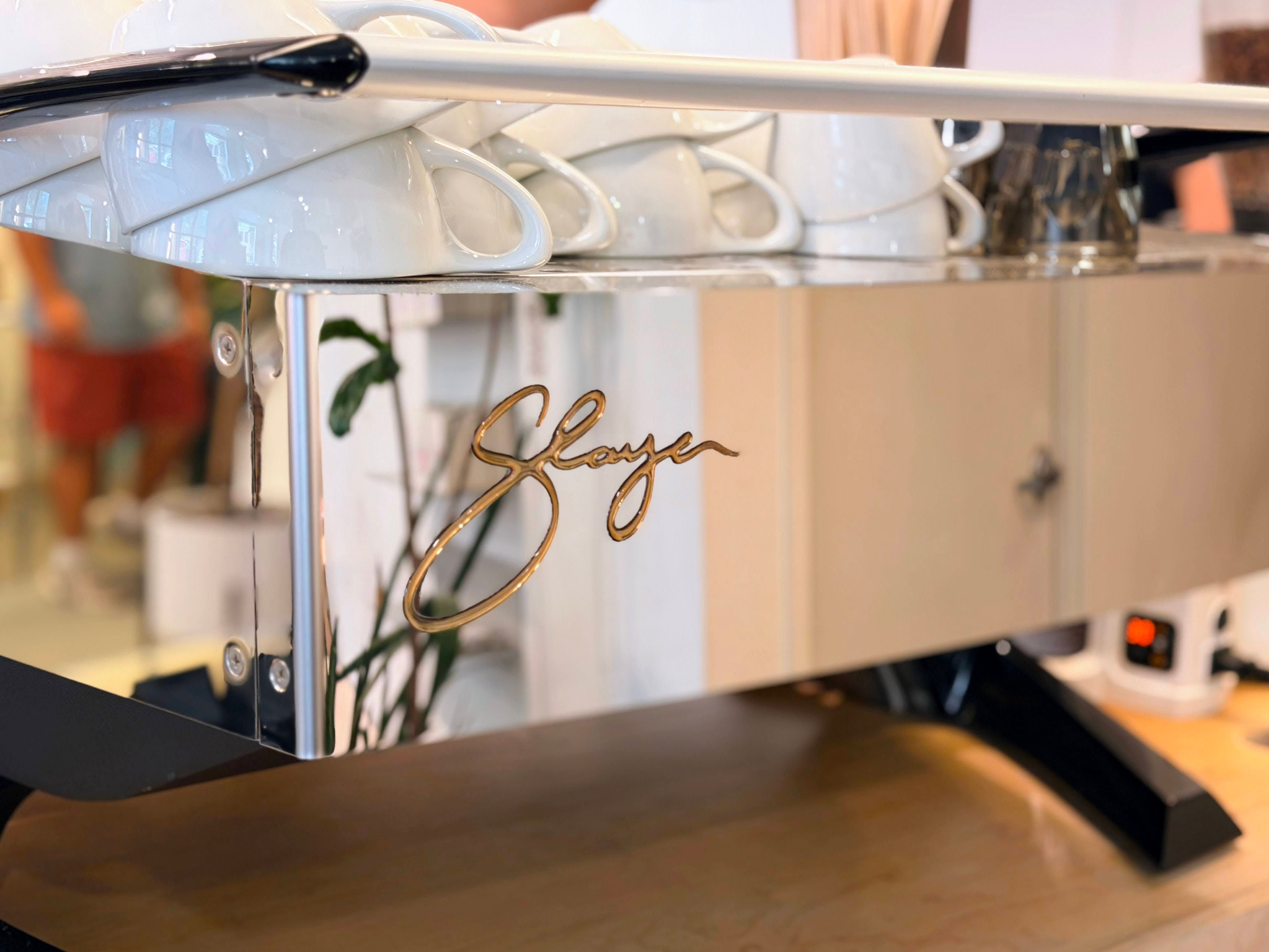
I enter the shop through an unobtrusive patio entrance, go down a small set of interior steps to a polished concrete floor, and stand in line behind a handful of other customers who are ahead of me. I watch as other fun looking orders come out, the two slender female baristas in black t-shirts studiously working a gorgeous espresso machine labeled “Slayer” while the kitchen is cranking out avocado toasts piled high with various edible accoutrements.
When it’s finally my turn, I order their seasonal latte, a “summer crumble,” which promises a flavor reminiscent of a blueberry dessert, then take a number and look for a seat. There are no individual tables left, so I choose a low stool at the end of a long communal table, lay out my books, and wait for my drink.
When my drink arrives, it has a vaguely purplish-gray-brown complexion that changes depending on the light, and too much ice, leaving the flavor watered-down. Considering the complex description on the menu, the taste completely underwhelms. But I’m out of the house, and doing something different, and that’s what matters.


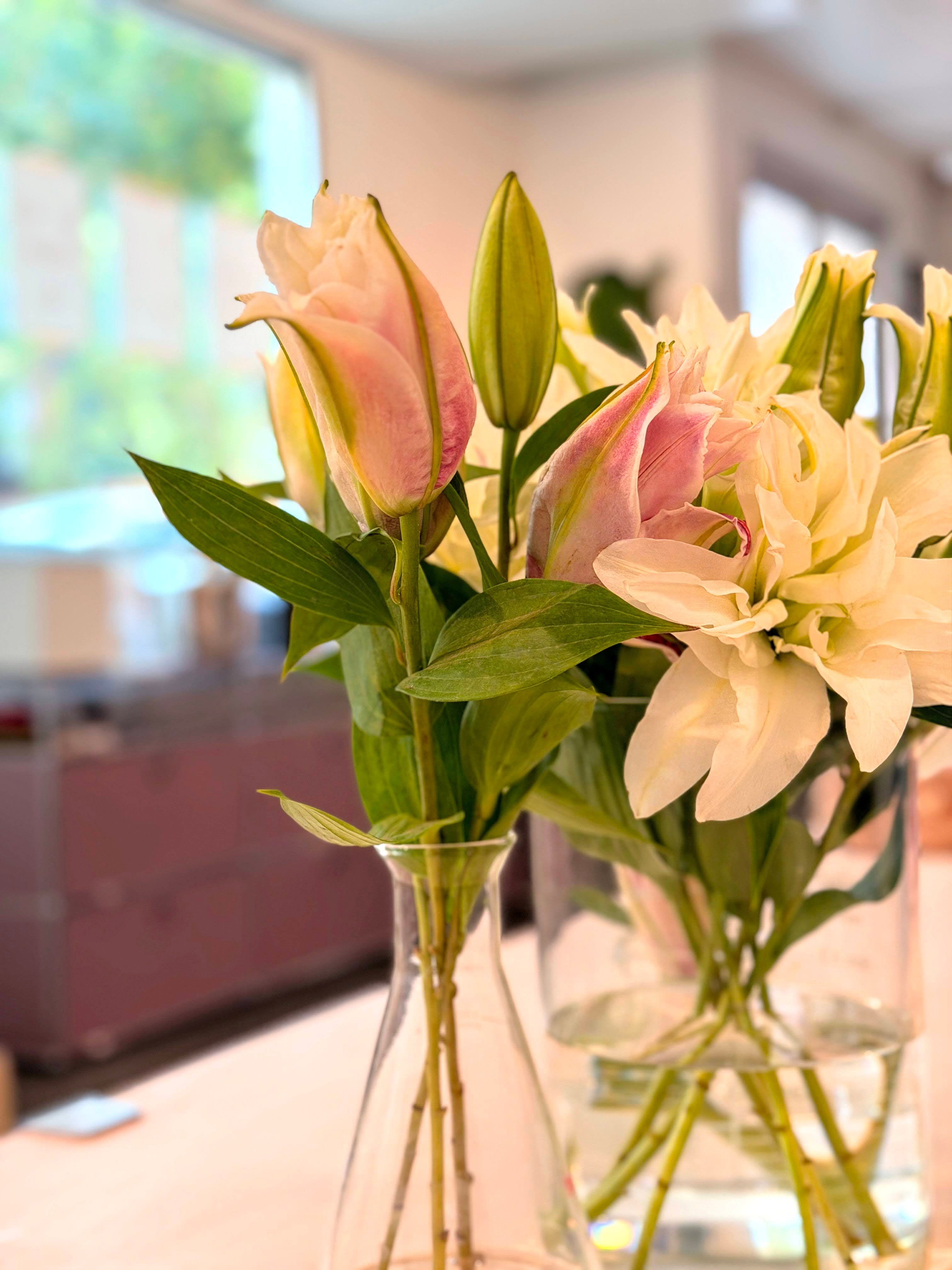
A group of half a dozen twenty-somethings that were outside decide to move inside, and they sit at the other end of my table, separated only by two bouquets of oriental lilies, one of them set inside a large Erlenmeyer flask as a vase. They converse loudly about firefighter salaries in New York City and speak sotto voce about sex and then pivot to talking about Mexico City and swimming in the ocean. The wooden stool I’m perched upon is the antithesis of ergonomic, and it hurts the bones in my non-existent ass. Flies take off and land at intervals, as though the long table is actually an aircraft carrier for bugs.
It’s a packed shop and there are people just two feet away from me, but somehow I’m still alone. It’s weird, but extremely on-brand.
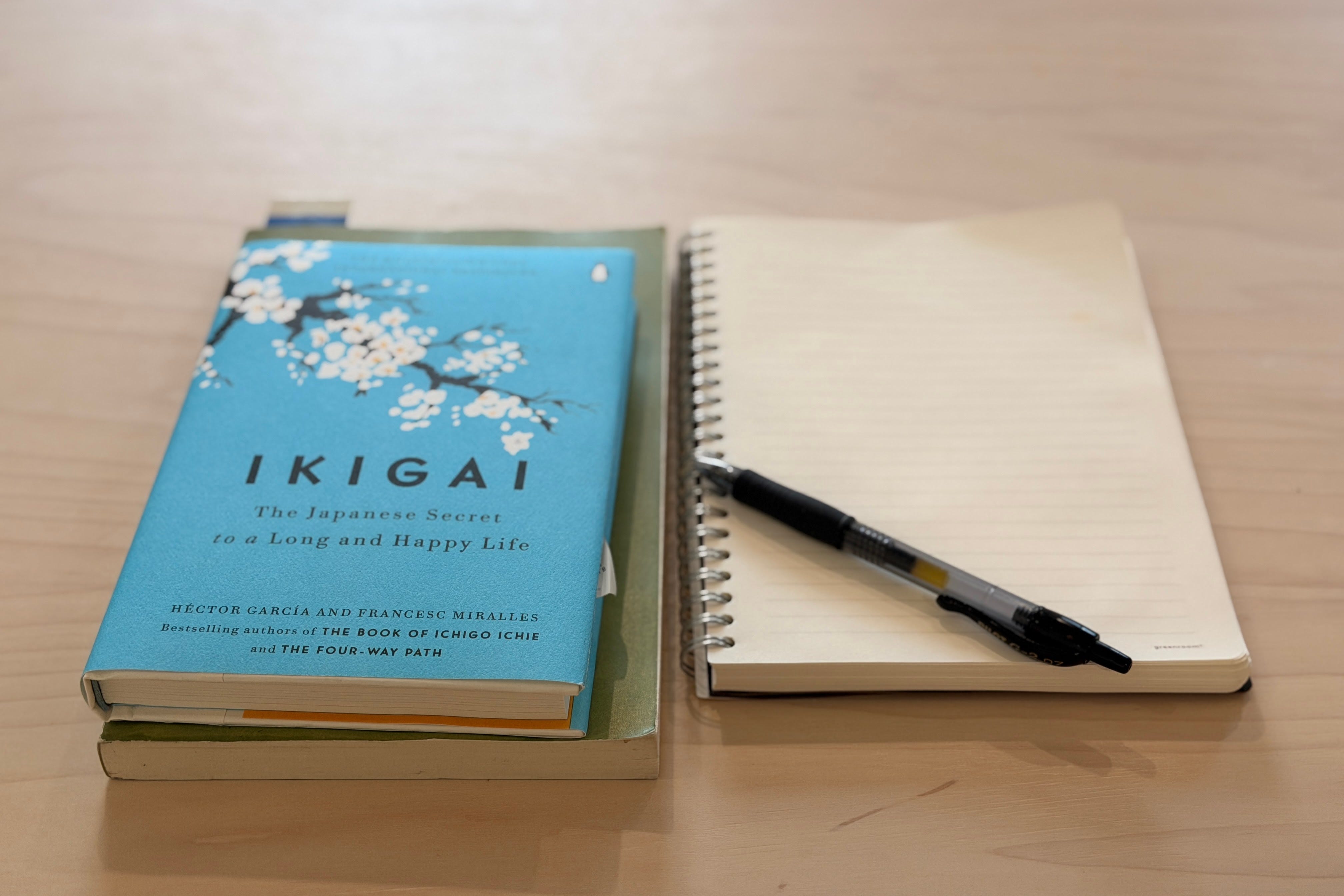
My notebook stares at me, blank-faced, my copy of Ikigai as unused as whichever part of my brain is responsible for considering the lessons it contains.
My table companions make no attempt at pleasantries with me, the lone interloper in their widely-varying conversation, and I see no opportunity to break in to make a friendly observation or a joke, so I revert to scrolling through my phone. They’re too loud for me to get any real reading done. I realize, with a little note of amused surprise, that without consciously making the decision, I have somehow become locked in an unannounced competition with the clique. They invaded my space without any social niceties, so I’ll be damned if I leave before they do. It’s a territorial thing. But the minutes tick on, and they seem to have quite a bit of stamina. My rear end is absolutely killing me. I keep trying to shift positions, and it’s just not working. Just as I’m considering a tactical retreat, they all make the hivemind decision get up to go at once.
Victory!
I stay a little while longer, just to savor the moment. My sit bones are ready to start flipping over tables, though, so I finally agree to get up and go.
I got barely any reading done, and don’t see a single comfortable chair in the coffee shop, so I decide to head over to the library to continue my attempt at learning how to live “a long and happy life.”
When I arrive, there is a woman who looks and sounds as though she has recently arrived from Africa talking on her phone as she walks through the automatic door. I make a stop in the first floor restroom, where I find a couple of homeless men performing their ablutions. I do my best to stay out of their way and do what needs doing, then leave the bathroom and walk up the stairs to an open mezzanine filled with tables and chairs between the stacks of books, many of them taken, and I select a spot in a corner that feels unobtrusive and offers an outside view.
But tucked behind the pillar is the same foreign woman I saw walking in, still talking on her phone. In the coffee shop, the ambient noise and the music made concentration at least theoretically possible, but here, in a mostly quiet environment, every noise stands up and demands attention.
I remember that I’ve got earbuds in my car, so I head back down the stairs to the parking lot, but instead of retrieving the headphones and going back inside, I find myself climbing into the driver’s seat, starting the engine, and just driving away.
I do want to know the secrets of Ikigai, but I already know what I want to do with my life. I want to write. And right now, there are words pushing against the inside of my brain, trying to make it onto a page that is not yet before me, so I head back to my own desk and my own keyboard, and let them run free.
If you liked this essay, please consider subscribing—or send a tip (Venmo/Paypal/Stripe) to support me and my work.
This is your best kind of writing! You have a gift of story telling! And Yes, go wherever your kids are!
In a strange way, I'll be sad if you leave Raleigh. My Mom passed away earlier this year, and my sister, who took care of her, is now in the process of moving to a small town near Wilmington. My brother moved to Durham decades ago, and I left in '89. So now, for the first time in 60 years, nobody in my family will be in Raleigh. I still have a handful of friends there with whom I'm gradually reconnecting. When my kids were young, I kept the old friends at arm's length, since the last thing my kids wanted to do on our annual visit was visit grouchy old dad's high school friends.