


This is a free post made possible by paid subscribers.
Writing is my profession and calling. If you find value in my work, please consider becoming a subscriber to support it.
Already subscribed but want to lend additional patronage? Prefer not to subscribe, but want to offer one-time support? You can leave a tip to keep this project going by clicking the link of your choice: (Venmo/Paypal/Stripe)
Thank you for reading, and for your support!
We all know the feeling when a big storm is coming.
It might still be sunny and warm, but dark clouds are gathering on the horizon. You perceive, on an almost subconscious level, a shift in barometric pressure. You notice the leaves on the trees showing their undersides as their stems soften under the growing humidity. They flutter in an increasingly steady breeze.
The birds go mostly silent, except for a few strays streaking by overhead, seeking shelter in their nests.
Thunder rumbles in the distance. A flash of lightning sears a jagged pink line in your vision, even from far away.
Perhaps you had the information that it was coming because you read the forecast. Perhaps you were busy and the growing darkness and the pregnant sky caught you unawares. But in either case, you can feel it now, and so you know it on a level that lies deep within ancestral memory. Your baseline anxiety begins to rise, a chemical warning from signals encoded over thousands of years, telling you to finish whatever you’re doing and take shelter. You continue your activities with a quickening pace, trying to finish up and get home before the heavens open up and unleash their fury.
This is the feeling that many of us have been having for some time now about the current state of the world. Everything feels fragile, like the collective consciousness is a brittle sheet of glass, buffeted and twisting in the winds that are now blowing, threatening to shatter into a million razor-sharp shards.
Social unrest. Political upheaval. Technology advancing at a pace we cannot hope to comprehend. A shifting global power balance. The insidious machinations of subtle but profound mass psychological influence campaigns. A sense of disconnection from history, and the fear that old lessons left unlearned are beginning to repeat, all while entirely new and unprecedented threats are being born.
We Cannot See The Path Ahead
If you will indulge me, I would like to layer in another metaphor, based on a recent experience of mine while on my road trip through the American West.
There’s a place on Highway 14, about 20 minutes East of Cody, Wyoming, where I broke the momentum of a long drive, plagued with car trouble on that particular evening, and came to a complete stop in the middle of the road.
The speed limit was 75MPH on that particular stretch of highway, but I wasn’t too worried about the danger of getting out and standing in the lane to have a look around. It was a quarter-to-nine on a Saturday night in late October. I was on a rail-straight strip of asphalt that had looked exactly the same for miles, and there wasn’t so much as the twinkle of a headlight in either direction.
It was so dark that outside the cone of illumination from my headlights, I couldn’t see anything. No moon. Not a star. Not a tree or a mountain or a rock or a silhouette that could have been interpreted as any of these. It was just an ocean of silent blackness, swallowing up all perception.
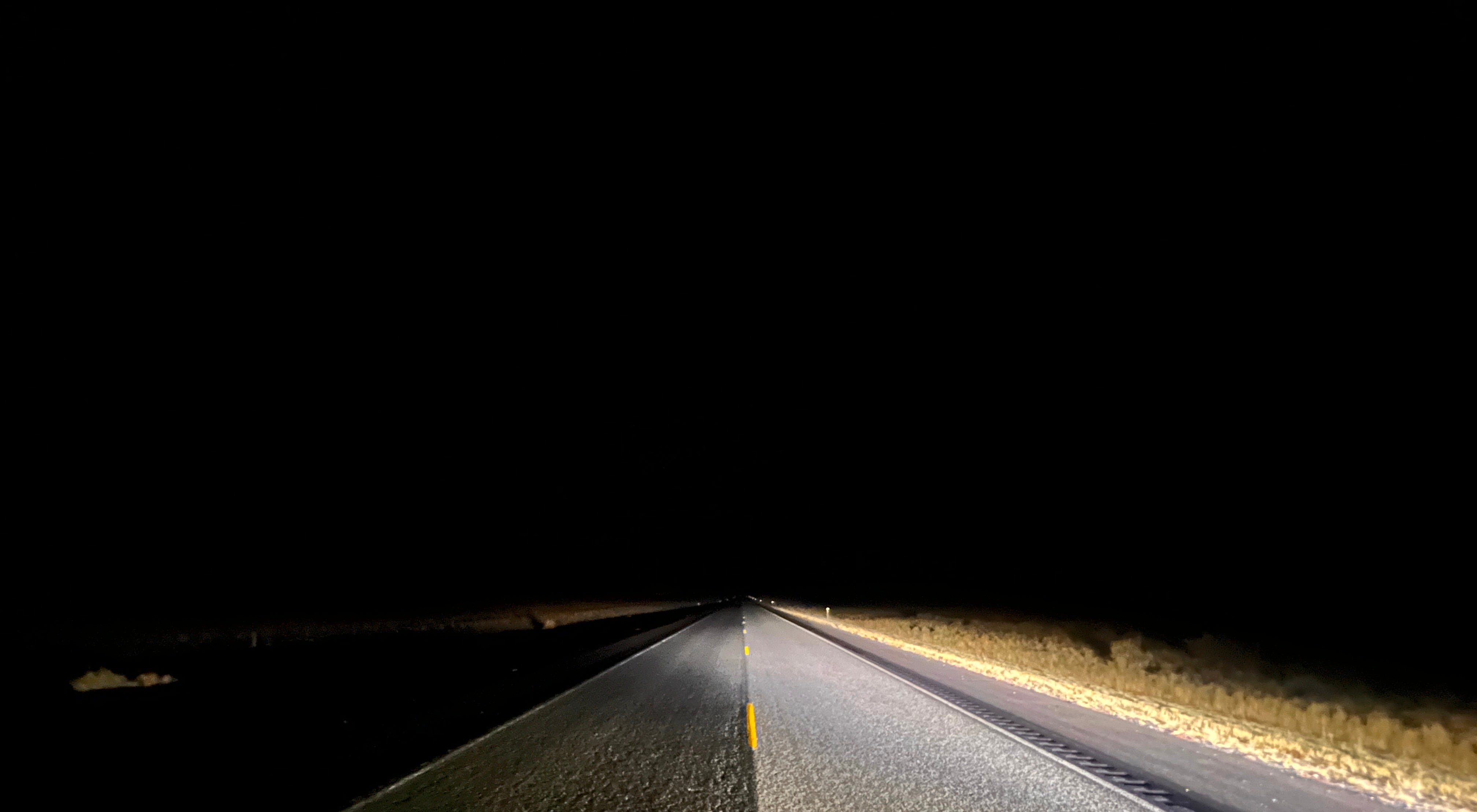
The photograph I took that night serves as a perfect visual metaphor for where we are right now as a society, a world, a collection of people going through a truly transformational time shrouded in the fog of possibility.
We are at a nexus point. A convergence. We are standing on the precipice of an epochal change that has thrown certainty about the future — and even our ability to imagine it with any degree of accuracy — into near-total obscurity. We can only perceive our immediate surroundings with any degree of accuracy, and nothing further.
This is a very strange place to exist. It is the worst kind of liminal state, a purgatorian waystation where you have to remind yourself that you’re still real from time to time, because the experience of the circumstances can feel so surreal.
All inputs are outputting errors. Despite the ambient excitement, the electric charge of so much change, anhedonia paints the world a tedious shade of beige.
Nothing is truly appealing when you can’t see a future that makes sense.
Nothing, that is, but getting back in that metaphorical car and hurrying down the road to see where it goes — and hoping it doesn’t break down along the way. You just need to find your way out of the darkness and back to something that feels like normalcy again.
You don’t know if that’s even possible, but you know you can’t stay here.
This darkness is not a destination; it is an interstitial space. A transition point between what was and what will be. And even if we’re terrified about what we might find if we keep going, we know with absolute conviction that the temporary safety of standing in the middle of this road can’t last forever. Eventually, we’re going to get run over if we don’t get back in and drive.
Patterns emerge from the data, but there is no map for this territory. We cannot look to history to accurately guide us, even if we’ve seen echoes of this before, because while history has some examples familiar to aspects of what we face, we have created a situation that is entirely unprecedented.
The End of the World as We Know It
“Those who do not learn from history are doomed to repeat it.”
The words above are an apocryphal but popularly-remembered paraphrase of the words of George Santayana. What he actually wrote was as follows:
Progress, far from consisting in change, depends on retentiveness. When change is absolute there remains no being to improve and no direction is set for possible improvement: and when experience is not retained, as among savages, infancy is perpetual. Those who cannot remember the past are condemned to repeat it. In the first stage of life the mind is frivolous and easily distracted; it misses progress by failing in consecutiveness and persistence. This is the condition of children and barbarians, in whom instinct has learned nothing from experience. In a second stage men are docile to events, plastic to new habits and suggestions, yet able to graft them on original instincts, which they thus bring to fuller satisfaction. This is the plane of manhood and true progress. Old age, for its part, has contracted habits, fixed instincts, and a memory loaded with precise images of the past; it can envisage no possible future but a repetition of the past. Experience, being once incorporated, cannot be dislodged; when memory is complete, life is stagnant.
It’s hard to say for certain which phase we are in, but it certainly feels as though we’ve adopted the “instinct has learned nothing from experience” motif.
The world we grew up in, the only world the vast majority of the human beings alive today have ever known, is a completely unique historical anomaly.
Most people are completely unaware of this.
I can jump in my car, with parts made all around the world, and drive down the street using fuel refined in one place from oil drawn from beneath the earth thousands of miles away, and enter a grocery store where I can buy mustard made in Germany, rice grown in Thailand, Kimchi from Korea, beans from Latin America, olives from Greece, and noodles from Japan.
I can return home and sit on my office chair designed in Singapore and manufactured in China, and write this at my computer assembled with parts from many countries, including microprocessors designed in America and built in Taiwan that are etched using extreme ultraviolet lithography lasers made exclusively in the Netherlands, using polysilicon taken from sands around the world and refined in crucibles forged from ultra-pure quartz that comes almost exclusively out of a singular mine in a little rural town in North Carolina called Spruce Pine.
If I default on my loans, I can file bankruptcy instead of being sent to a debtor’s prison. If I am unemployed, I can receive money to buy food and pay for housing from the government. If I need help with medical care, there are programs for that too.
Intricate global supply chain webs. New Deal-era programs. Social safety nets. Regulatory reduction of consequences to something more humane, and less punitive of bad decisionmaking.
All of this is new. We just think of it as “normal.”
Rising from the ashes of two world wars, fueled by a brand new system of multilateralism and enforced peace and global trade, the past 80 years have brought about the greatest period of prosperity our species has ever known. Referred to as “The Golden Age of Capitalism,” this period opened new markets, created explosive personal wealth, quadrupled global GDP, dropped extreme poverty from half the global population to less than 10%, gave rise to the rapid development of new technologies, and ushered in the most peaceful era — in terms of major wars — the world has ever seen.
And that period is now, for various complex reasons, drawing to its inexorable conclusion, making space for whatever it is that will come next. Letting go of a paradigm like this will not come without great resistance and turmoil.
And because so many variables are in play — some of them entirely novel — predicting that next thing with any degree of certitude is an almost impossible task. Every attempt is highly speculative, rooted only in conjecture and pattern recognition. These are useful heuristics in their own right, but they lack real probabilistic confidence.
This Series
When I originally started thinking about how to write about this, I conceived it as one coherent piece. But every time I tried to draft something, it felt too expansive, too comprehensive, too hard to get my arms around and express cogently.
And new considerations are being added all the time. As I write this, reports are lighting up my social feeds about massive movements of American military planes and ships in anticipation of a war between the US and Iran. Israel and Russia look to be involved as well. There are rumors that China’s equipment, at least, may make a cameo.
By the time you read this, fighting may have already begun. Or something else might have happened that throws the whole thing off track. No possibility seems certain.
So in order to tackle this as comprehensively as I can, I’ve decided to break up what I’m seeing into its component parts. There are five major forces that I see re-shaping the world today, and each will receive its own essay in the coming weeks. All will be linked from inside this piece when they are finished.
There are also some contributing forces — less powerful, but still potent — I will pull together in a bonus essay for paid subscribers.
It’s best to think about the piece you’re reading now as a kind of table of contents, a cobbled-together, impromptu map of the territory based solely on observational data. The map may change as the fog of war lifts. I can only describe for you what I can see from where I stand today, but I do not claim any of this to be definitive.
The 5 Major Forces Driving the Coming Change
I’ve been a bit abstract so far, so let me dive into a more concrete analysis. Specifically, I’d like to identify the most important forces I believe will shape the changing world:
1.) The Ending of the Post-War Order
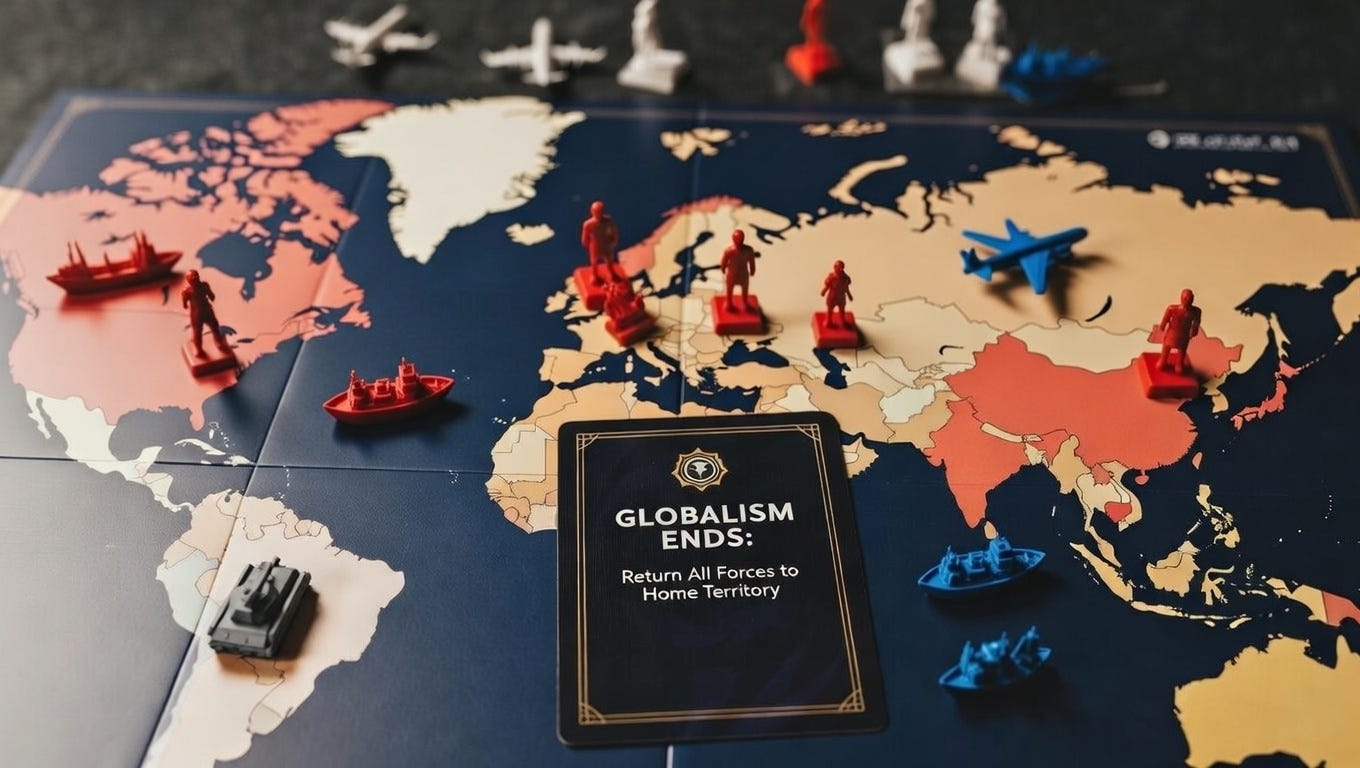
The Pax Americana is ending. Globalism is coming to an end. We are returning to a multipolar world. America is changing her sphere of influence, re-shoring manufacturing, exorcizing enemy influence (particularly China) from the Western hemisphere, and securing national interests. Nothing is off the table, including the end of the dollar as reserve currency or the death of NATO.
Why this matters: The post-war era, with decades of peace and rapidly-expanding prosperity, was intentionally architected and unprecedented in history. As this system goes away, the world we live in will begin to look and feel very different from the one we’ve always known.
Read my standalone piece on Force 1: The End of the Post-War Order
2.) The Rise of Artificial Intelligence
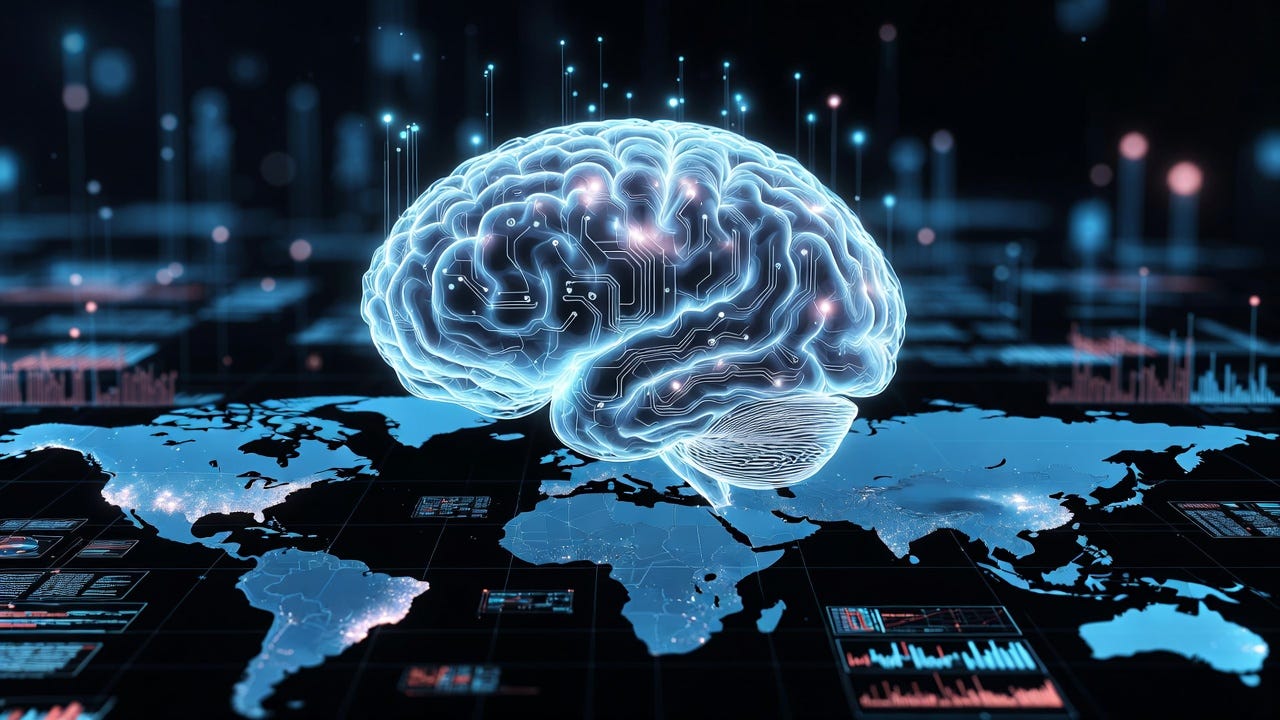
No technology has ever advanced so fast. But even more importantly, no technology has ever had the capacity to iterate itself and write human beings out of the process. We have created artificial minds capable of not just matching our own intelligence, but of exceeding it. And their use is beginning to disrupt not just industries, but entire economies, putting large sections of the human labor force out of work and being rapidly integrated into military applications.
Why this matters: Work will change. The way we make money will change. Scientific discoveries will begin to accelerate. Breakthroughs in medicine and physics are coming fast. Creative industries are already being disrupted. Knowledge work across a range of fields is becoming trivial and low cost. And as robotics advance, AI will move out of our phones and computers and into the real world. This is the new arms race, and it cannot be stopped.
Read my standalone piece on Force 2: (Coming Soon)
3.) Demographic Winter is Coming. Demographic Autumn is Here
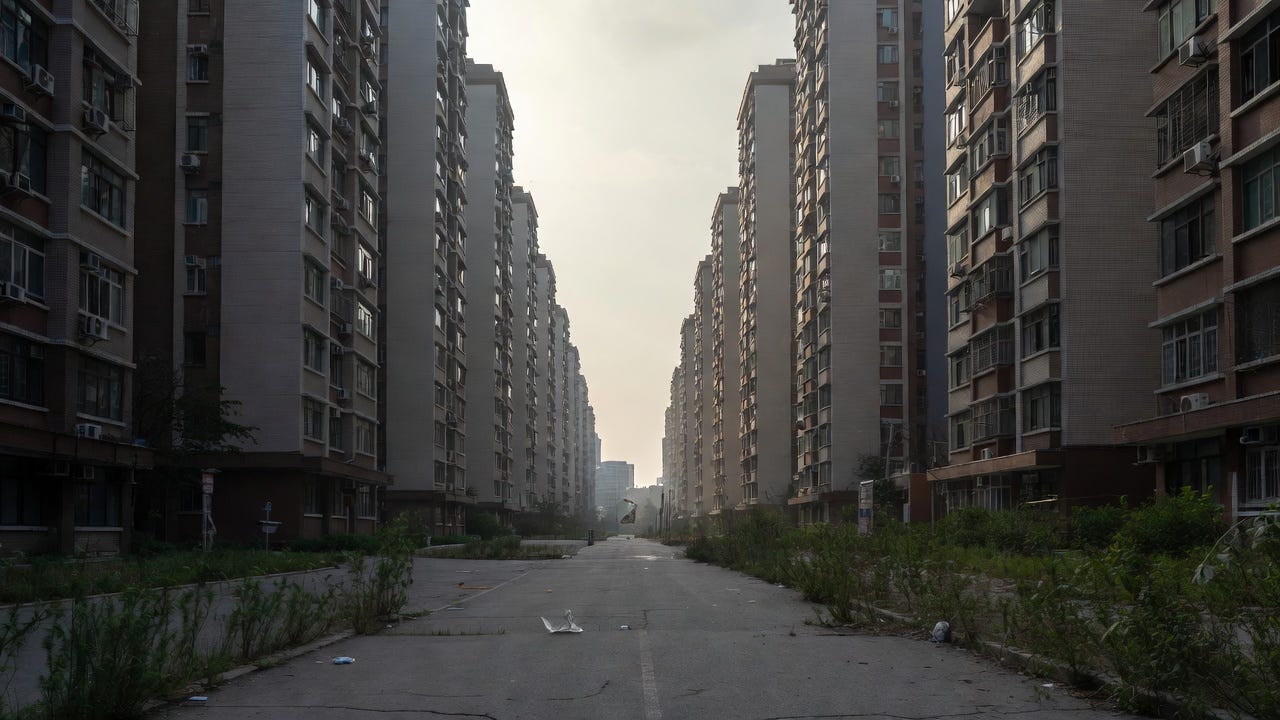
Every industrialized nation experiences a precipitous decline in births, due to urbanization and cost reconfiguration. The Total Fertility Rate (TFR) must be at 2.1 births per woman in order to simply stabilize population and keep it from falling. The global average TFR is currently 2.3 — but in developed countries, it’s much, much lower, and populations are rapidly aging as fewer and fewer babies are being born.
Why this matters: Shrinking populations means shrinking labor forces and smaller tax bases. As older people retire or die, new workers will not exist to fill the vacancies. Infrastructure will begin to collapse. Manufacturing will struggle. Countries will (and are already) increasing immigration to make up for the shortfall, but that means replacing existing populations with more fertile populations imported from the third world — with different values, beliefs, and cultures. Growing elderly populations will put massive economic strain on smaller groupings of young workers. Countries will topple and fall. Famines will return unless agriculture can be quickly automated. Globalism is failing, in part, because of fertility math. And AI and robotics will begin to be looked at as a growing part of the solution in the absence of human resources, accelerating machine takeover of formerly human domains.
Read my standalone piece on Force 3: (Coming Soon)
4.) Expanding Humanity to the Stars
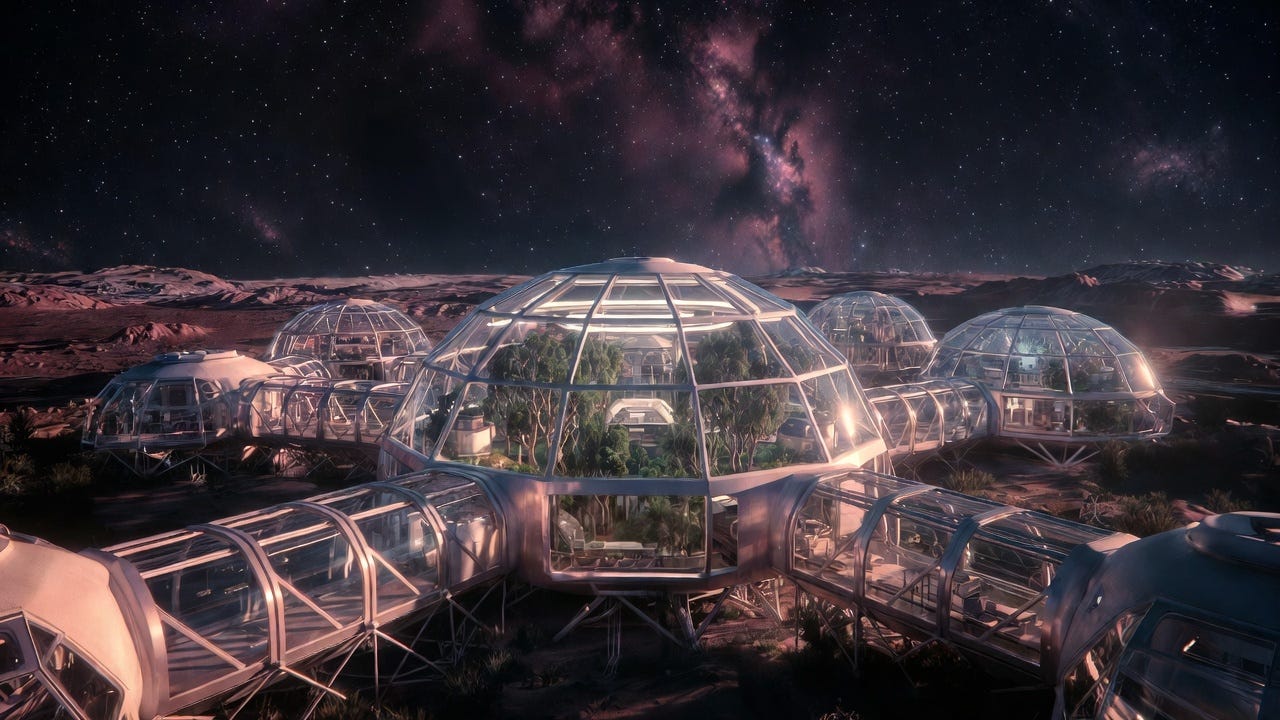
Elon Musk is the most formidable industrialist in a world full of very talented billionaires. And he has been singularly focused, through all of his other endeavors, on reaching the stars. “I really don’t have any other motivation for personally accumulating assets,” Musk says, “except to be able to make the biggest contribution I can to making life multiplanetary.” He believes strongly in this vision, and intends to move AI datacenters to space, harness the energy of the sun for unlimited power, build a base on the moon, and then colonize mars.
Why this matters: The industries that are springing up around space, the lowered cost-to-orbit through relentless refinement of technology through SpaceX, the possibility of mining abundant off-planet resources, the space commerce and tourism that will be possible once we establish a permanent foothold outside of Earth’s gravity well — this will all drive many of the technological and scientific achievements that will be the hallmarks of the 21st century. And it will change the very nature of the human race itself, once we begin to live and work outside of our home planet.
Read my standalone piece on Force 4: (Coming Soon)

5.) The Reality Crisis
People are becoming less religious, and traditional religions are fragmenting under the weight of scandals and doctrinal controversies. Political and ideological division is growing increasingly rancorous. Trust in institutions and experts was shattered during COVID, and AI-fueled hoaxes, misinformation, disinformation, and narrative warfare are on the rise, filling the gap with believable but ultimately false information. The questions surrounding the possibility and nature of machine sapience is fueling philosophical, scientific, and ethical debate. And a growing consensus that we are not only not alone in the universe, but not even alone on the planet, is rising to a crescendo that may lead to public disclosure and widespread ontological shock.
Why this matters: Simply put, we don’t know what to believe anymore. We don’t know how to discern what is true from what is false, and traditional epistemology is cracking under the strain. Long-held concepts about humanity’s uniqueness and place in the cosmos are coming under direct fire. Confusion, chaos, despair, and widespread unrest and violence are real possibilities.
Read my standalone piece on Force 5: (Coming Soon)
These are the broad outlines of the forces converging into a global storm that will change the planet forever. In the coming decades, much of this will come to pass. Barring something apocalyptic happening, many of us will live to see the beginning of what lies on the other side. Only then will we be able to compare our predictions to reality to see how much we got right. Only then will we know what the new status quo will look like.
However it ends up, it’s the world our children, and our children’s children, will inherit.
The stakes are high. Our ability to change the course of things is limited.
The first essay drops next Thursday. I hope you’ll join me in trying to figure this out.
If you liked this essay, please consider subscribing—or send a tip (Venmo/Paypal/Stripe) to support this and future pieces like it.
A very well done synopsis of the "Big 5", Steve.
It would seem that the elders of the tribe of humanity have only wisdom pertaining to the life they lived....and not a clue as to how to prepare those to come since all has been twisted and distorted by design so that nothing is as it seems.
I've learned more about what's happening from predictive programming.....in your face movies that gave the plot away decades beforehand.
It was always hiding in plain sight.
The knot in my stomach just got tighter, but a well written outline anyway.